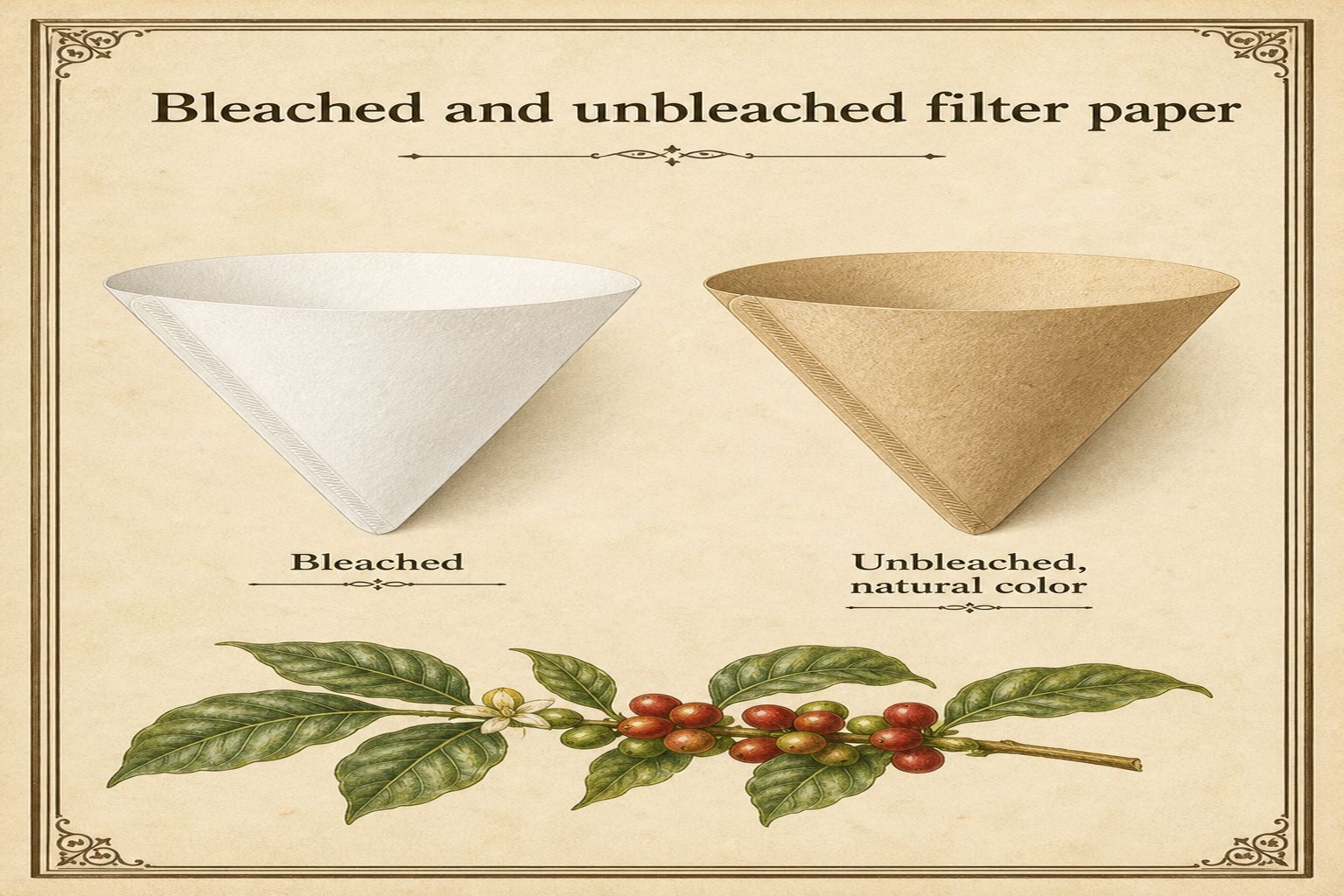
White paper filters have been bleached; brown filters are usually unbleached. The color does not create two different brew methods. Paper quality, fit, thickness, and rinsing can matter more, while unrinsed brown paper is more likely to contribute a papery taste.
Updated: Aug 20, 2026Reviewed by: Ah-Zhu (English-site batch review)
The visible difference is paper processing
White paper filters have gone through a bleaching or brightening process. Brown filters are commonly called natural or unbleached. The color does not define a different extraction method, nor does it establish quality by itself.
Manufacturing varies by brand and market. One manufacturer describes its white filters as oxygen-bleached in the United Kingdom and its North American white cone filters as elemental-chlorine-free. Those are product-specific claims, not a standard that applies to every white filter.
Start by matching shape and size to your brewer. A cone filter belongs in a compatible cone brewer, and a flat-bottom filter belongs in a compatible flat brewer. Fit can influence bypass, folds, and flow more directly than the color. See pour-over starter equipment for that setup.
The illustration shows paper color, not a real brand or a quality ranking.
Which one tastes more like paper?
Unbleached paper retains more of the material associated with its brown color and is more likely to contribute cardboard or paper flavor when used without rinsing. Lignin is part of wood’s structural material; bleaching and washing remove or transform more of it.
White paper is not automatically neutral. Low-quality bleached paper can also contribute paper taste. Thickness, fiber, manufacturing, storage, and water flow all matter. A very thin filter may drain quickly, while a thicker filter may slow flow and retain more oil and fine particles.
The most useful comparison is practical: rinse each candidate, brew the same coffee with the same recipe, and compare flavor and drawdown. Do not assume the brown or white option wins before testing.
What bleaching terms actually mean
Older elemental-chlorine bleaching used chlorine gas and could generate problematic dioxin emissions in pulp production. Modern elemental chlorine free (ECF) processing avoids chlorine gas but may use chlorine dioxide, often with peroxide or oxygen stages. The name does not mean every chlorine compound is absent.
Totally chlorine free (TCF) systems avoid chlorine compounds and can use oxygen delignification, hydrogen peroxide, or ozone. Packaging may also say oxygen-bleached.
Enzyme-assisted processing is another easily confused phrase. Research on xylanase shows enzymes often serve as a pretreatment that makes later color removal easier and can reduce bleaching-chemical demand; the enzyme is not necessarily the complete whitening step.
Environmental tradeoffs primarily concern pulp-mill processing, effluent, energy, and chemical use. Unbleached paper skips a whitening stage, while oxygen or modern ECF methods reduce concerns associated with old chlorine-gas bleaching. These manufacturing differences are not evidence that a properly made white coffee filter is unsafe in the cup.
Should you rinse the filter?
Rinsing is common because it can remove loose paper flavor and preheat the brewer and vessel. HARIO’s V60 instructions include thoroughly wetting the paper with hot water and discarding the rinse water before adding coffee.
Rinse the whole paper and discard the water; the practice is common, not a universal requirement.
If a single rinse still produces obvious paper flavor, rinse again or try another paper. Choose white or brown based on taste, manufacturing information, availability, environmental priorities, and fit—not on a blanket claim that one color always brews better.
Common Misconceptions
Are unbleached coffee filters healthier?
Brown color means the paper was not bleached; it is not a health grade. Modern coffee filters are generally considered safe for brewing when used as directed.
Does elemental-chlorine-free mean no chlorine compounds were used?
No. ECF means elemental chlorine gas was not used and may still involve chlorine dioxide. Totally chlorine free or oxygen-based processes use no chlorine compounds.
Must I rinse a paper filter?
It is common rather than mandatory. Rinsing can reduce paper taste and preheat the brewer. Unbleached paper is more likely to show a paper flavor when unrinsed.
Do bleached filters always taste better?
No. Paper quality, thickness, fit, flow, storage, and rinsing can matter more than color. A poor white filter can taste more papery than a well-made brown one.
Barista Hustle, P 1.02 Rinsing Paper: Technical explanation of lignin, paper flavor, bleaching, and hot-water rinsing; its specialty-use recommendation is treated as an editorial position.
HARIO, V60 Series: Manufacturer instructions that include thoroughly rinsing the paper, warming the brewer, and discarding rinse water.
Stora Enso, Pulp bleaching fact sheet, 2017: Pulp-industry source for lignin removal, elemental chlorine, ECF, TCF, chlorine dioxide, oxygen, peroxide, ozone, and dioxin context.