Processing
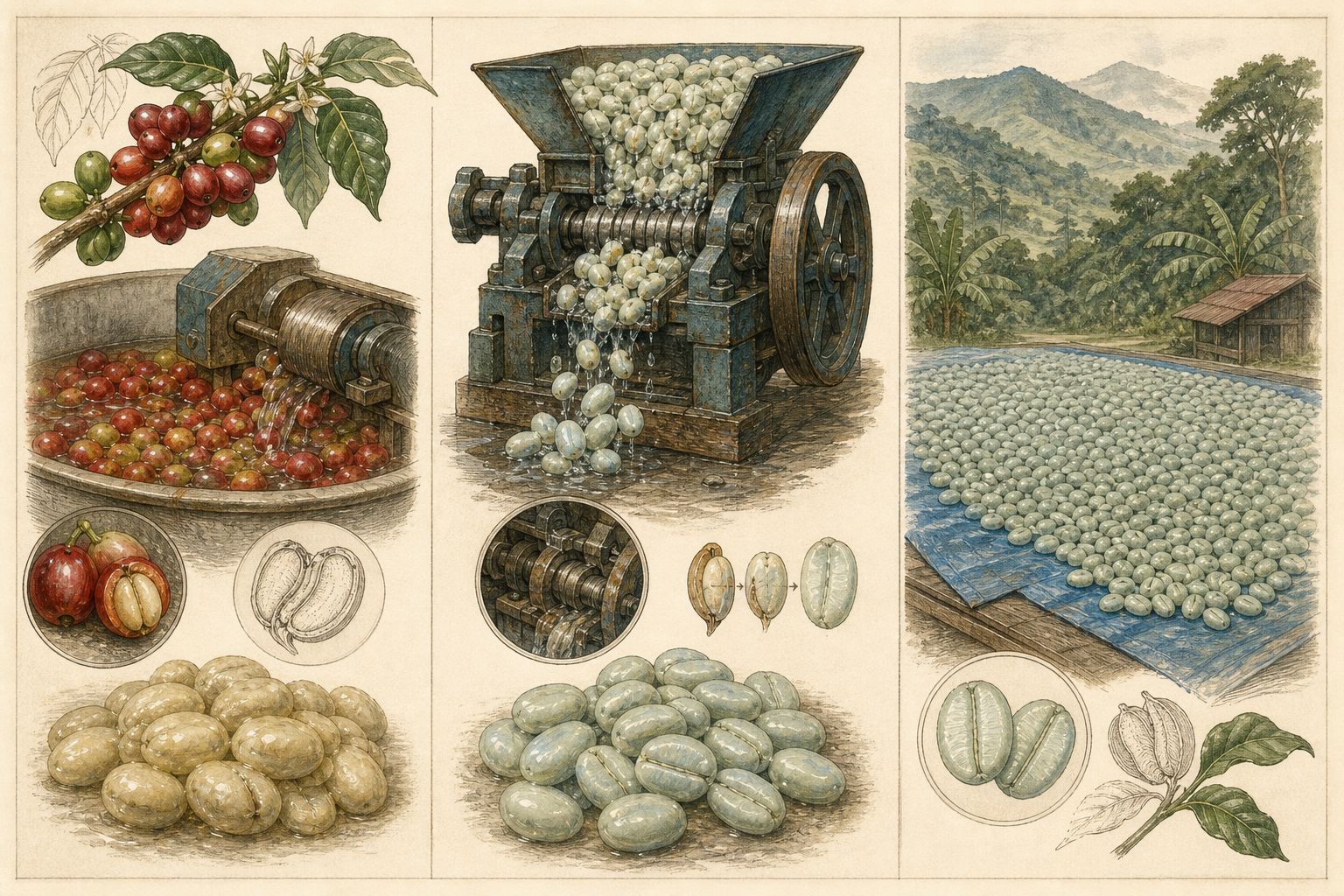
Processing is the path from coffee fruit to green coffee.
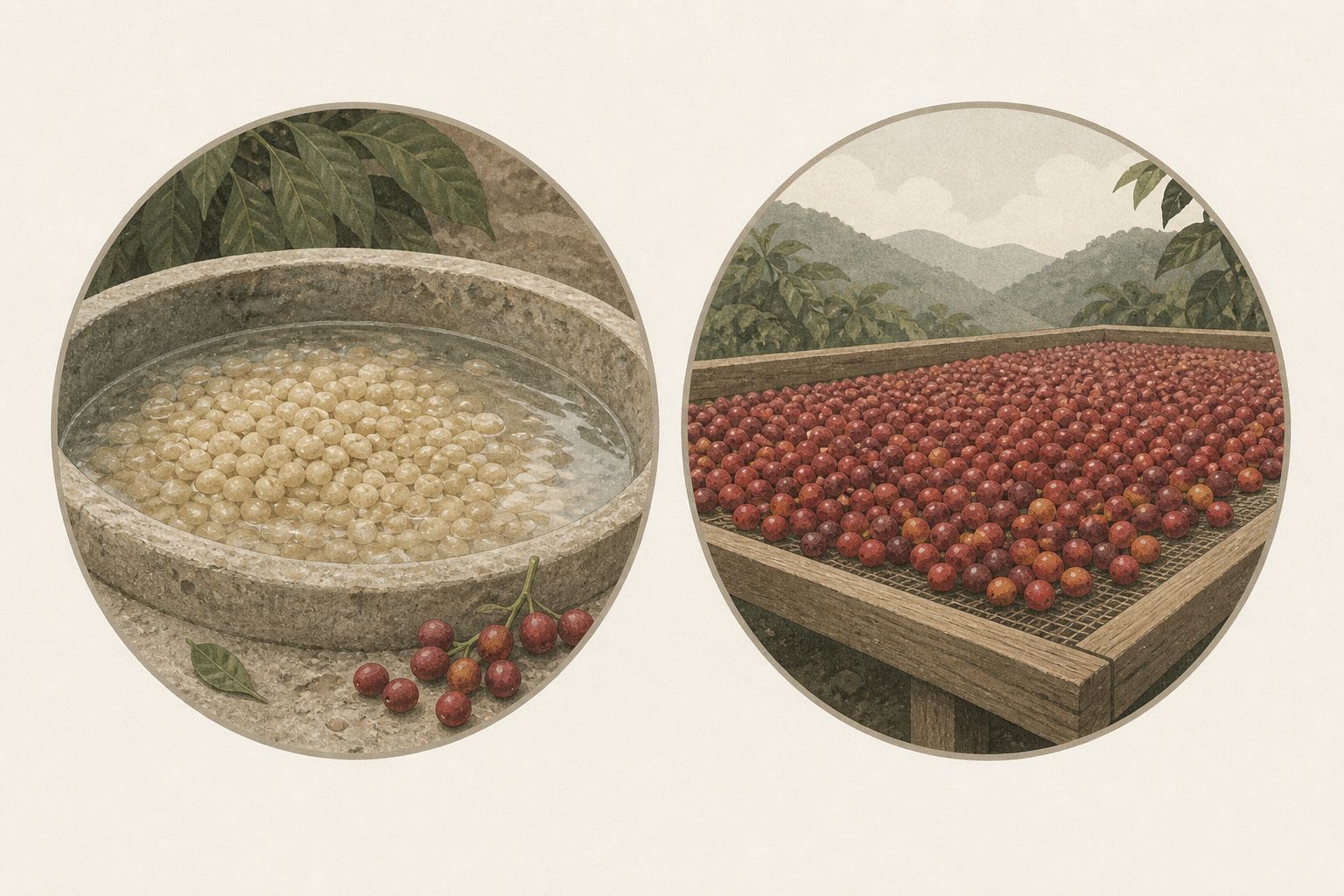
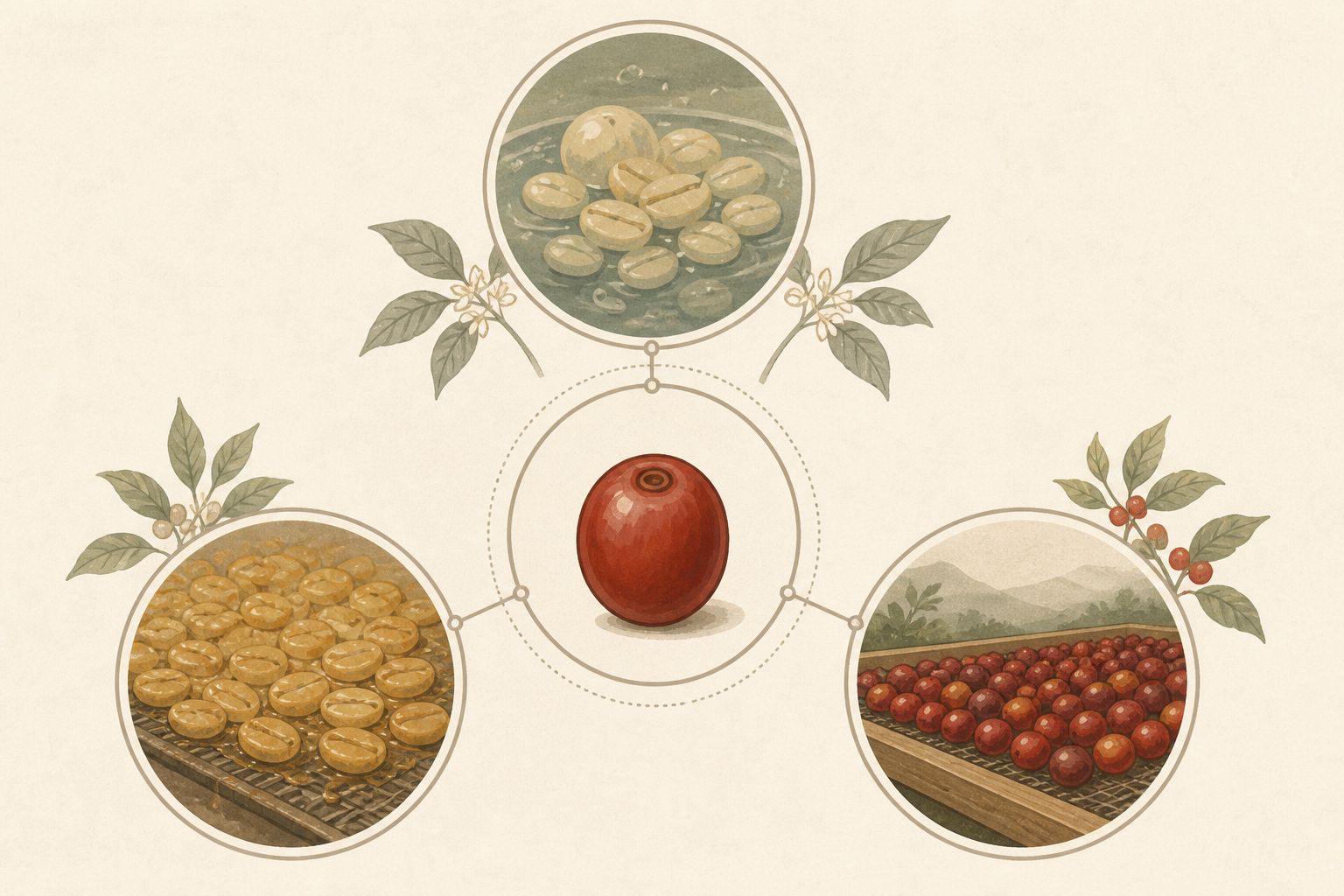
Washed, natural, and honey describe what happens after coffee cherries are picked. Processing can shape clarity, fruit character, and fermentation notes, but it is only one part of the final cup.
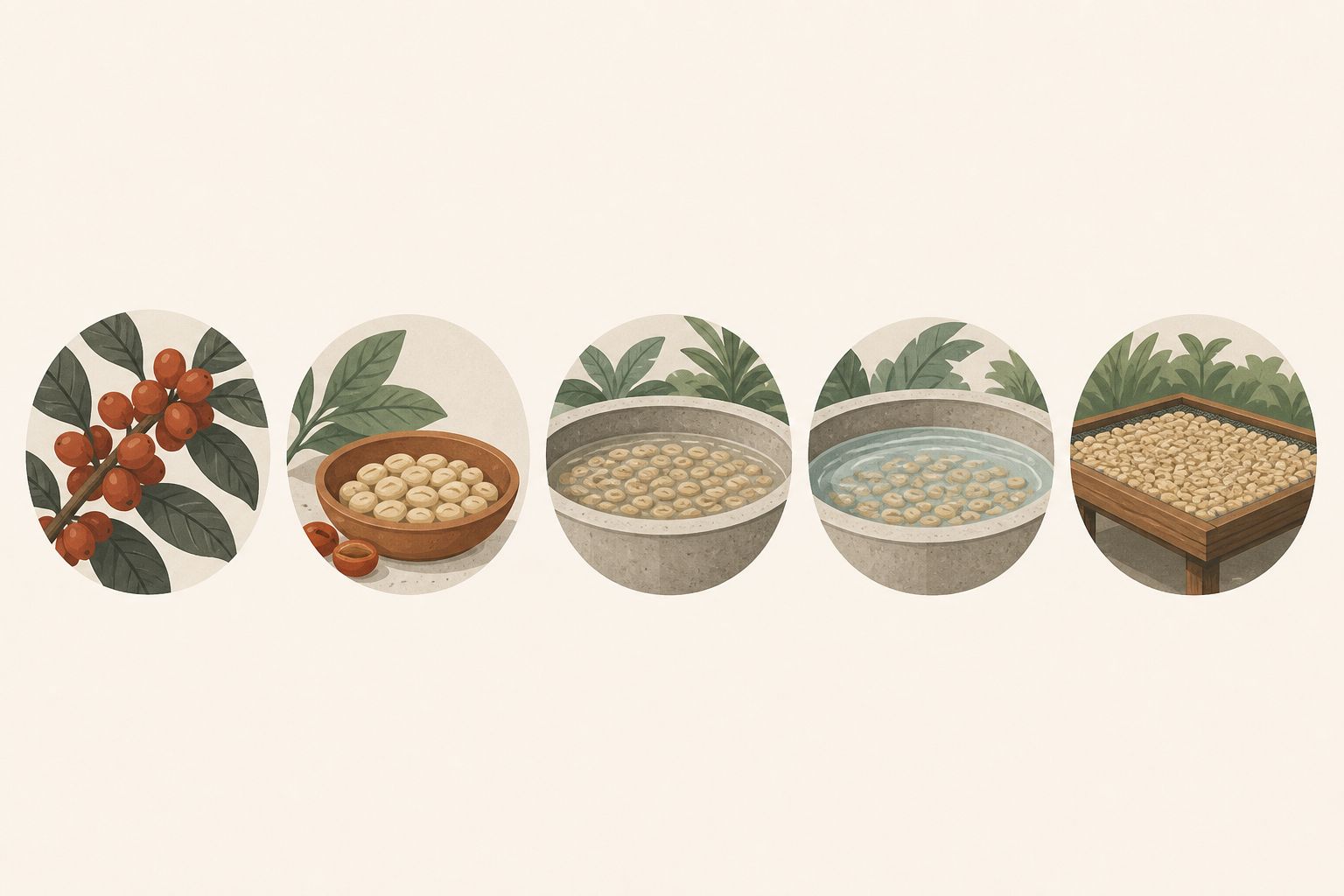
Washed Process
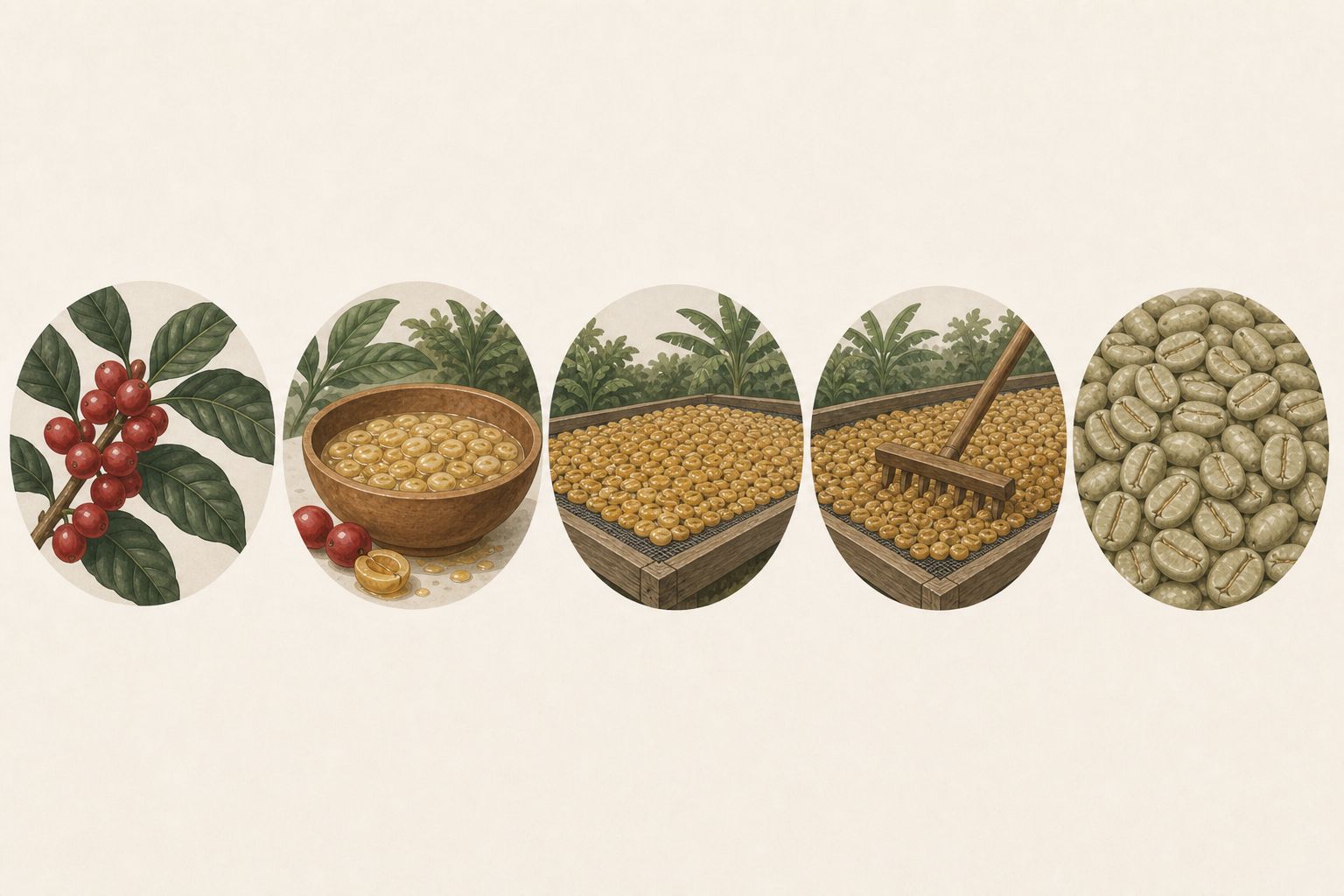
- Pick ripe coffee cherries
- Remove the skin and pulp
- Break down the mucilage through fermentation
- Wash the coffee
- Dry the parchment coffee
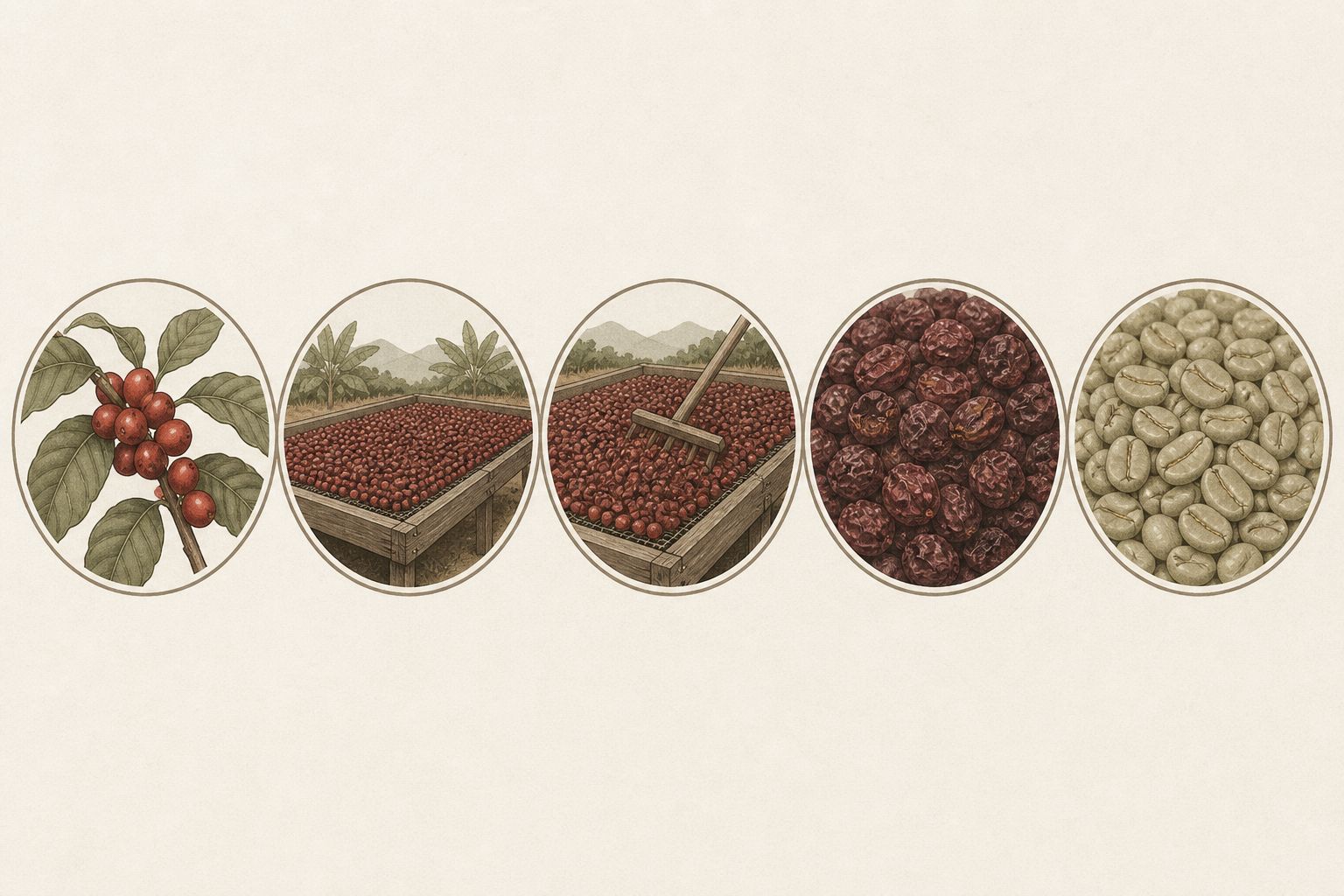
Natural Process
- Pick ripe coffee cherries
- Dry the whole cherries
- Turn them regularly
- Remove the dried fruit and parchment
- Prepare the green coffee
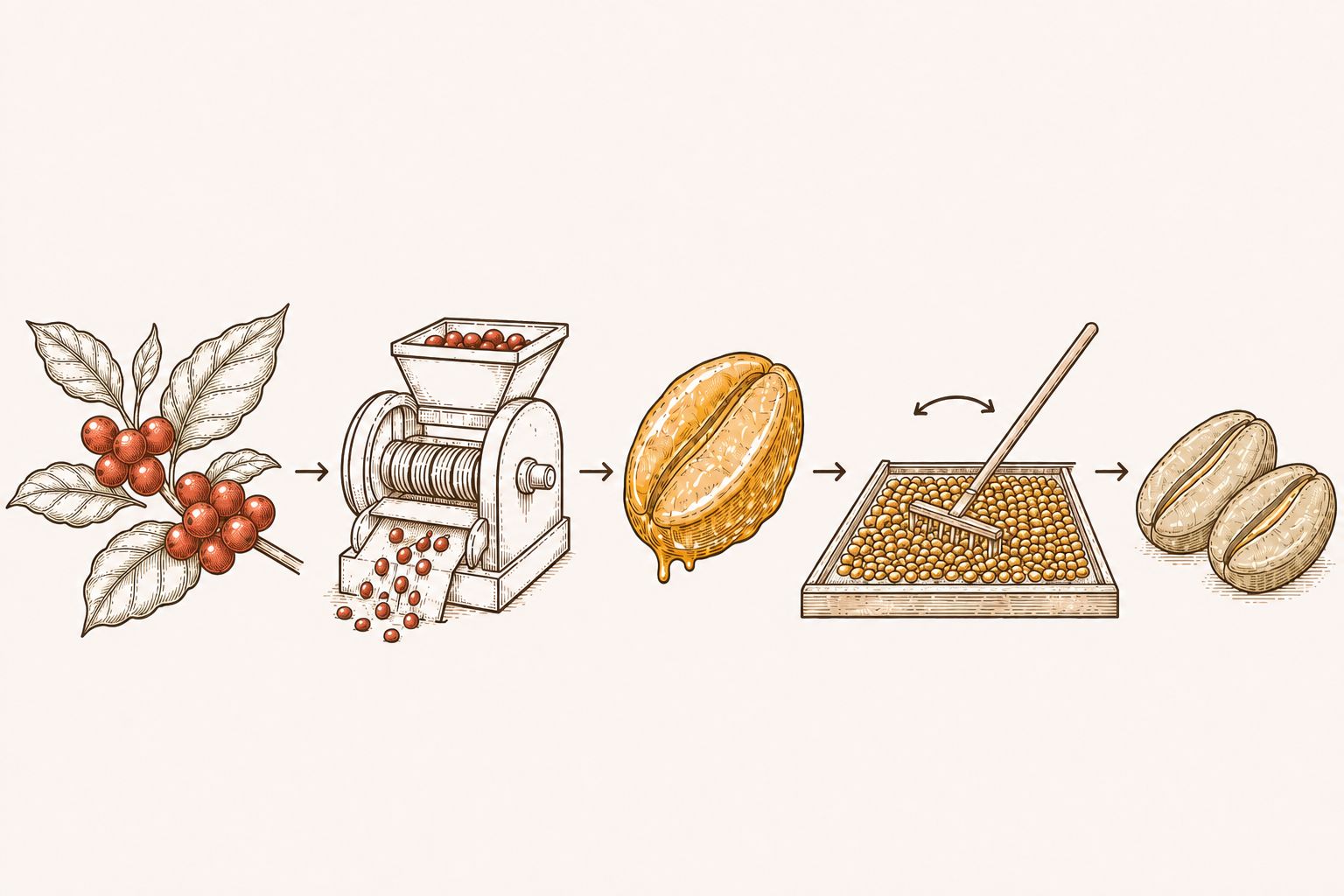
Honey Process
- Pick ripe coffee cherries
- Remove the skin while retaining some mucilage
- Dry the coffee with mucilage attached
- Remove the parchment after drying
- Prepare the green coffee
Wet-Hulled Process
- Pick ripe coffee cherries
- Depulp, then briefly ferment or wash
- Remove the parchment while moisture remains high
- Continue drying
- Prepare the green coffee
Anaerobic Fermentation
- Pick ripe coffee cherries
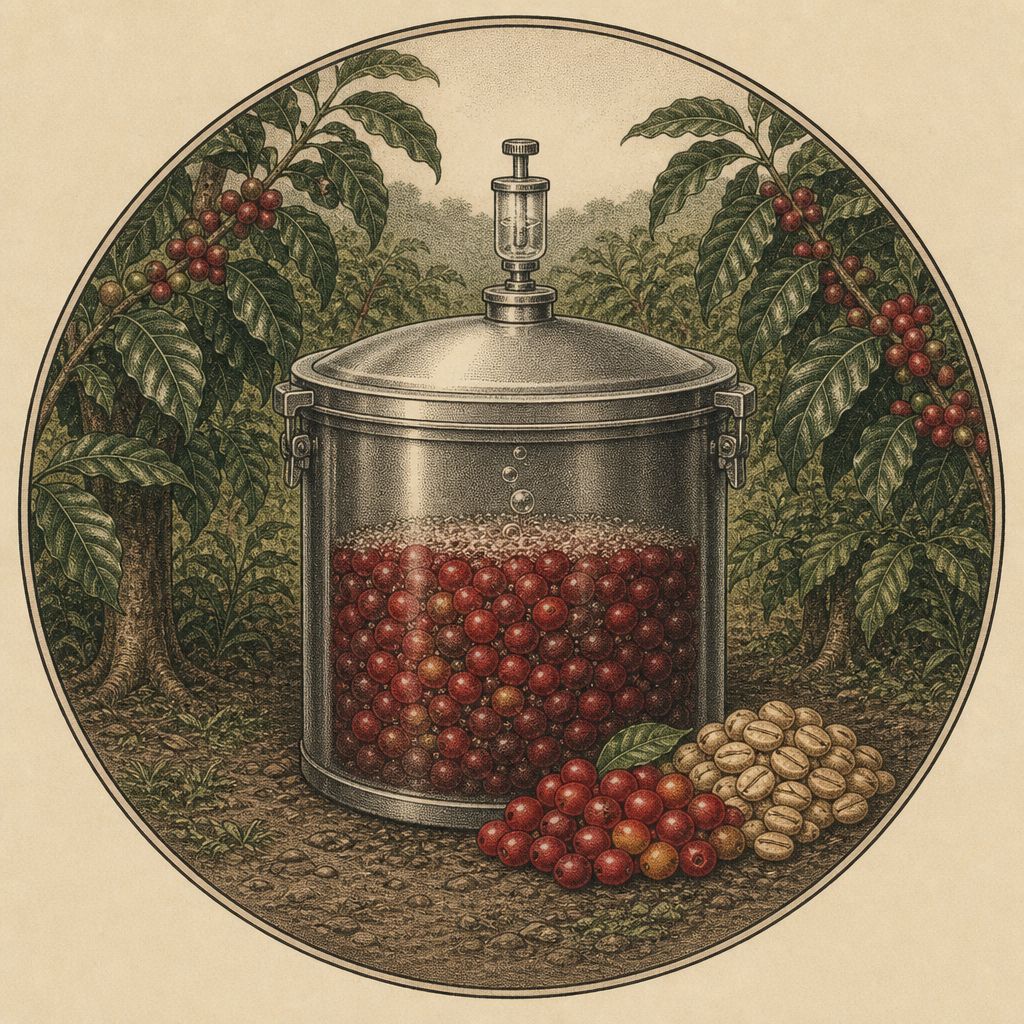
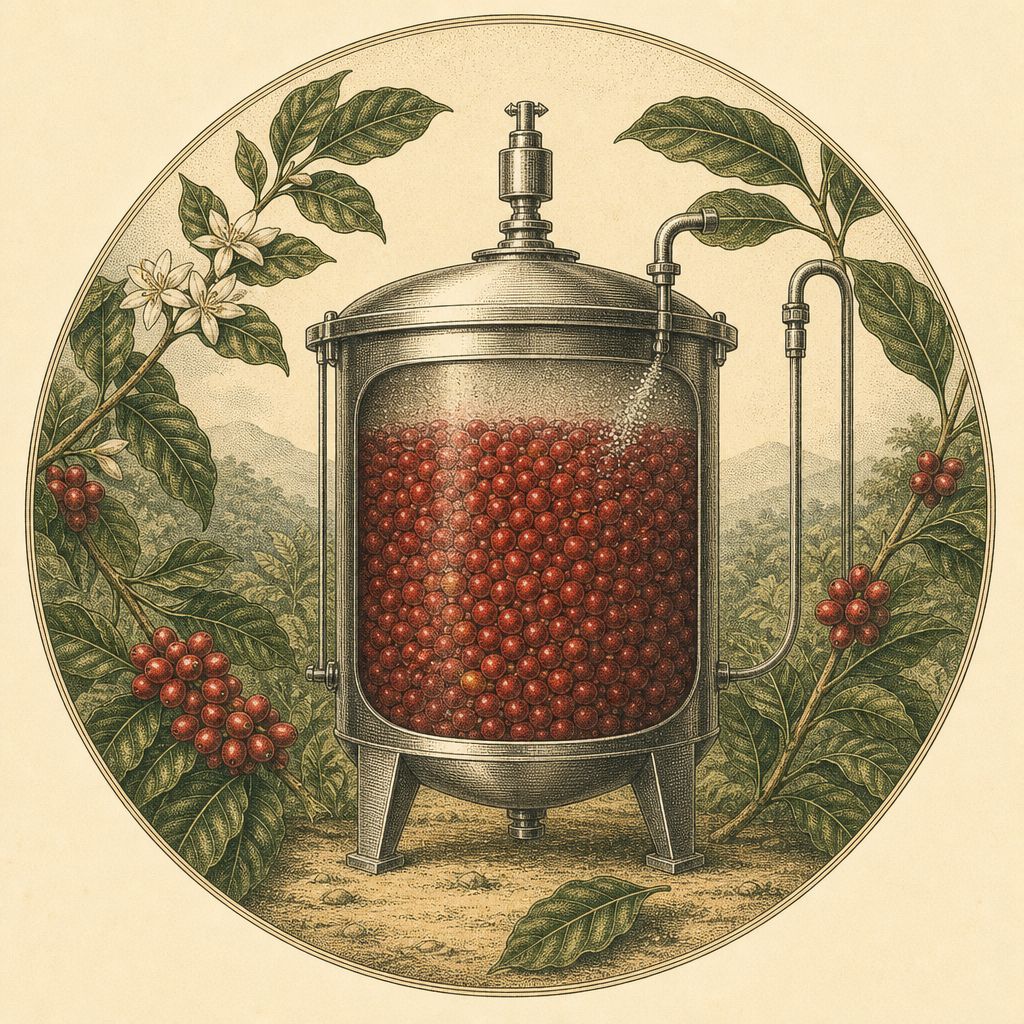
- Place the coffee in a sealed or low-oxygen vessel
- Control fermentation time and temperature
- Finish with a washed, natural, or honey process
- Dry the coffee
Foundation
- Processing You are here
Core
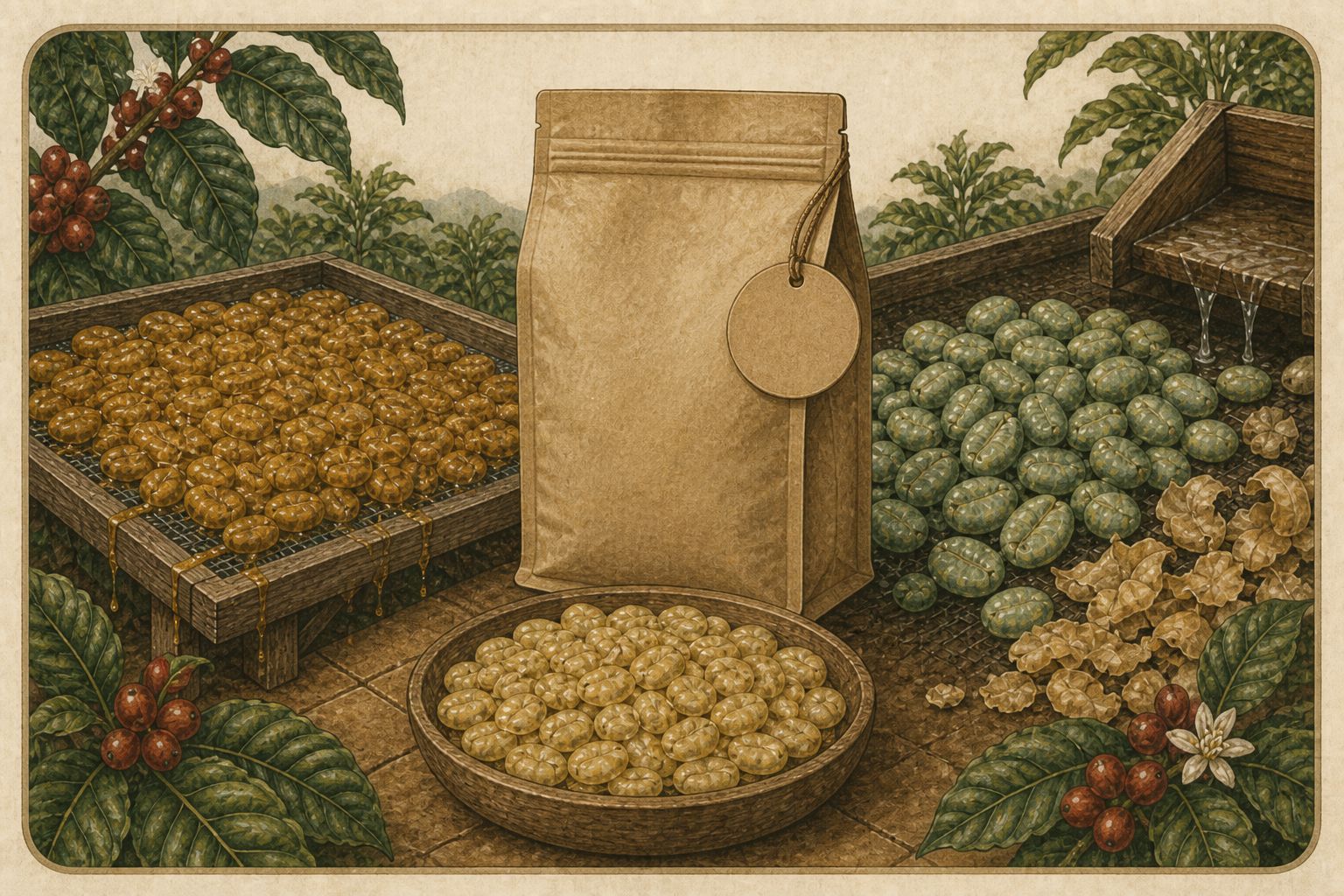
- Honey Process No honey is added—the name refers to the sticky mucilage left during drying.
- Natural Process See what changes when the whole cherry dries around the coffee seeds.
- Pulped Natural A Brazilian name for depulping coffee and drying it with mucilage attached.
- Semi-Washed One label can point to mucilage-on drying, partial demucilaging, or wet hulling.
- Washed Process Learn what is actually washed away and why the cup often tastes clearly defined.
Special and Further Reading
- Anaerobic Process A sealed fermentation stage can intensify flavor before the coffee follows another drying path.
- Carbonic Maceration A winemaking term with two common—and overlapping—meanings in coffee.
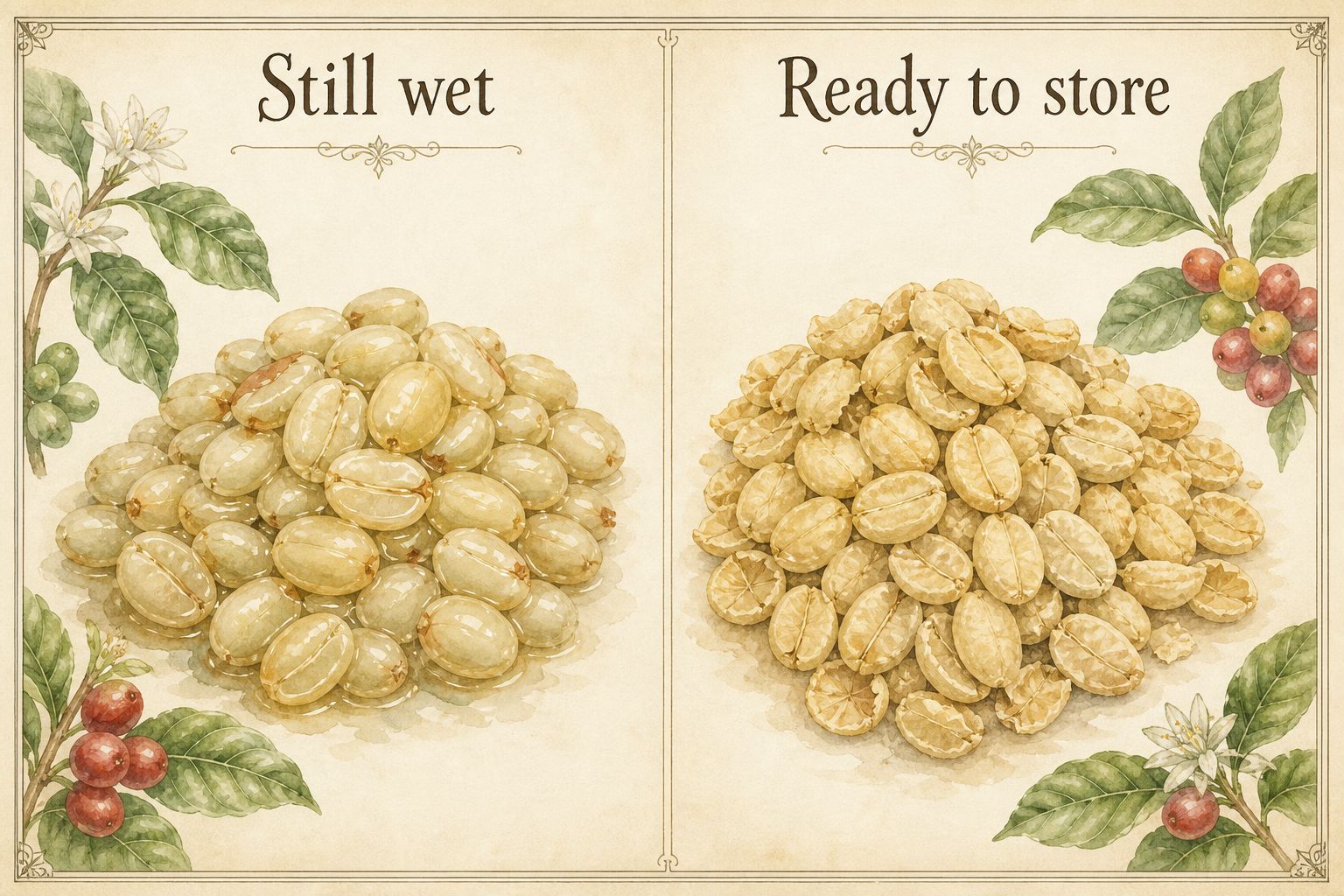
- Coffee Drying How drying affects storage, and how airflow differs between raised beds and patios.
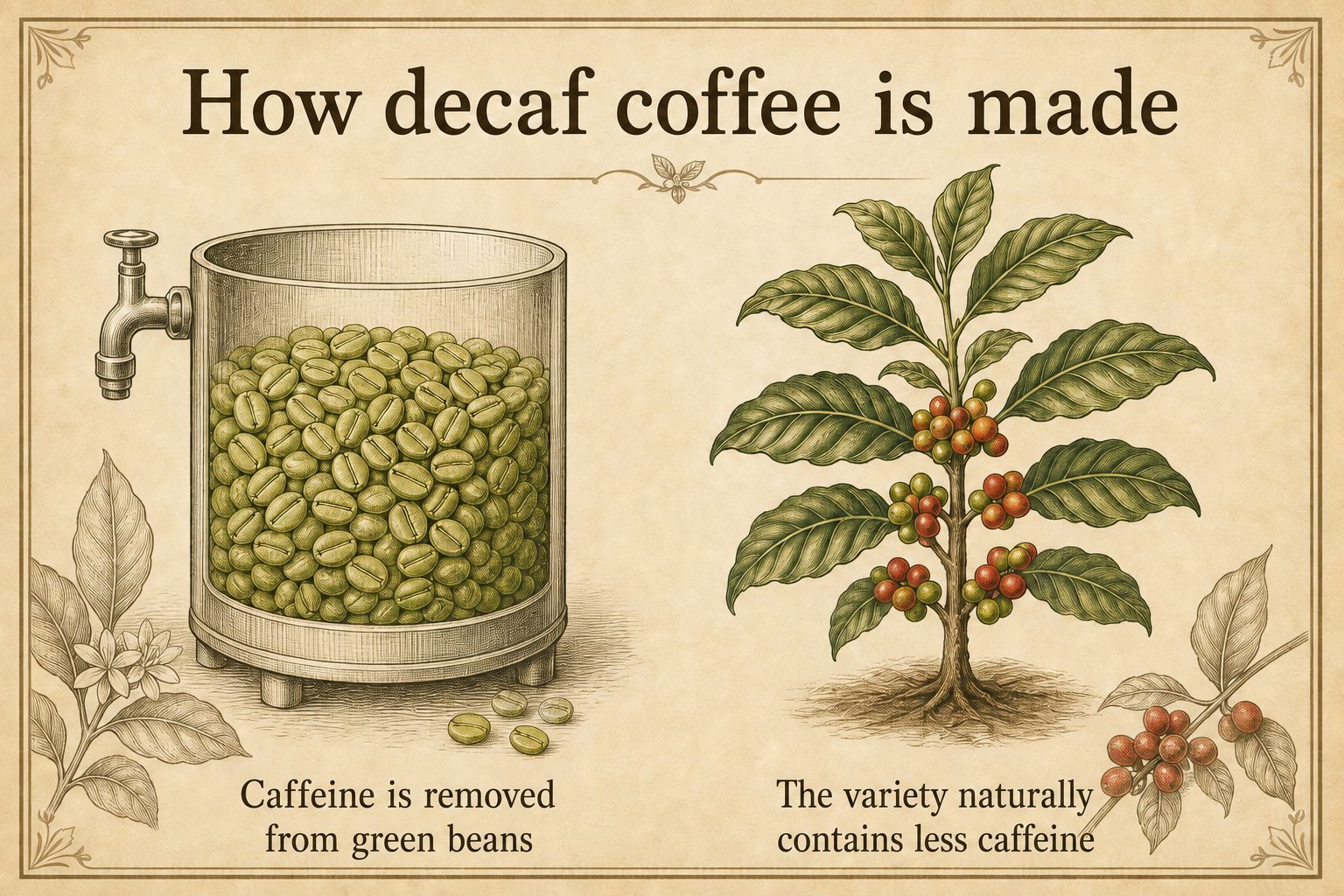
- Decaf Coffee How caffeine is removed from green coffee, and how that differs from naturally low-caffeine varieties.
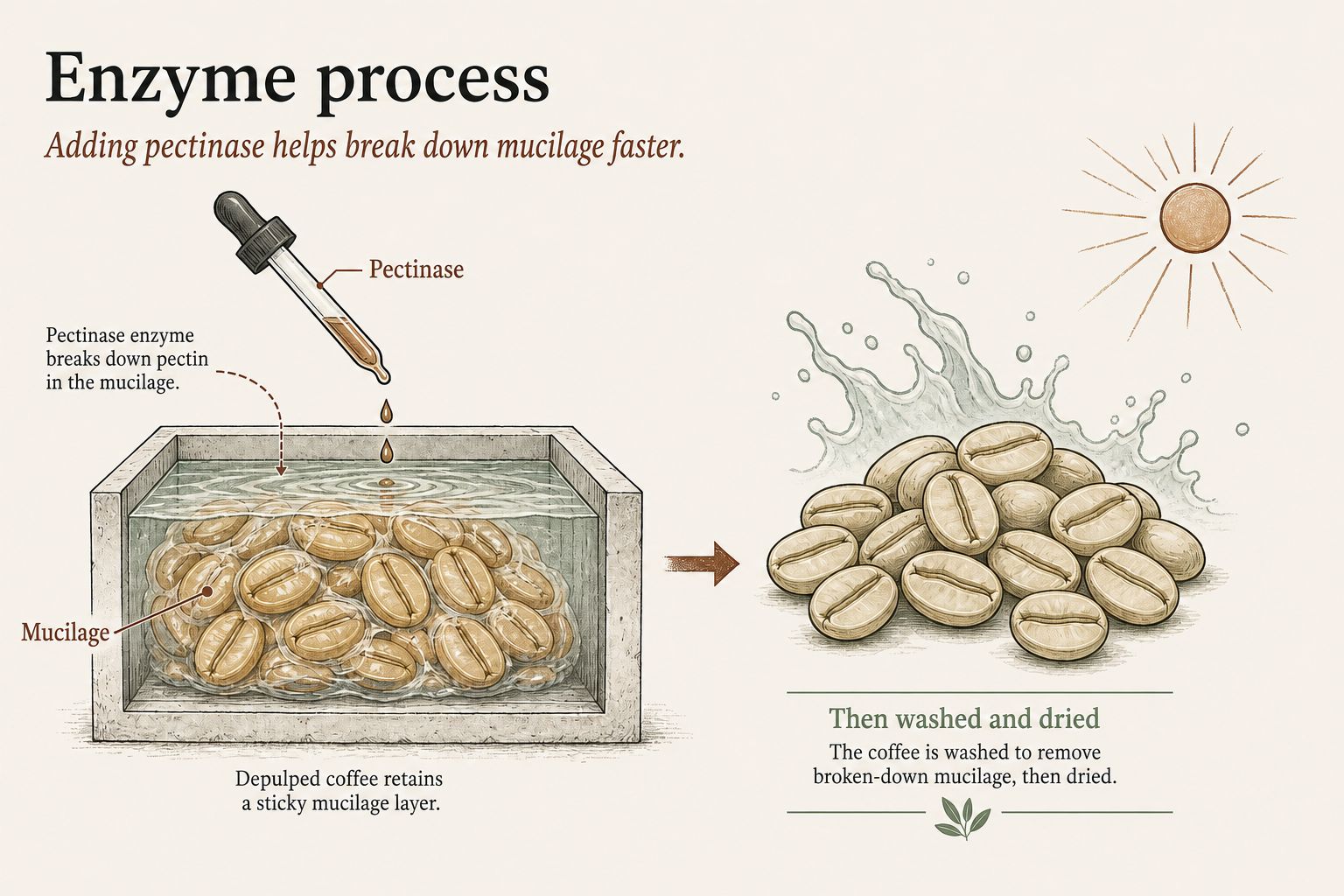
- Enzyme Process Added enzymes accelerate mucilage breakdown, serving a different purpose from anaerobic fermentation.
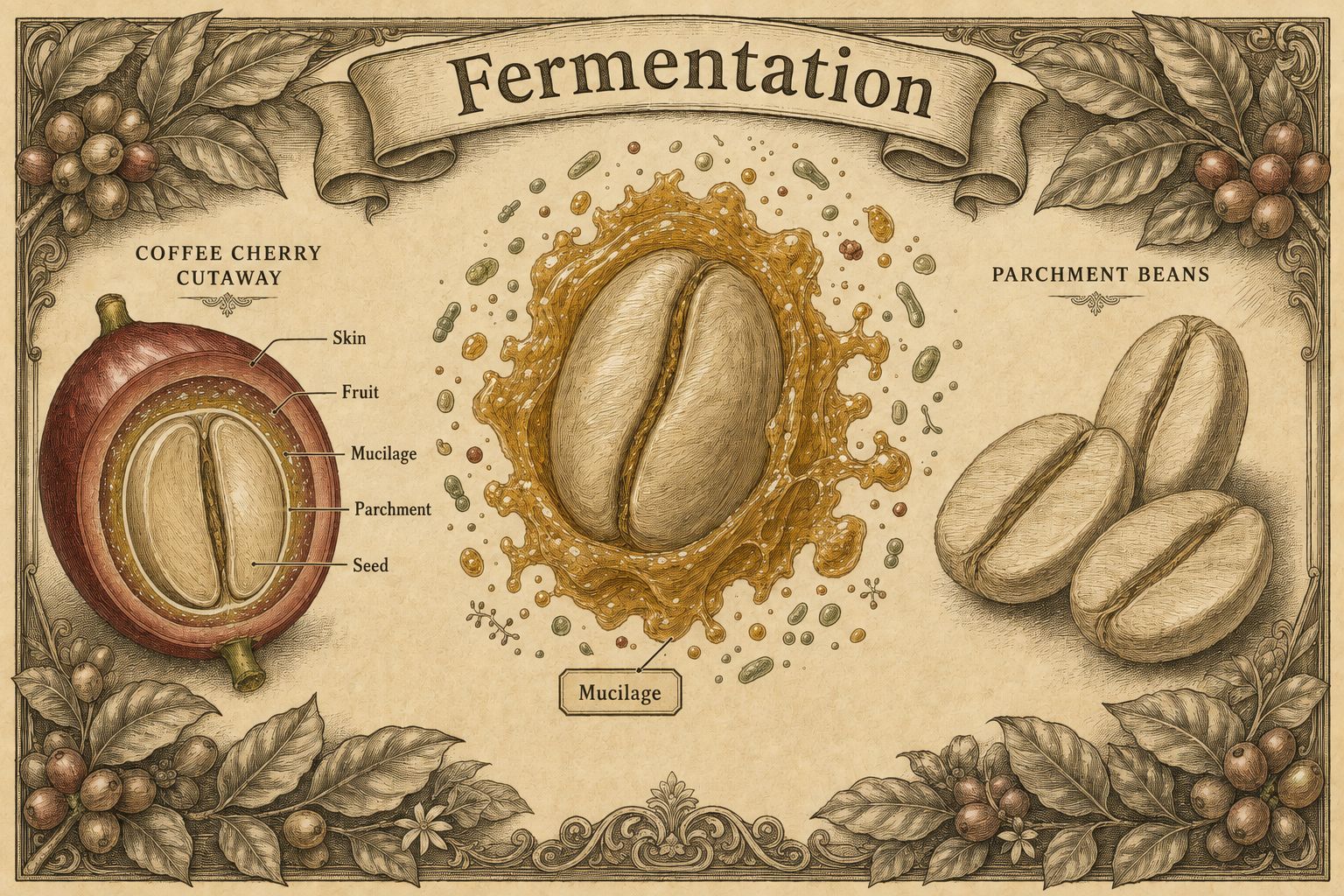
- Fermentation Microbes break down mucilage, while fermentation conditions and duration influence quality.
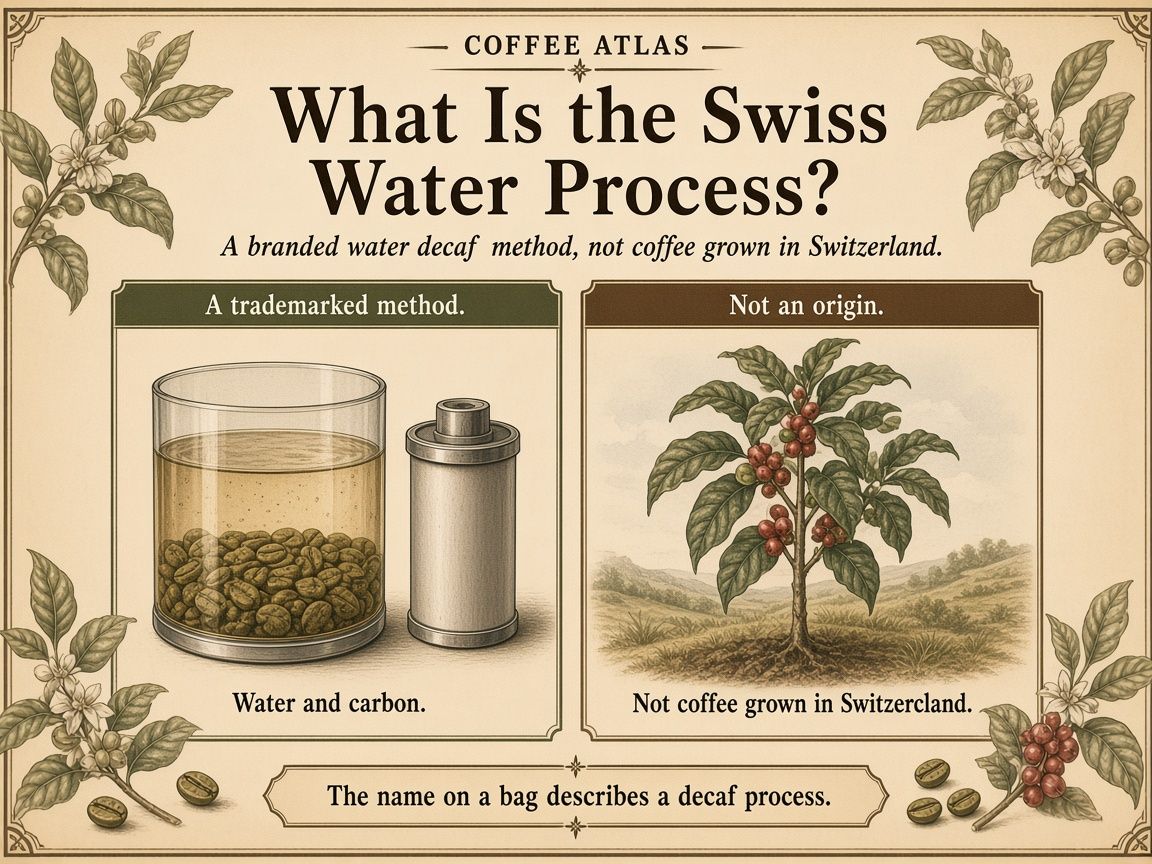
- Swiss Water Process How this trademarked water decaf works, and what the name on a bag can and cannot tell you.
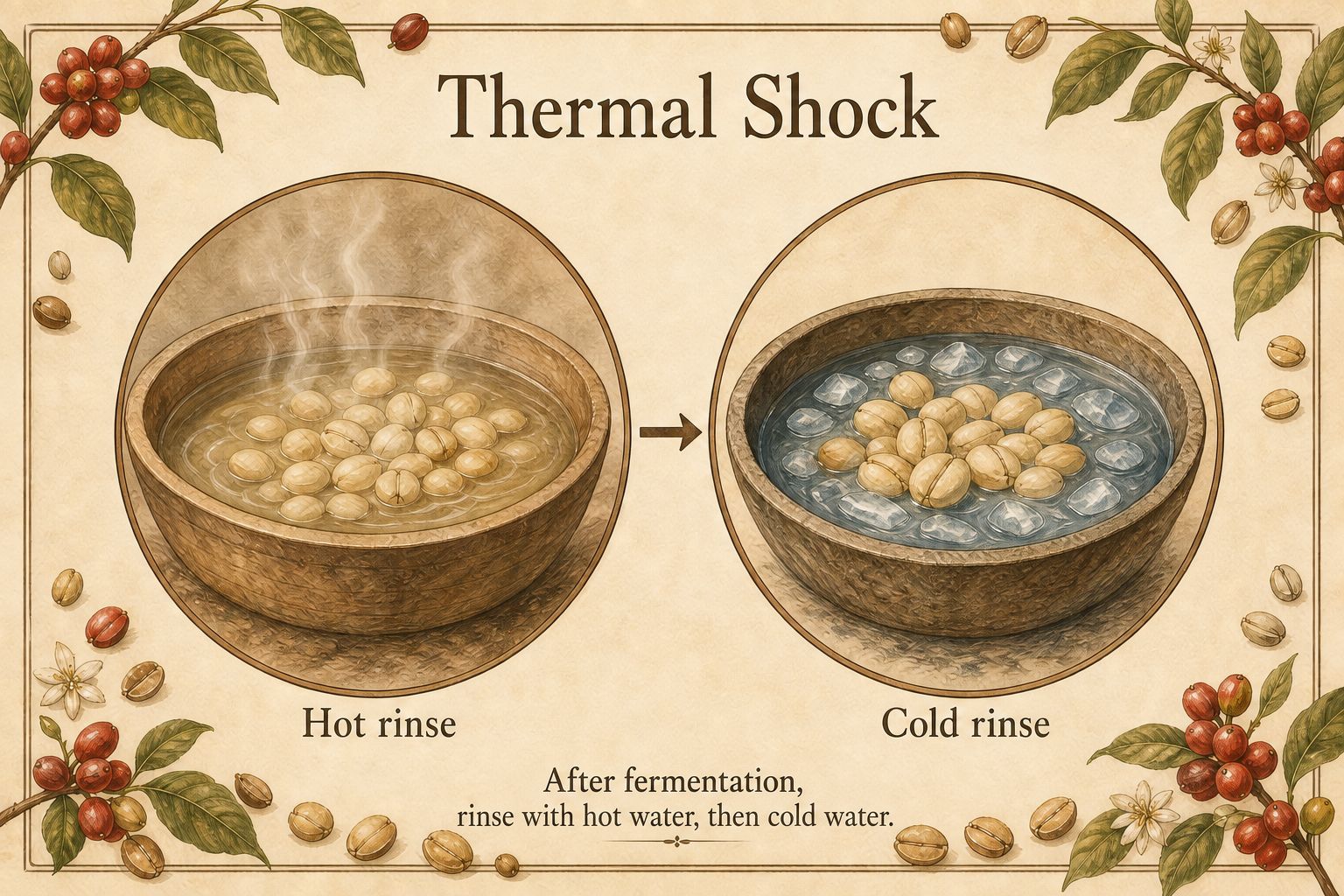
- Thermal Shock A hot-then-cold rinse, often after fermentation.
- Wet-Hulled Coffee The parchment comes off early, and the exposed green coffee finishes drying afterward.