Varieties
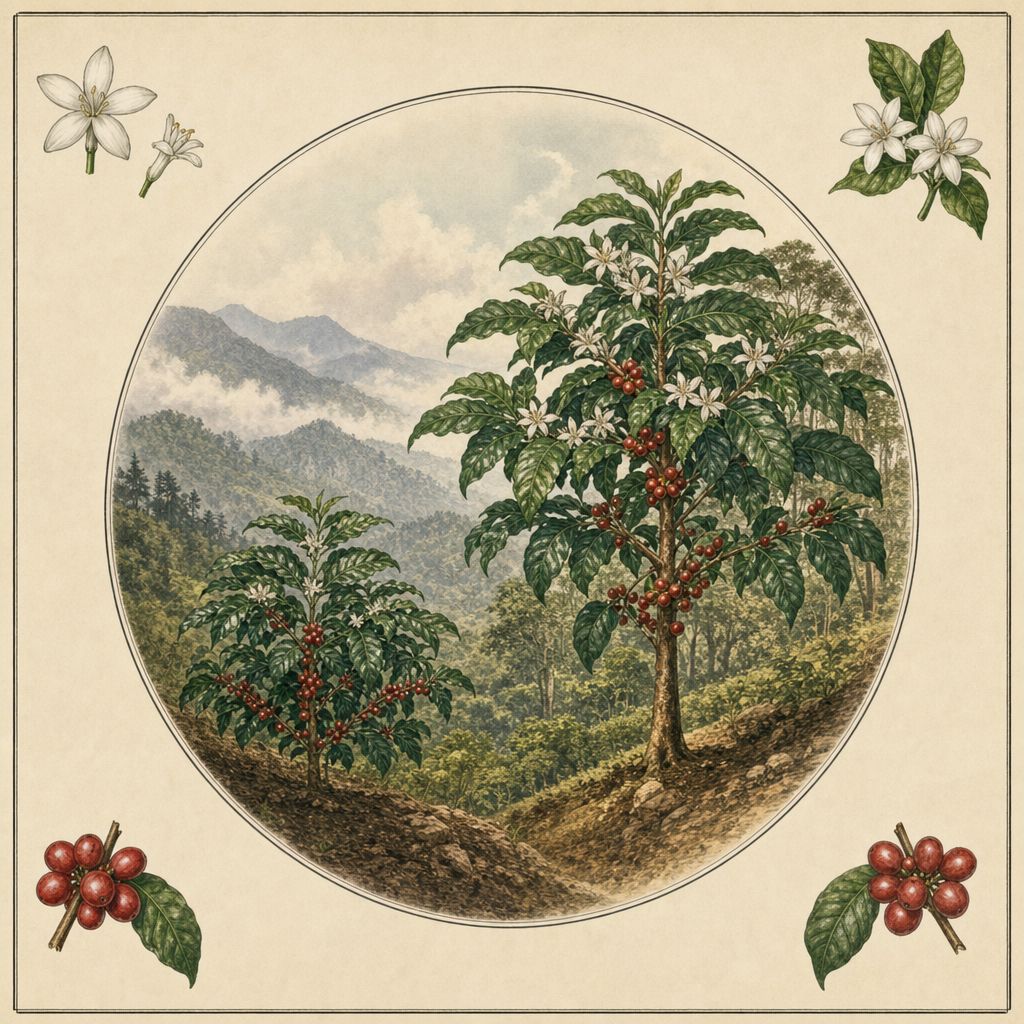
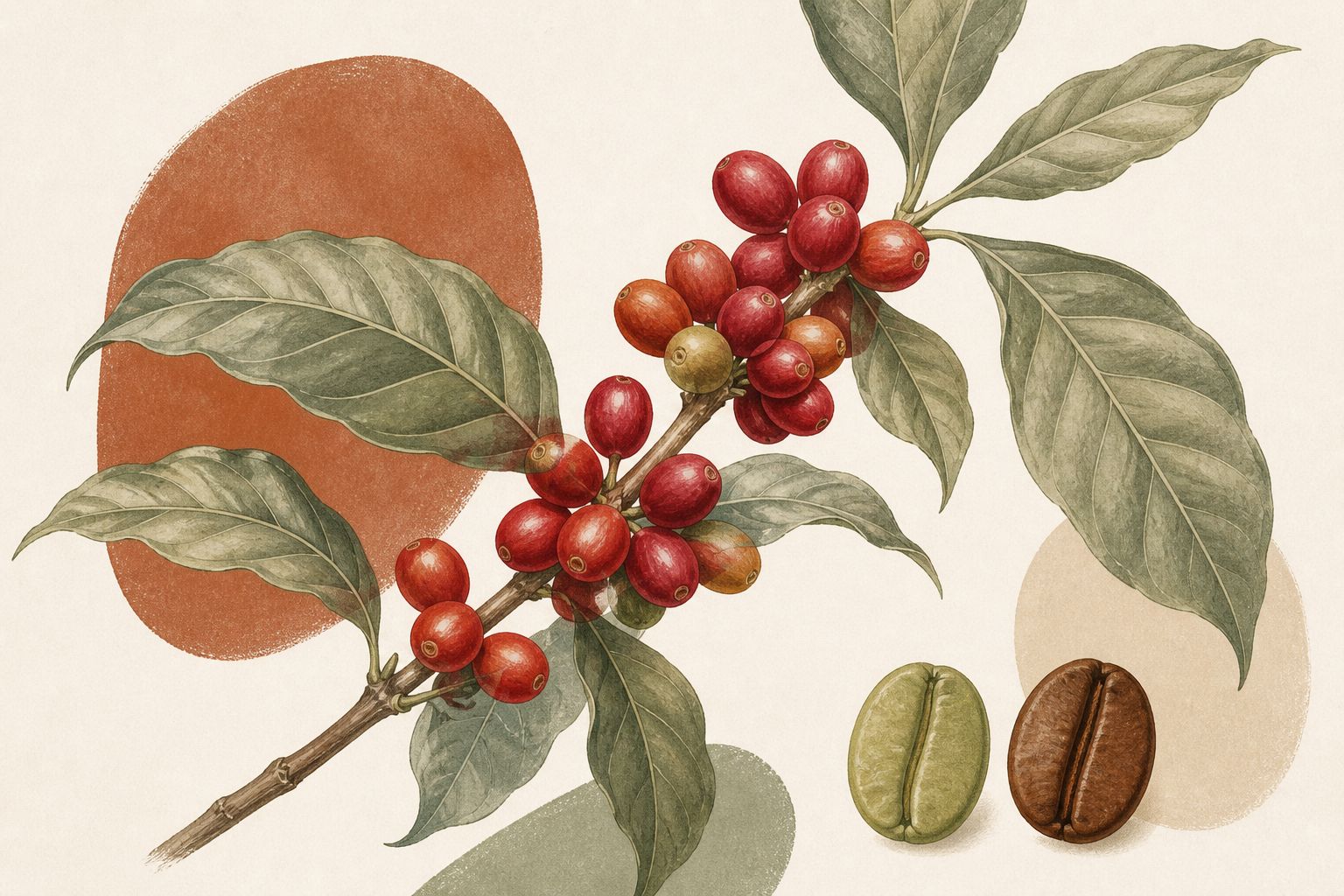
Varieties connect coffee flavor to plants and genetics.
Names such as Gesha and Typica identify plant material, not guaranteed flavor profiles. Learn a few major varieties first, then connect genetics with origin, farming, processing, and roasting.
Foundation
- Coffee Varieties You are here
Core
- Arabica vs. Robusta Compare the plants, caffeine ranges, common uses, and quality potential.
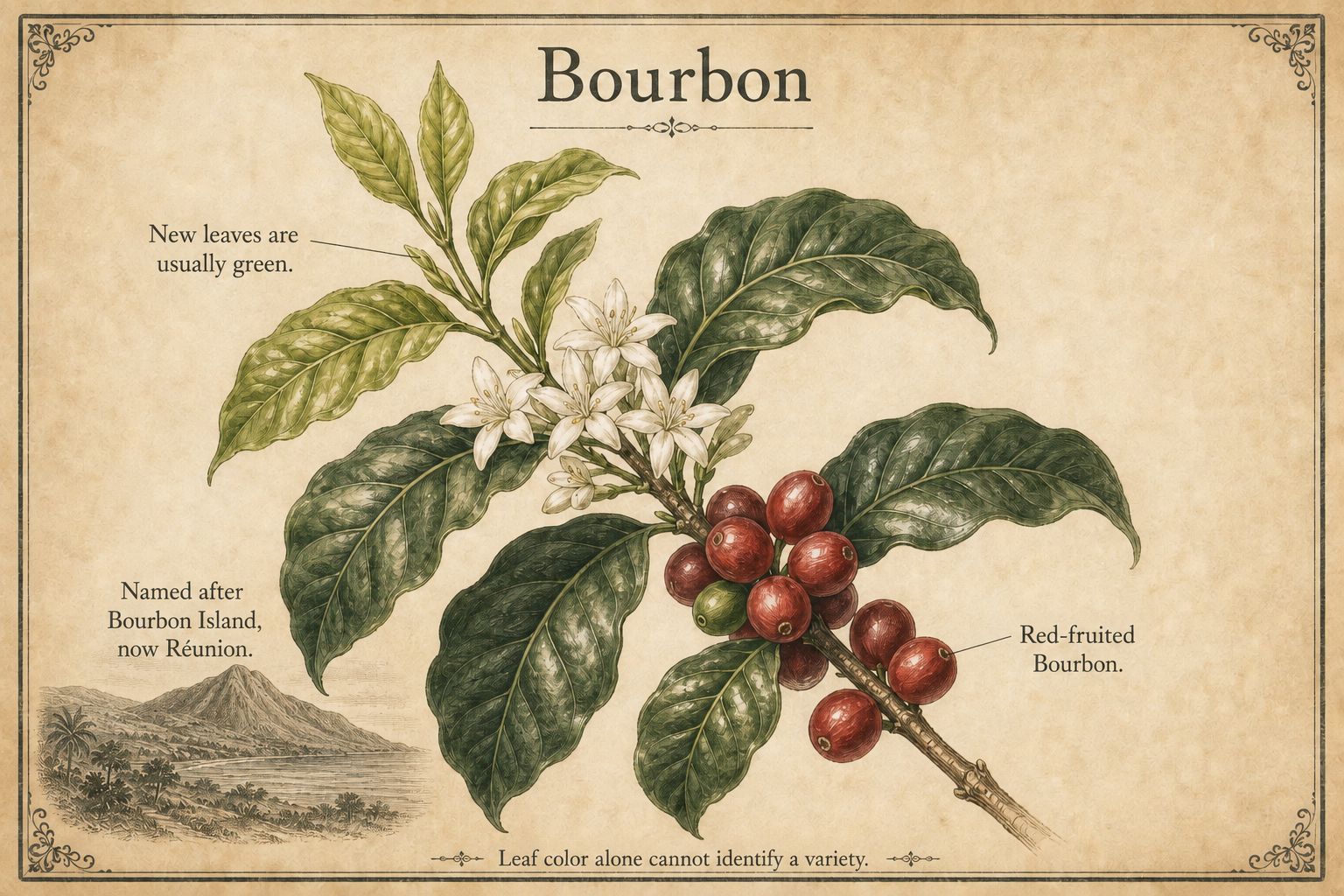
- Bourbon Learn how a Yemeni coffee population took root on Réunion and spread worldwide.
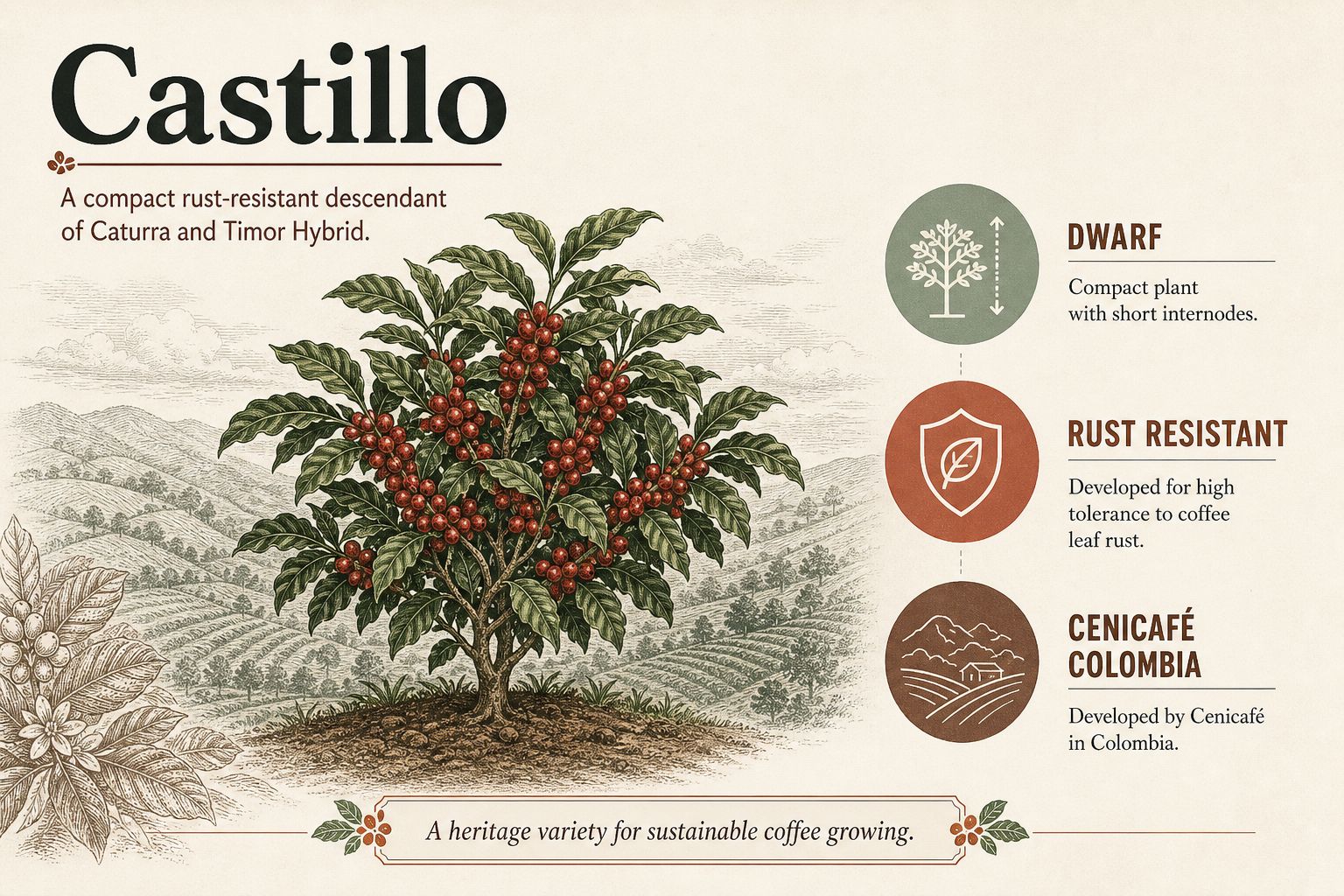
- Castillo A composite variety bred from Caturra and Timor Hybrid, combining compact growth with resistance to coffee leaf rust.
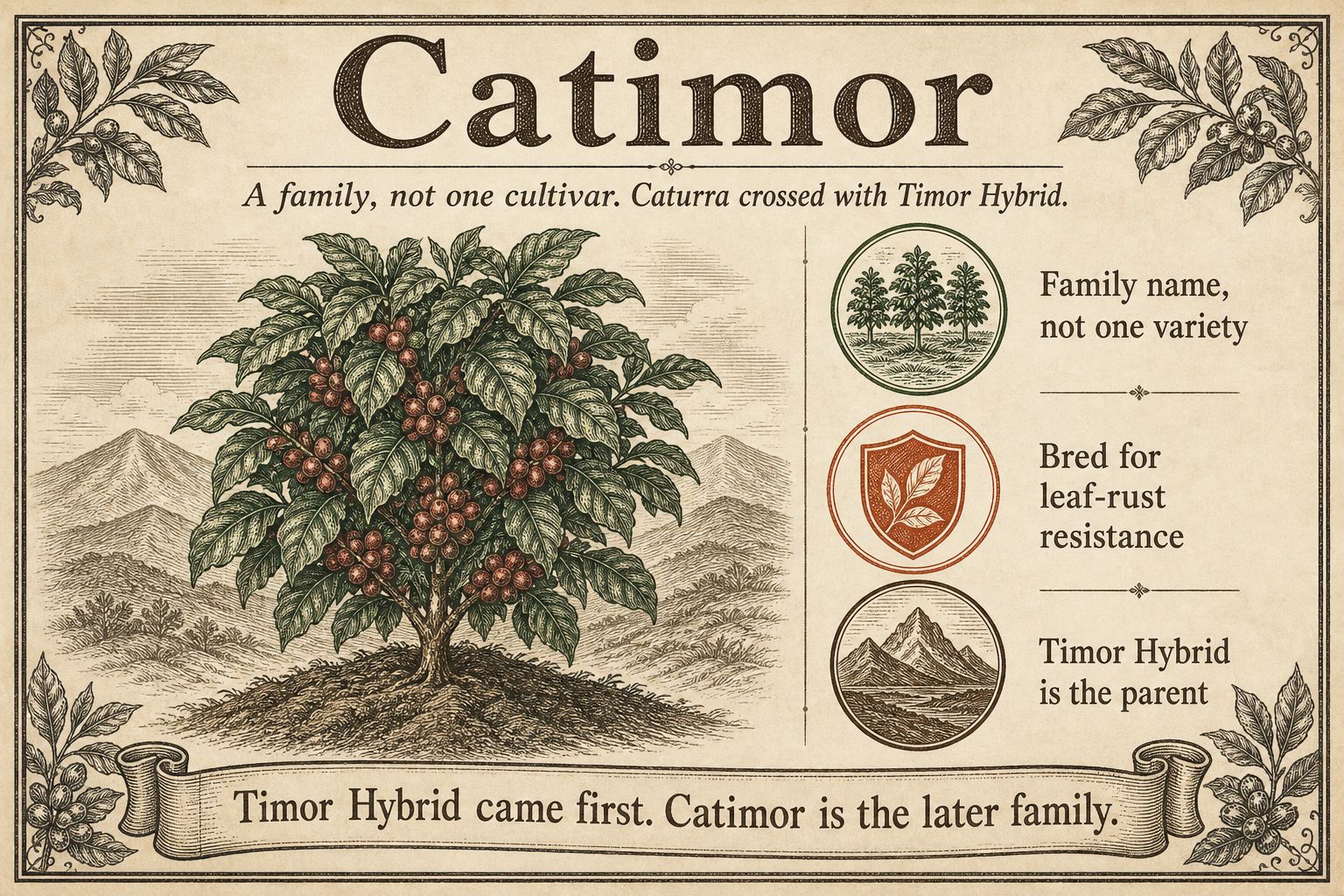
- Catimor / Timor Hybrid Learn about Timor Hybrid’s natural cross and why Catimor refers to a family of varieties rather than a single cultivar.
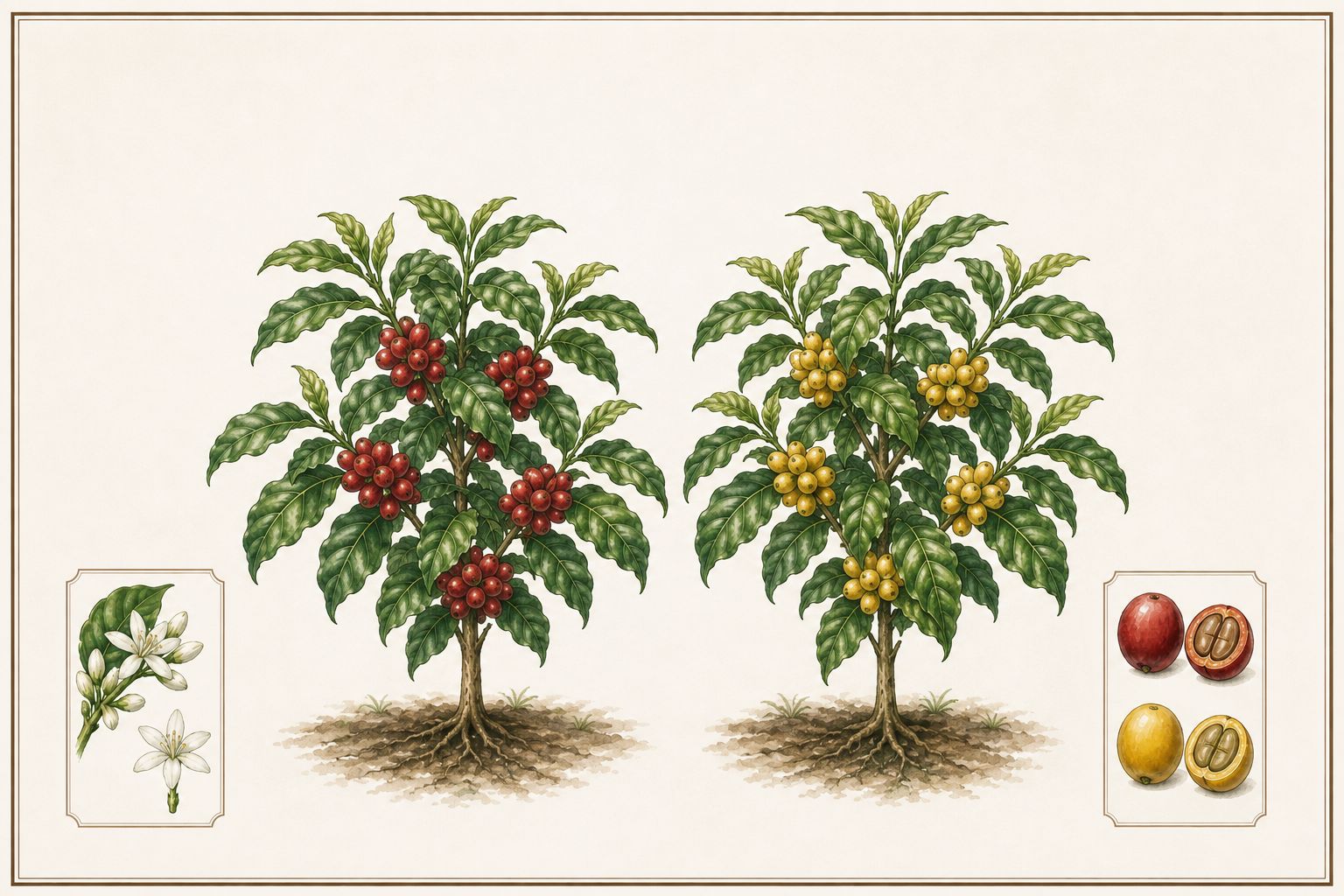
- Catuai A compact Mundo Novo × Caturra cross with red- and yellow-fruited selections.
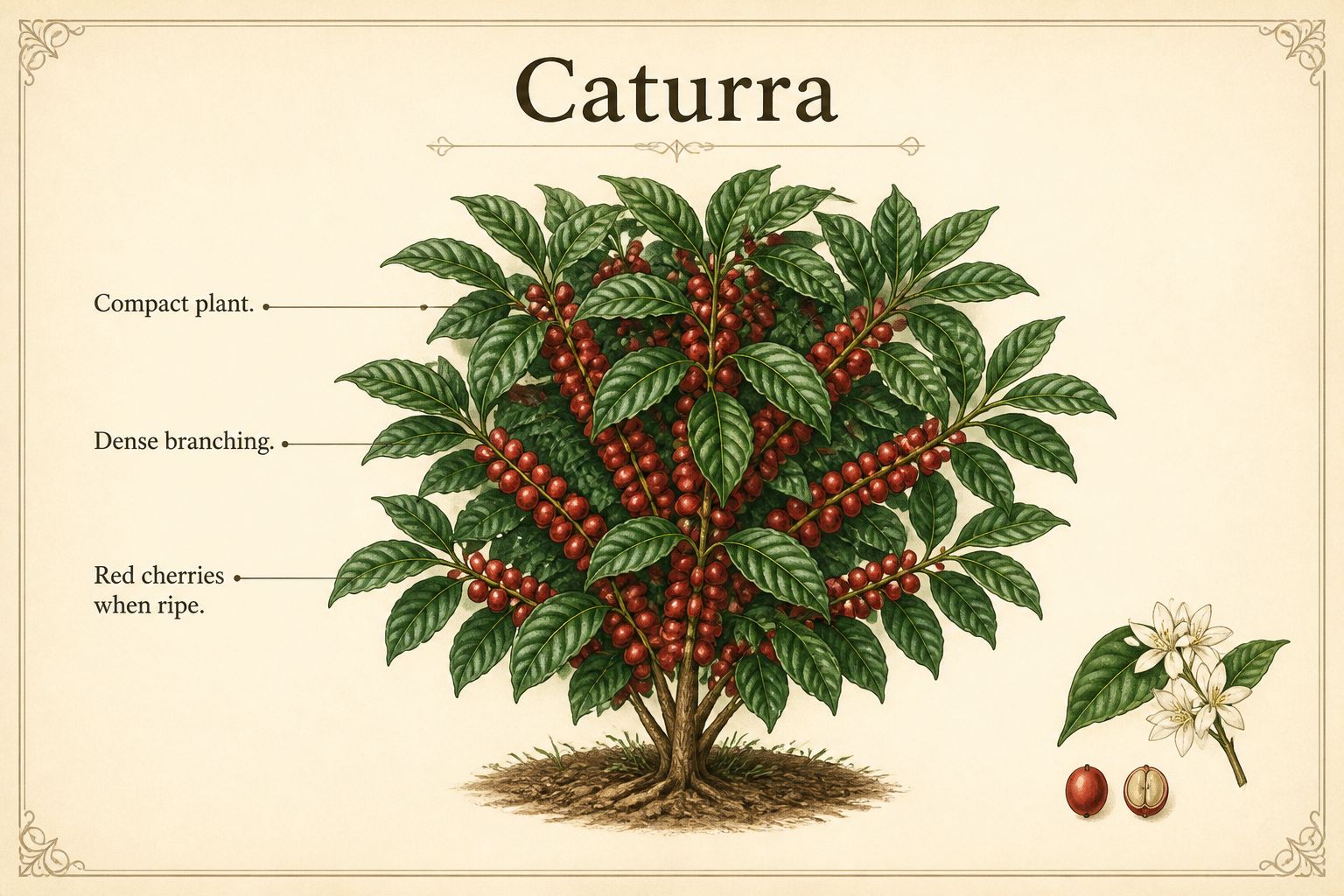
- Caturra A compact Bourbon mutation that became central to Latin American coffee farming.
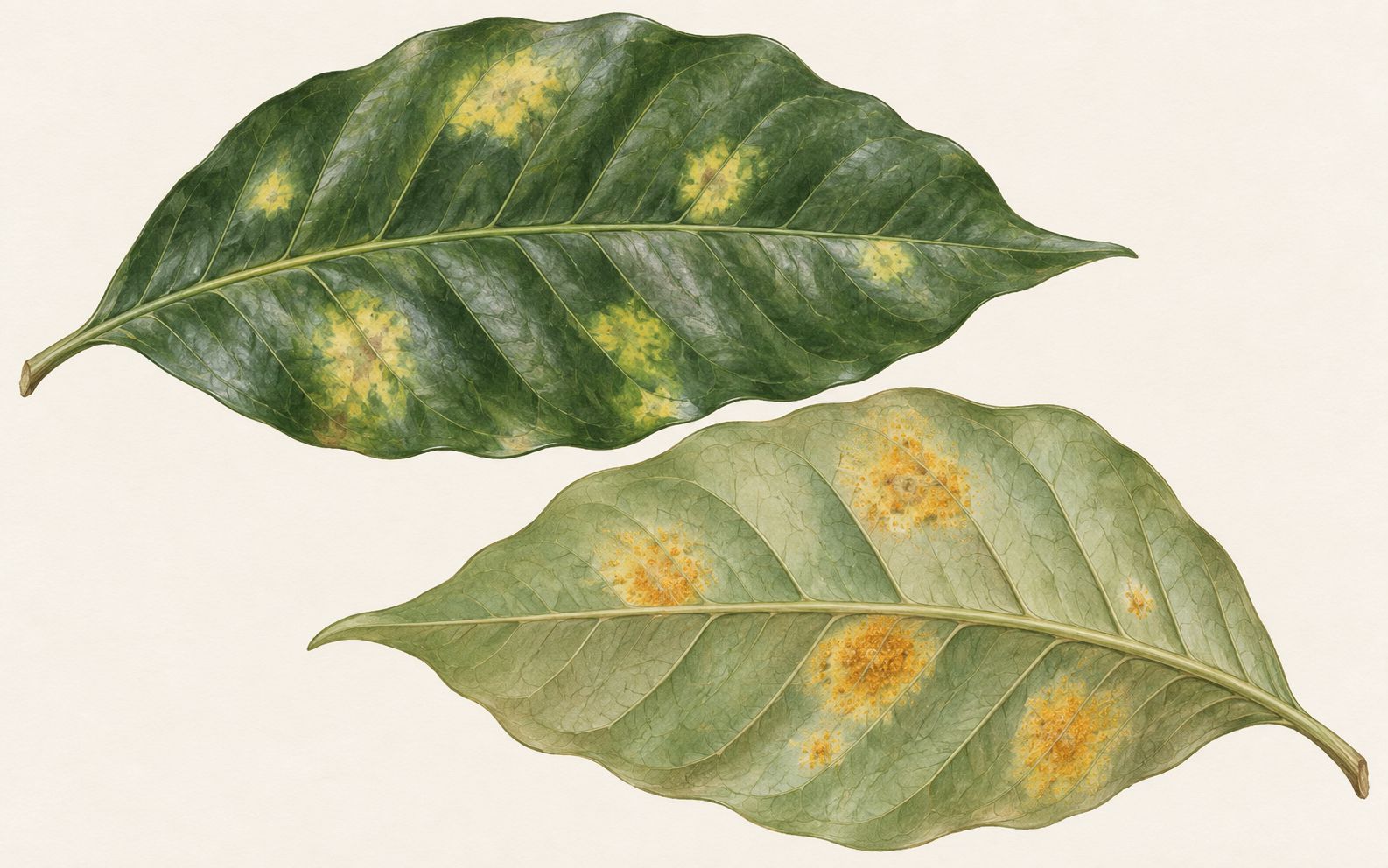
- Coffee Leaf Rust Recognize the leaf symptoms and understand what rust resistance means for a coffee variety.
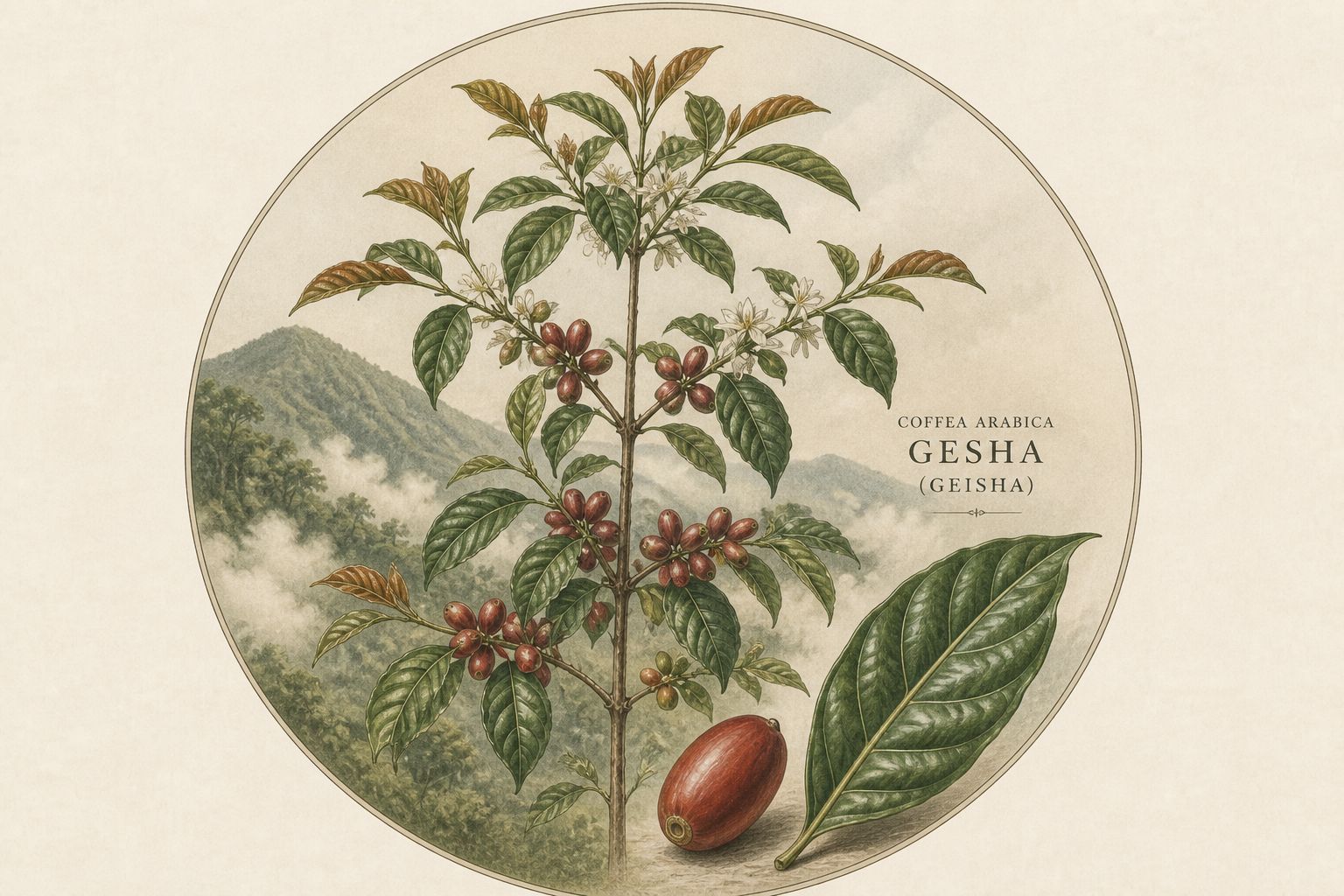
- Gesha / Geisha Trace the Ethiopian landrace behind Panama's celebrated floral coffee.
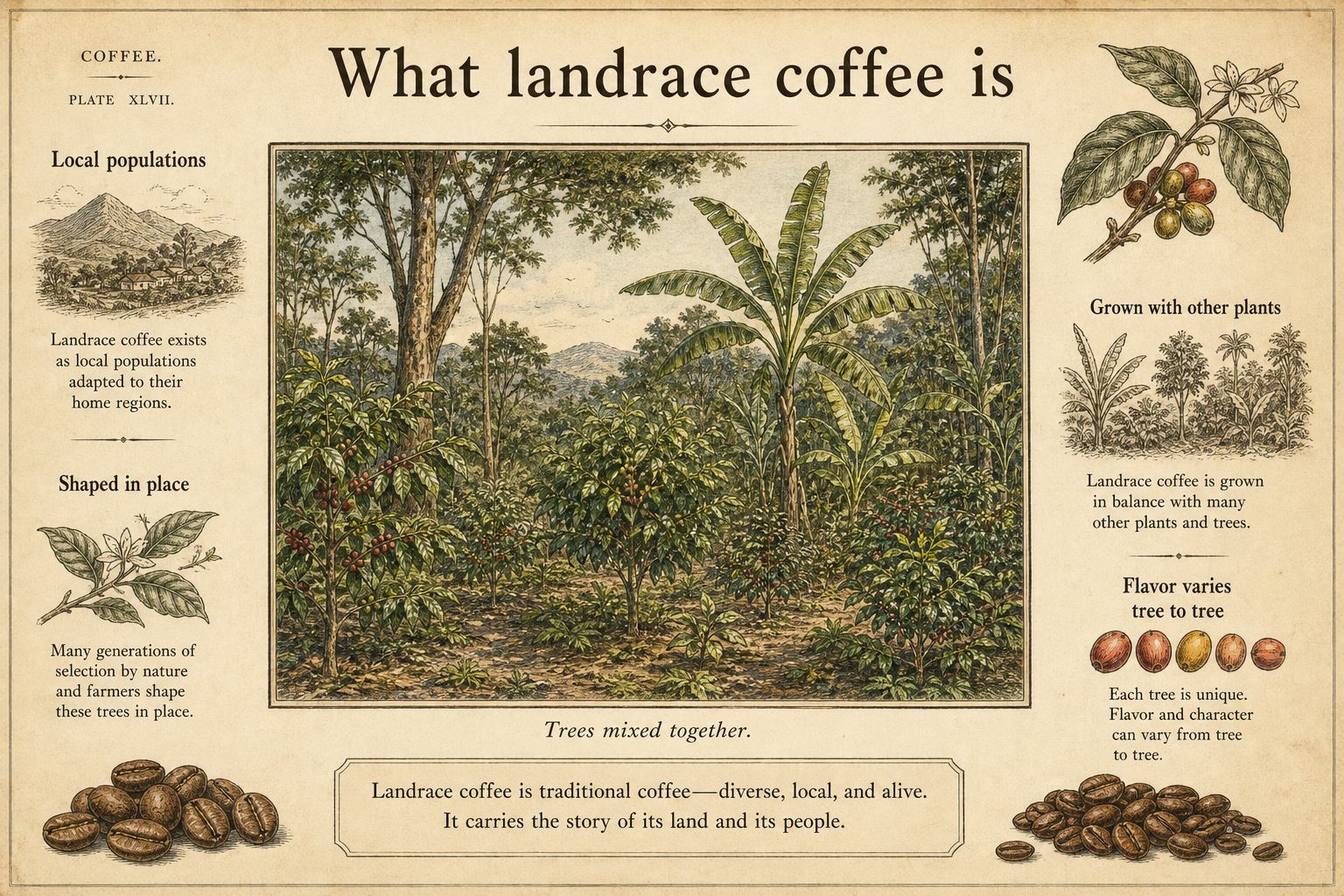
- Landrace / Heirloom Learn why these labels often describe a diverse local population, not one variety.
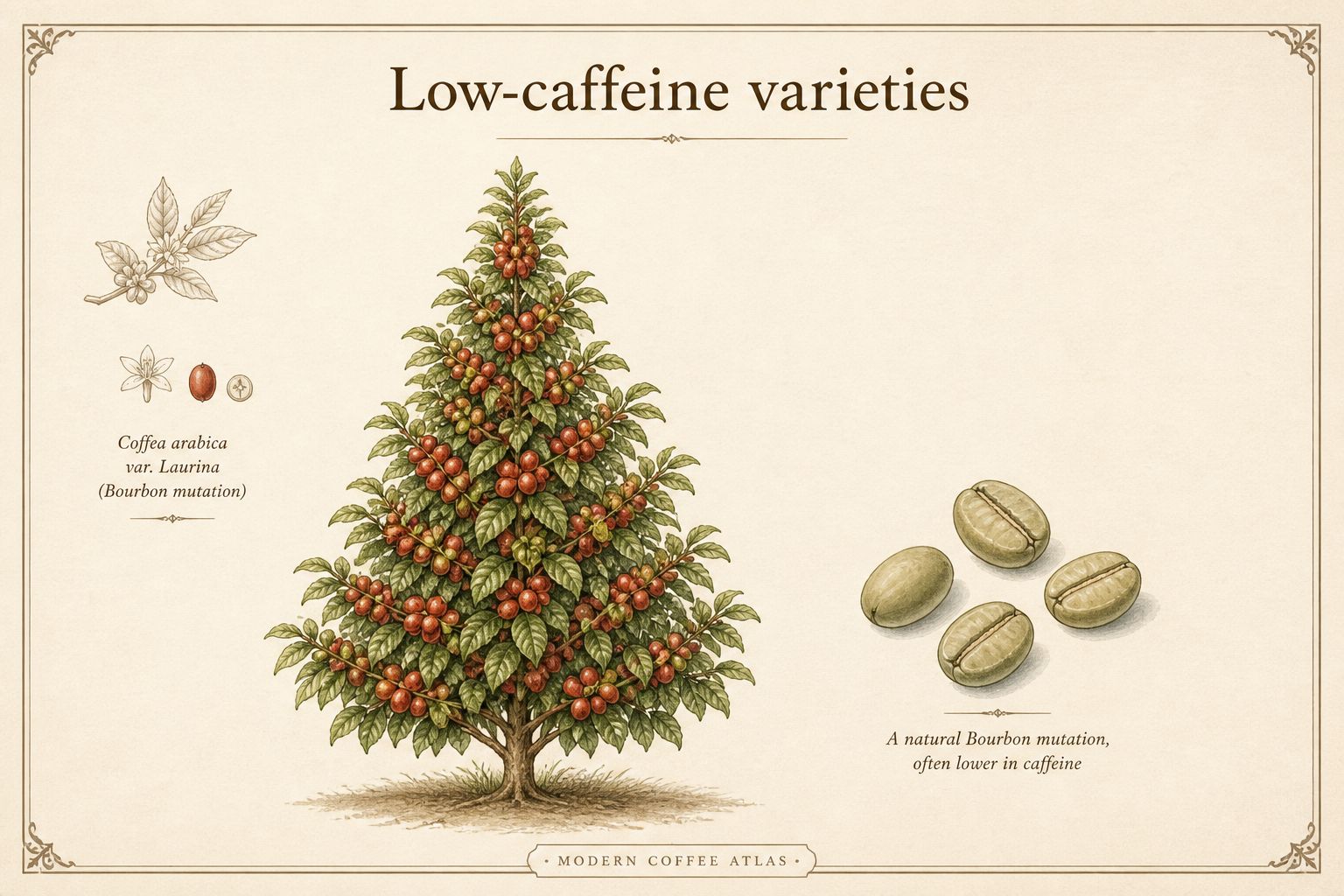
- Low-Caffeine Varieties Meet naturally low-caffeine varieties such as Laurina and learn how they differ from decaf coffee.
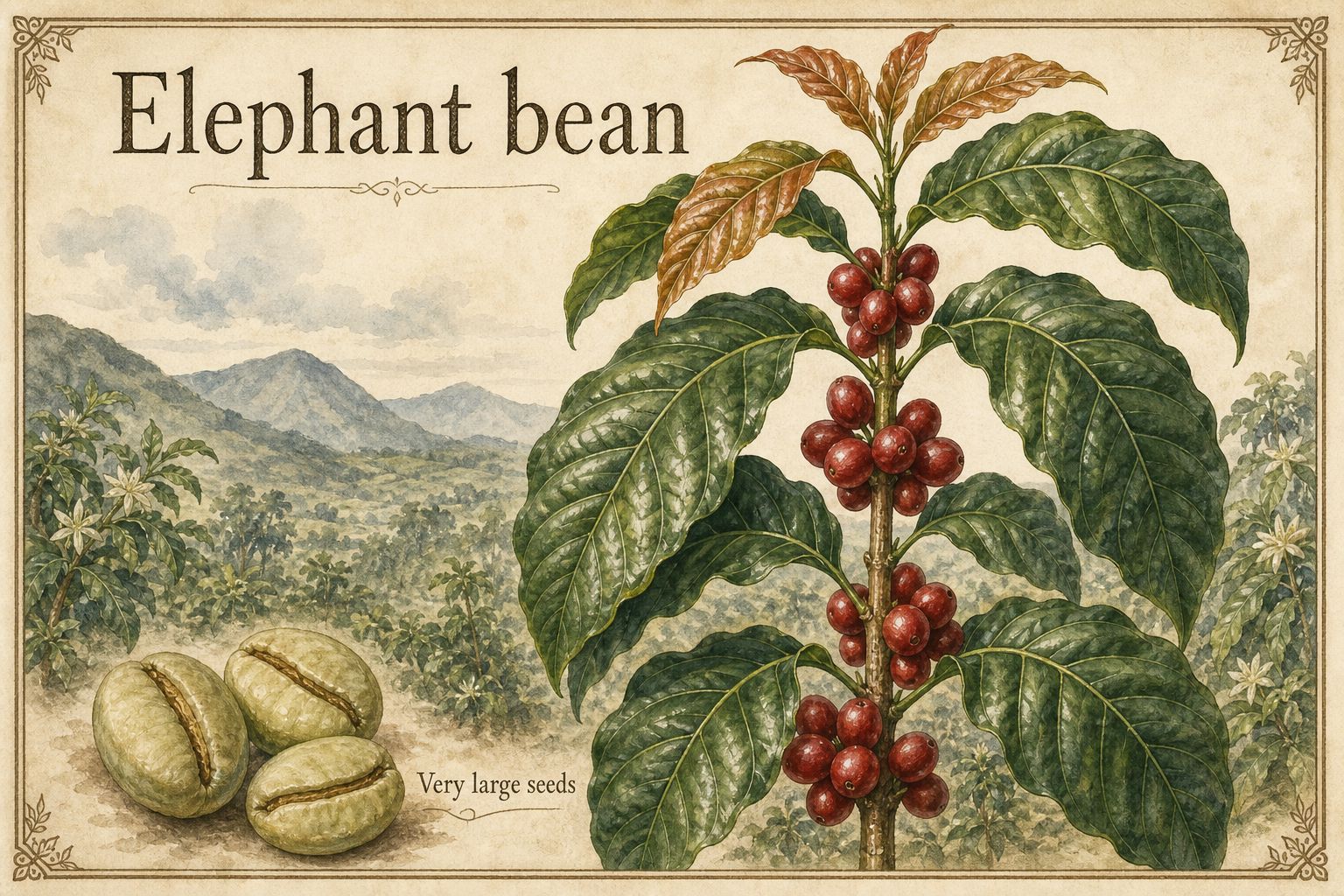
- Maragogipe A tall Typica mutation with very large beans and one parent of Pacamara.
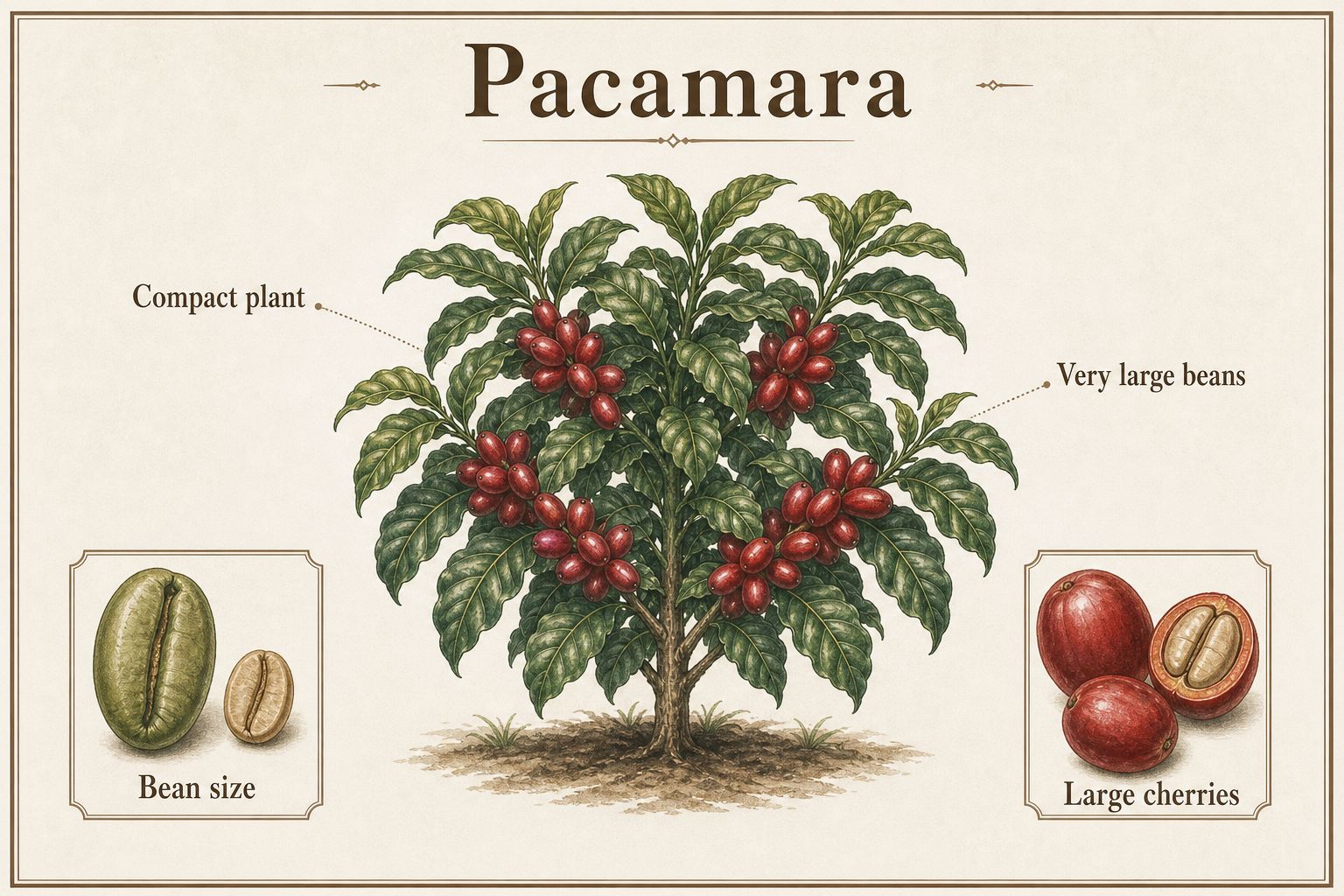
- Pacamara A Pacas × Maragogipe cross that combines a compact plant with very large beans.
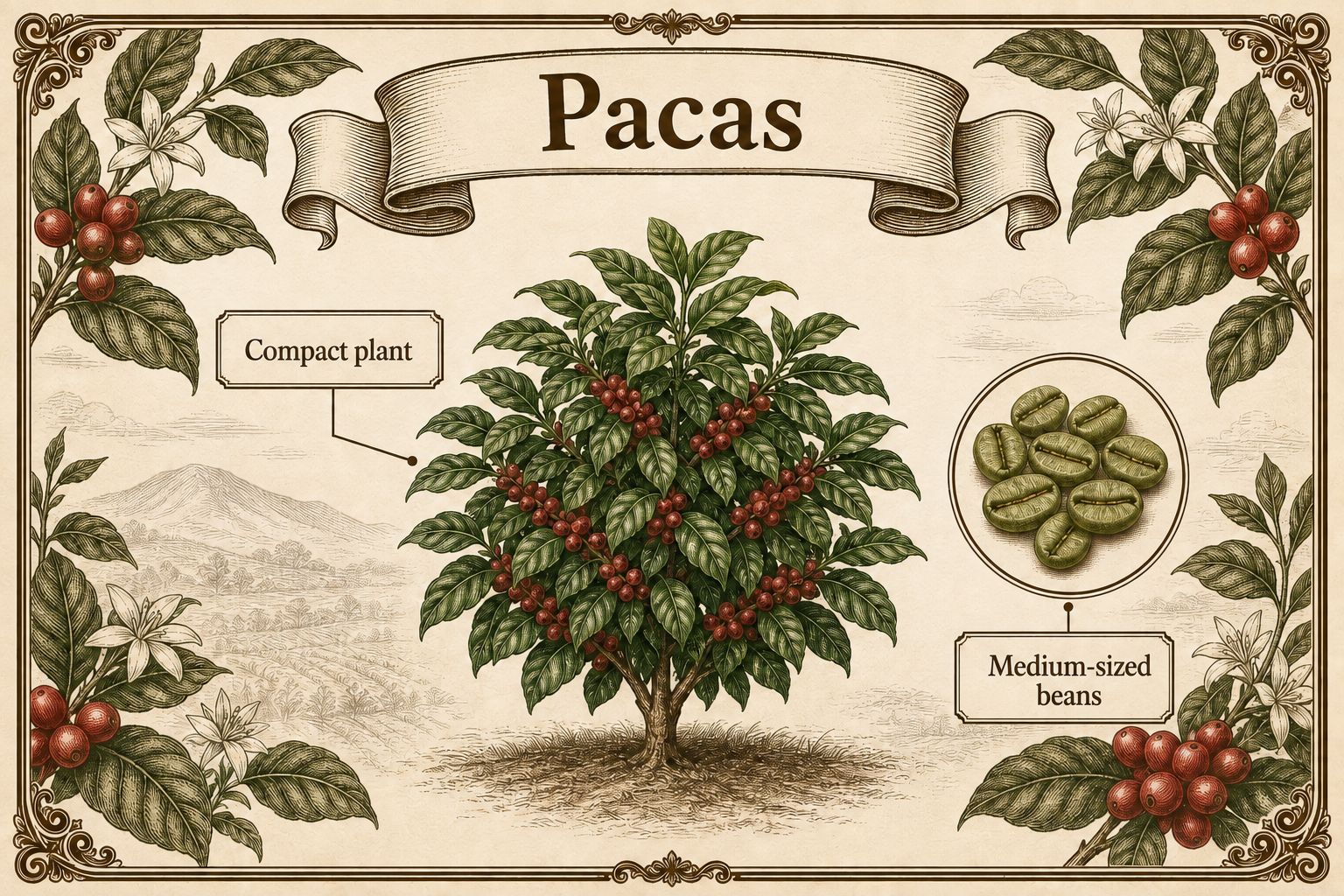
- Pacas A compact Bourbon mutation with medium-sized beans and one of Pacamara’s parents.
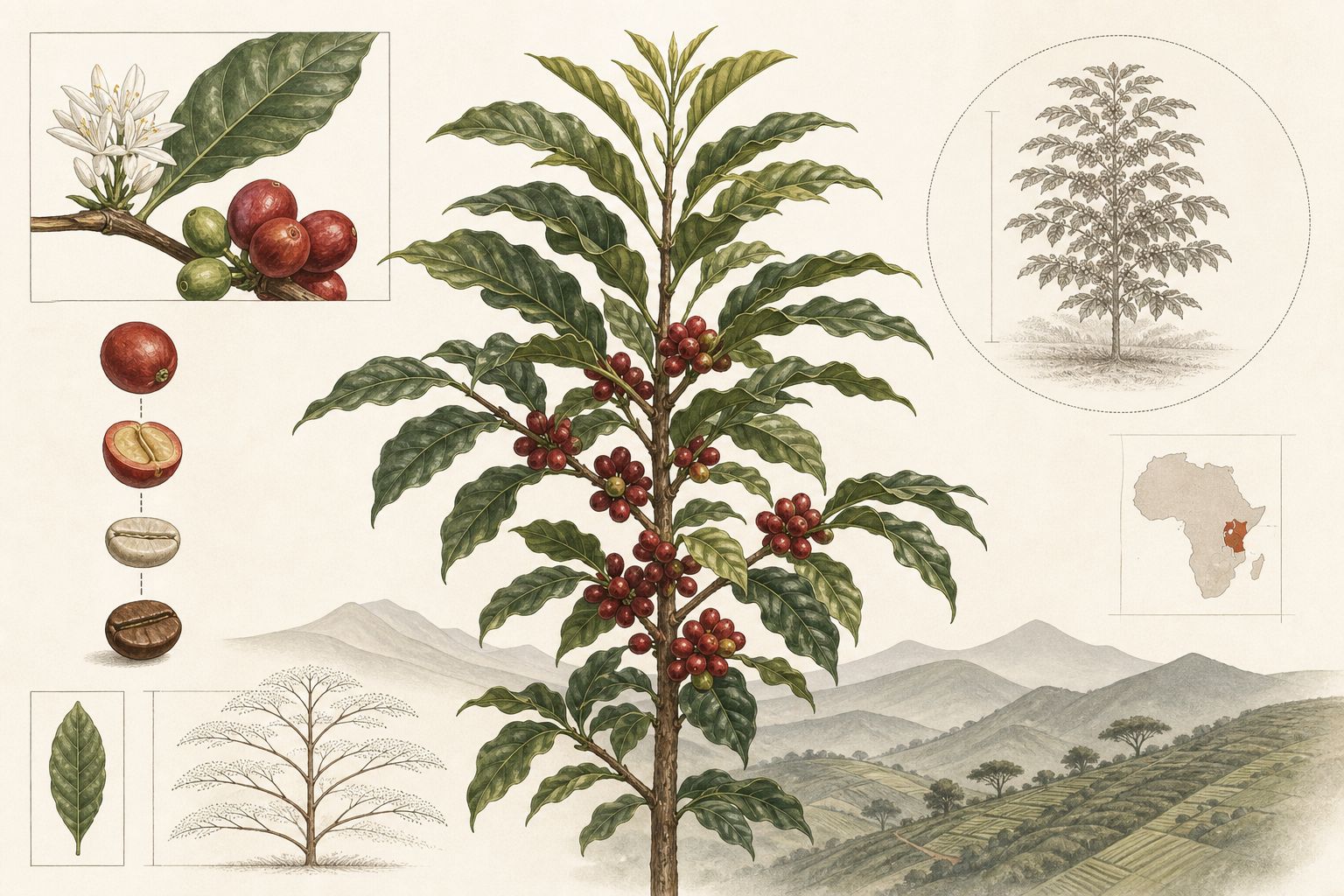
- SL28 Meet the drought-tolerant variety behind many classic Kenyan coffee profiles.
- Typica Follow one of arabica's major lineages from Java to the Americas.
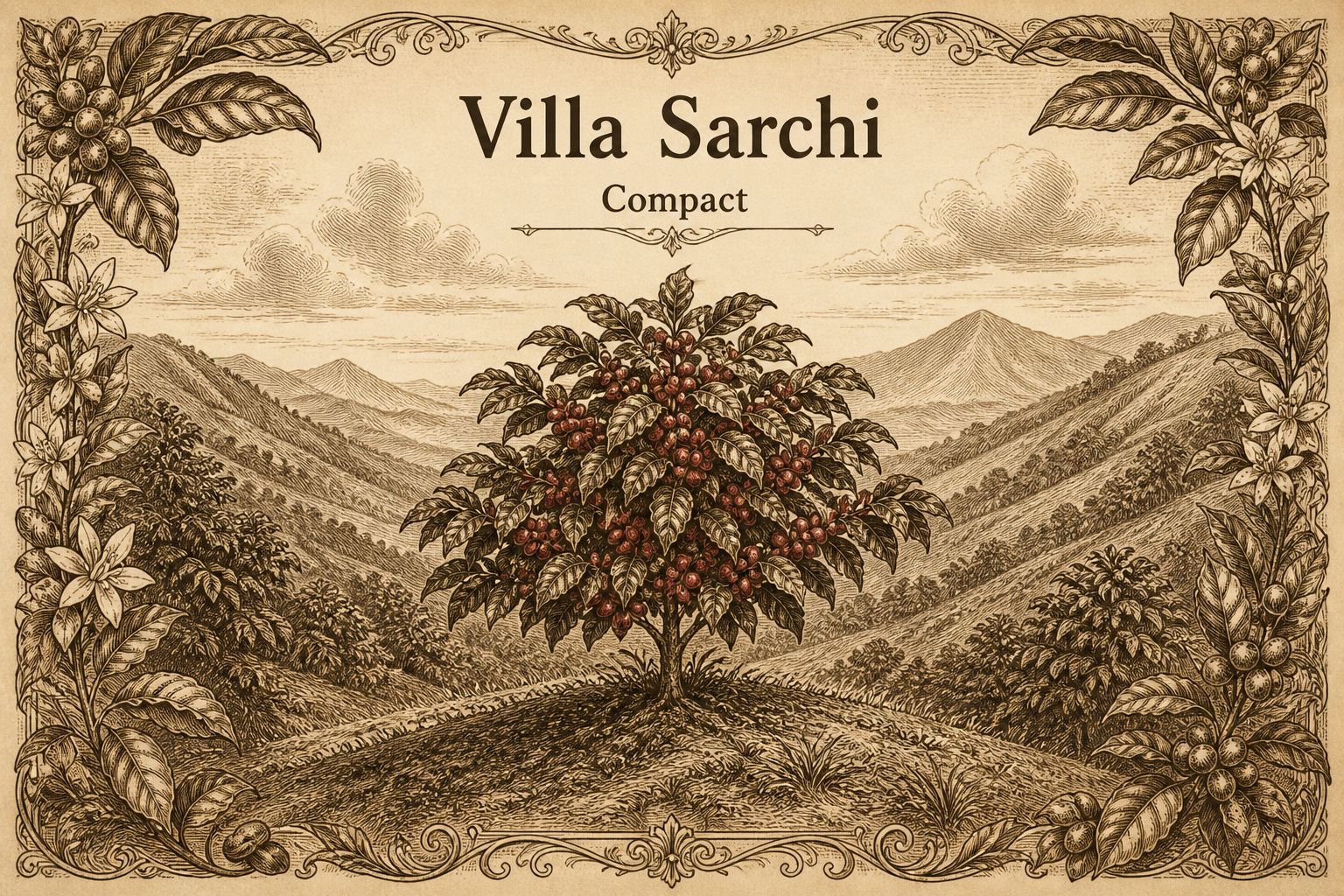
- Villa Sarchi A Costa Rican dwarf Bourbon mutation related to the separately discovered Pacas and Caturra.