Origins
Origin gives coffee its growing context.
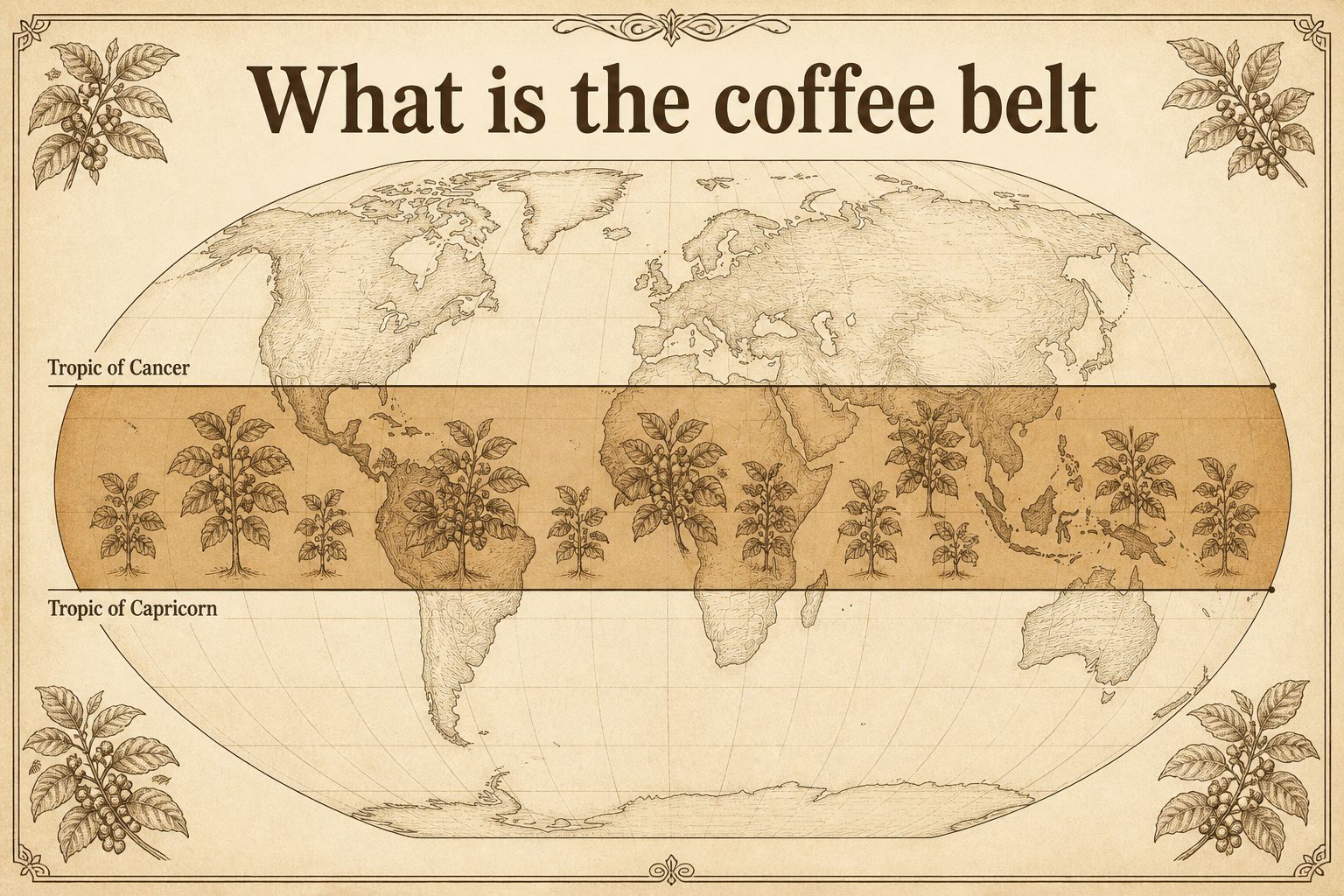
Elevation, varieties, harvest cycles, processing traditions, and producer decisions all shape coffee from a region. Start with the coffee belt, then use country guides as orientation, not as promises that every lot will taste alike.
Foundation
Core
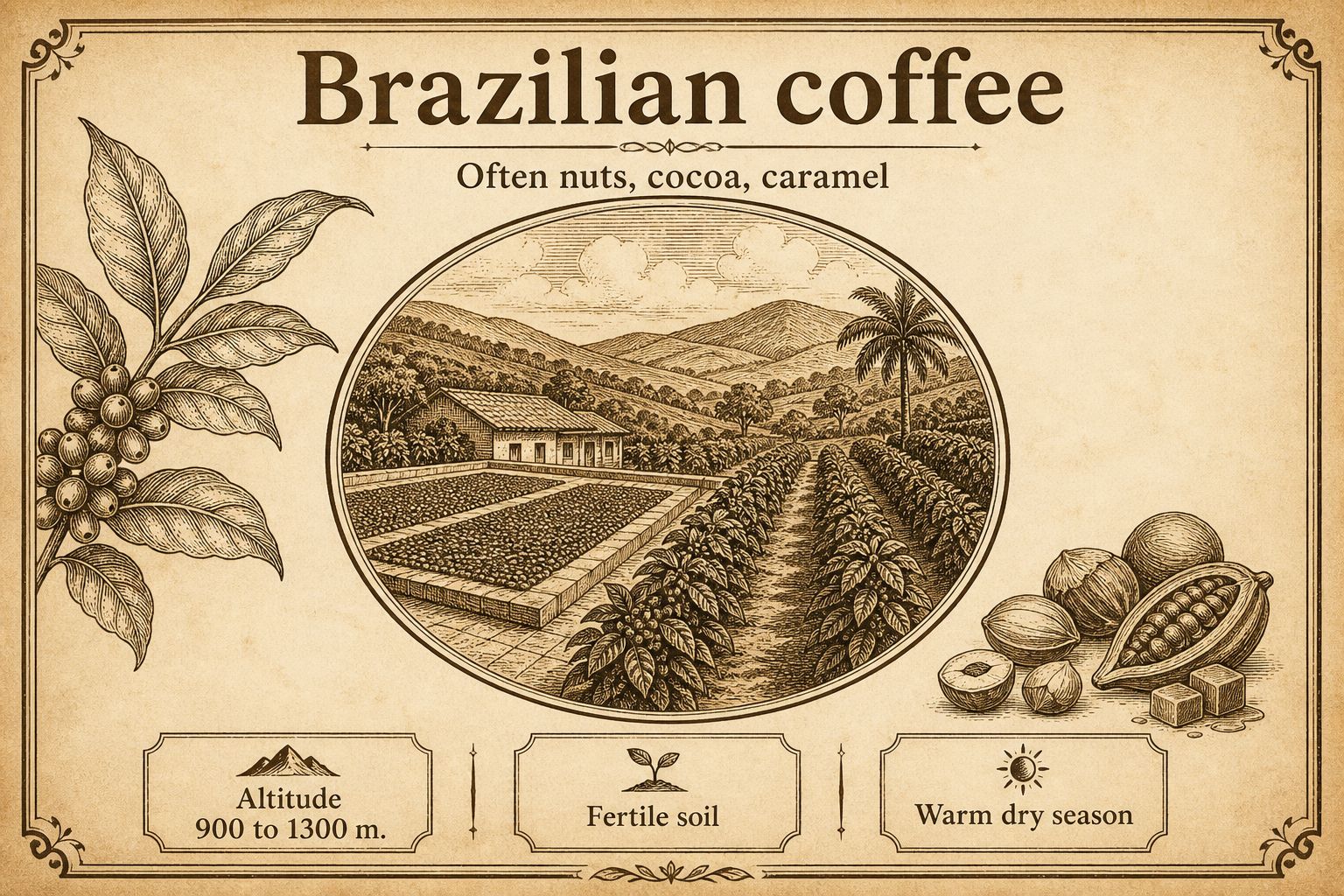
- Brazilian Coffee Connect altitude, natural processing, and major regions to Brazil's familiar cup profile.
- Colombian Coffee Explore Colombia’s balanced washed coffees, growing regions, and bean screen-size labels.
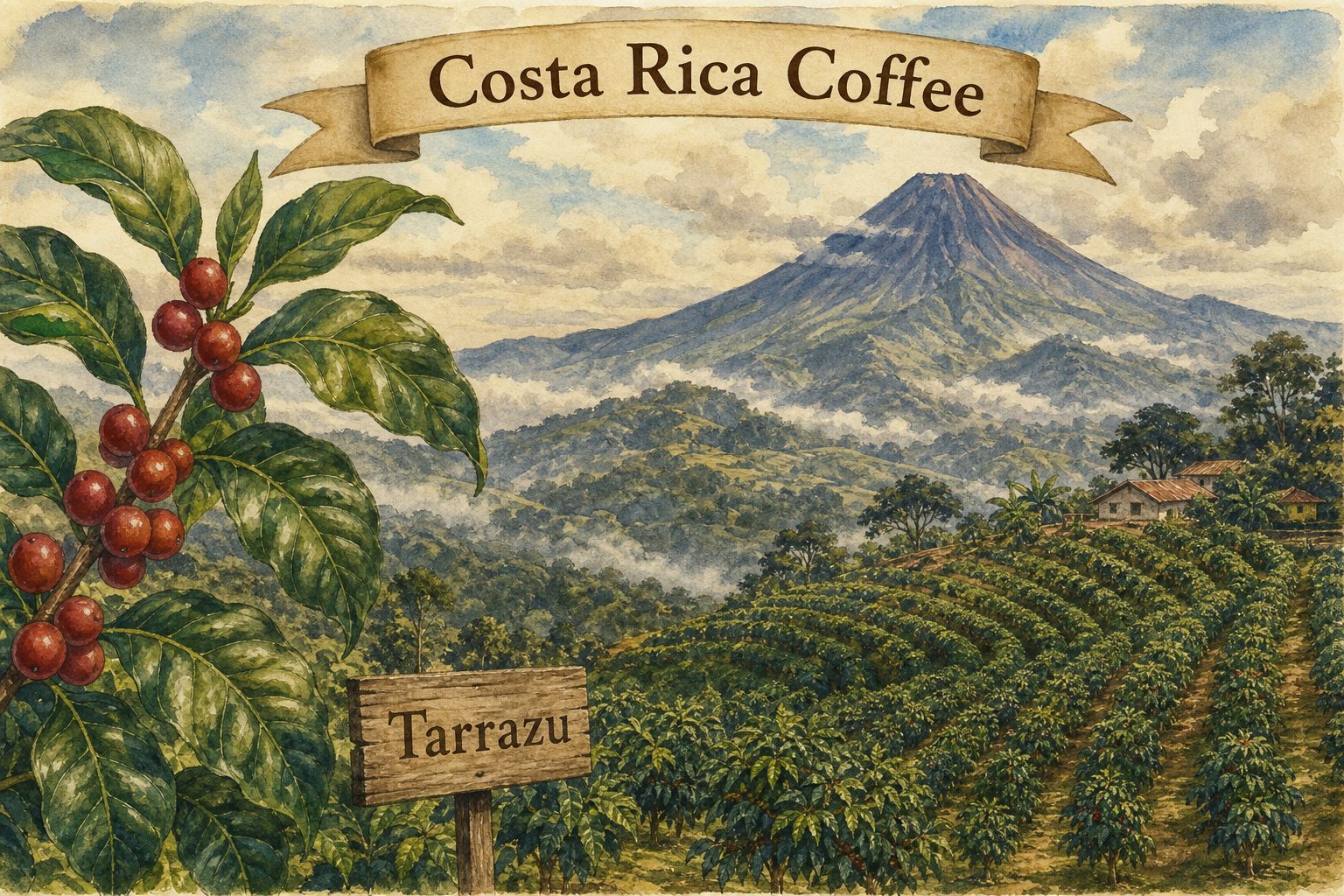
- Costa Rican Coffee Explore Costa Rica’s clean washed coffees, eight growing regions, Tarrazú, and the meaning of SHB.
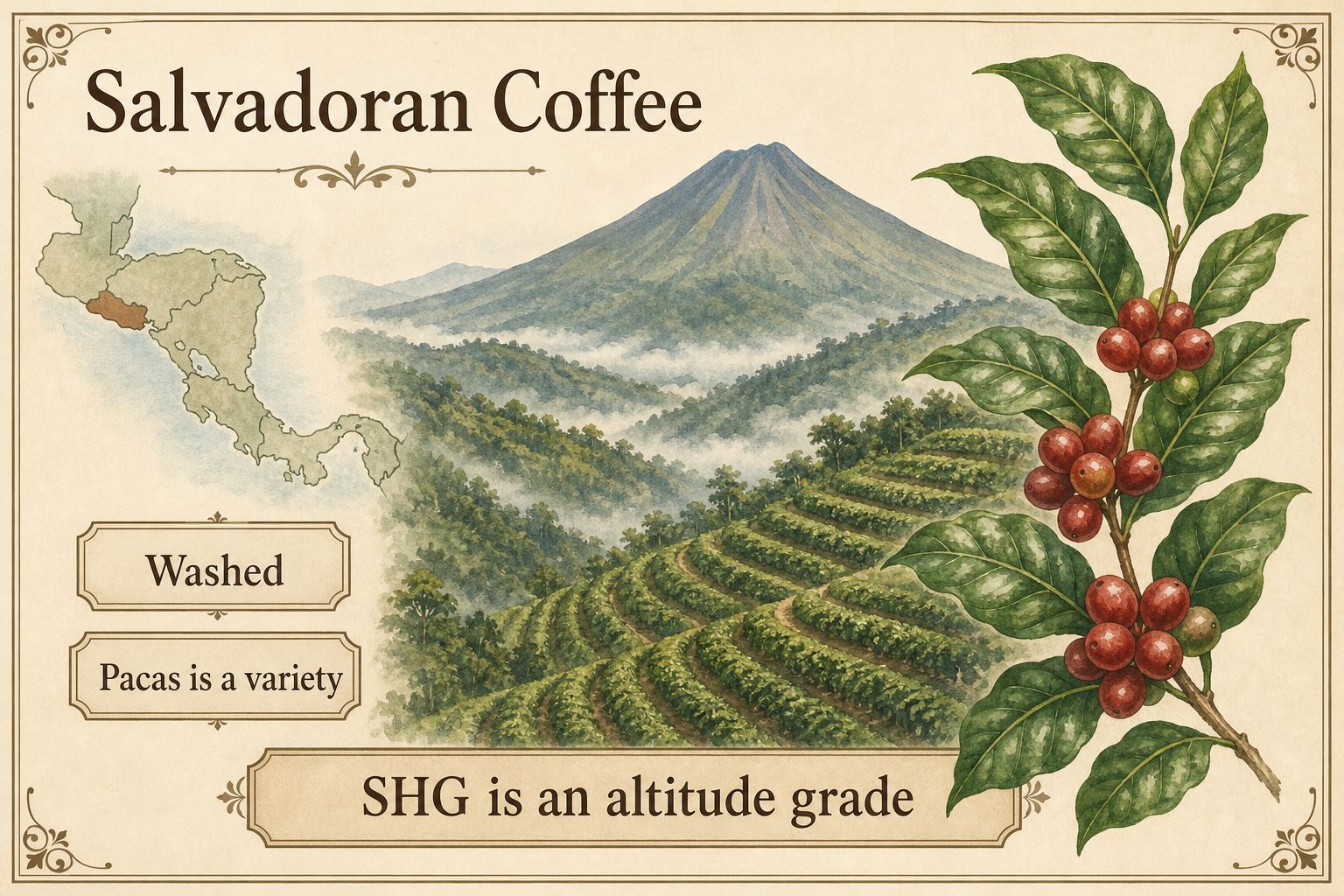
- Salvadoran Coffee Explore El Salvador’s typically sweet washed coffees and its connections to Pacas, Bourbon, and Pacamara.
- Ethiopian Coffee Learn how arabica diversity, growing regions, and processing relate to Ethiopian coffee flavors.
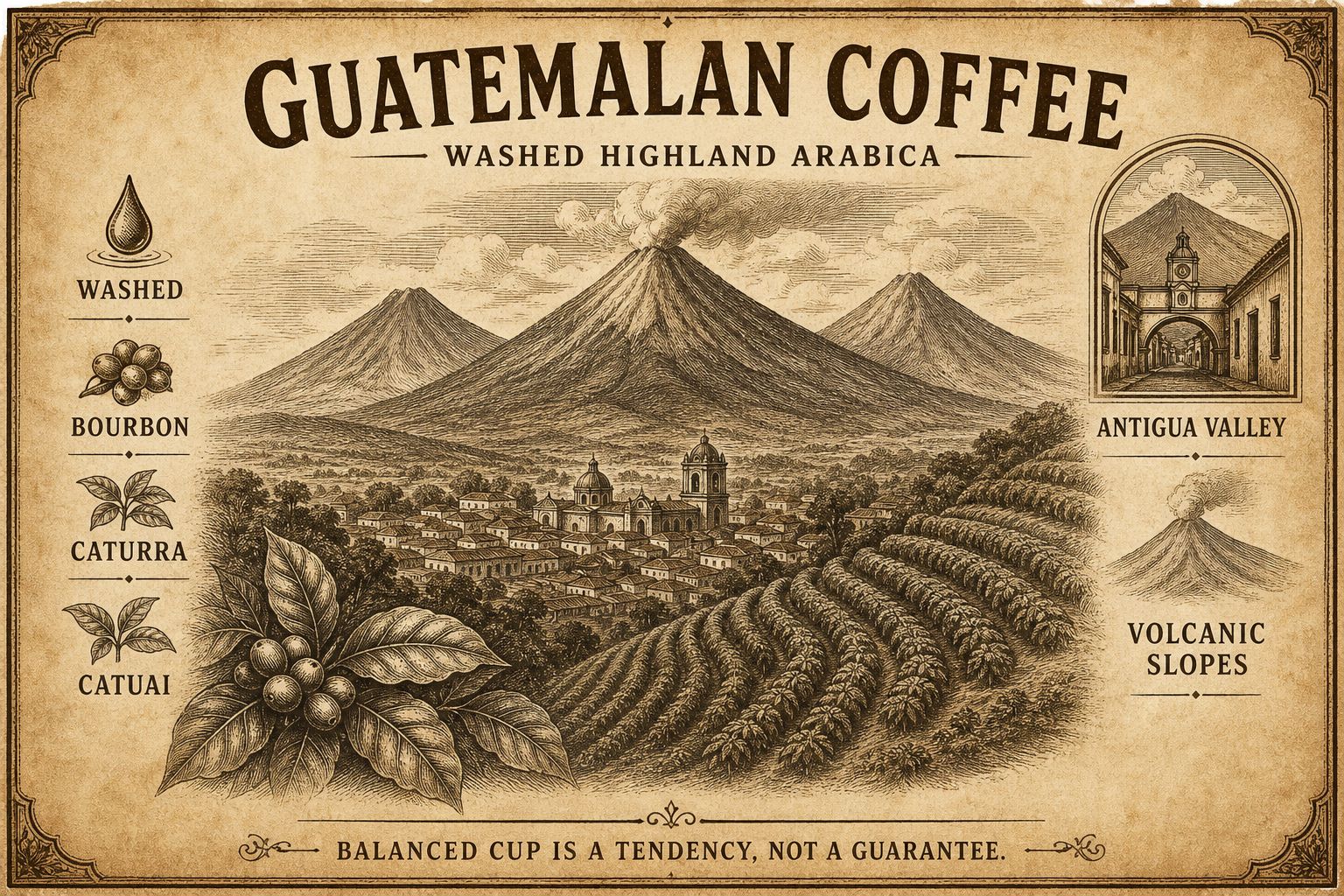
- Guatemalan Coffee Explore Guatemala’s balanced washed coffees, the Antigua and Huehuetenango regions, and the meaning of SHB.
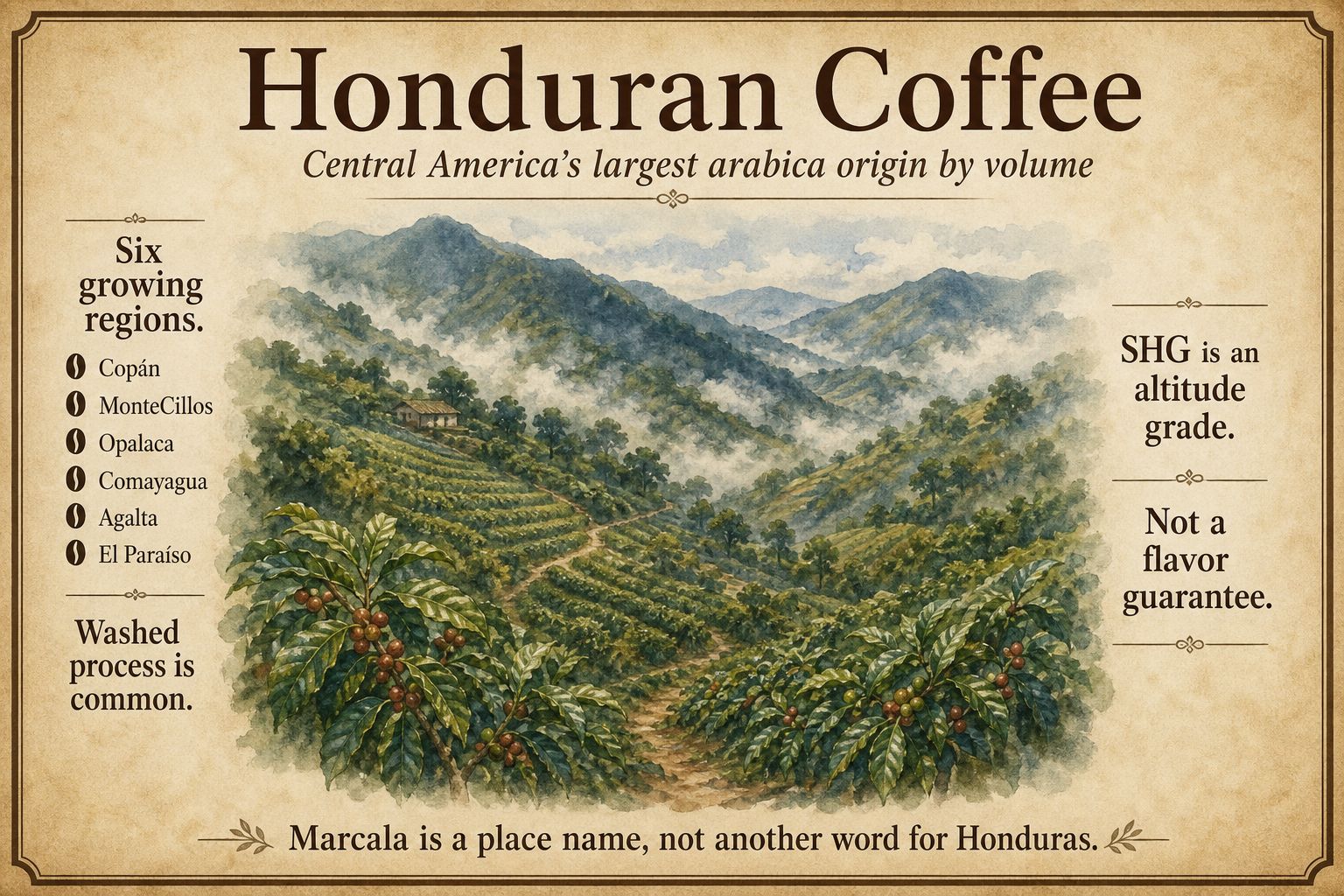
- Honduran Coffee Explore Honduras’s balanced washed coffees, six growing regions, Marcala, and the meaning of SHG.
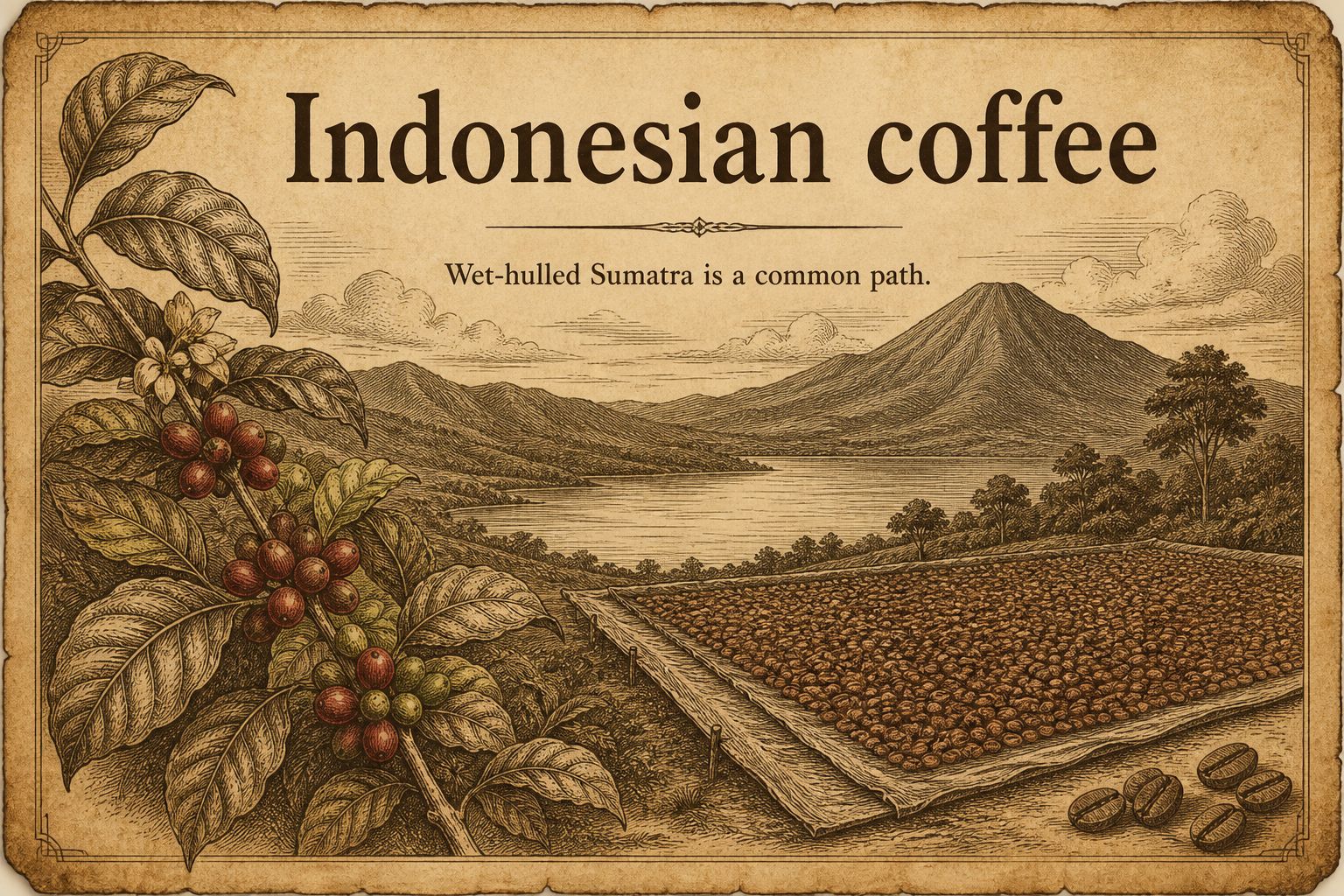
- Indonesian Coffee Understand Indonesian origin names, coffee species, and the flavors associated with wet hulling.
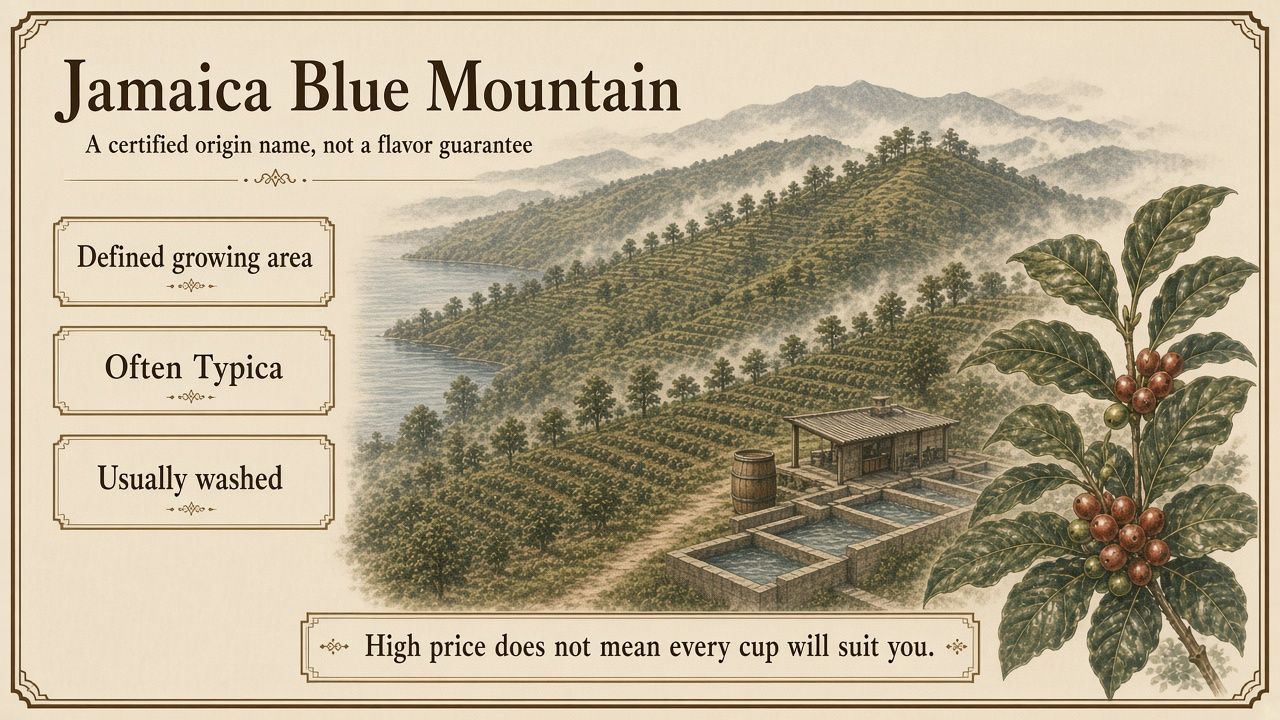
- Jamaica Blue Mountain Learn why Blue Mountain is a licensed origin name, and how it differs from Typica and from “style” blends.
- Kenyan Coffee Read the acidity, variety, process, and screen-size clues on the bag.
- Panamanian Coffee Understand Panama as a small highland coffee origin and how it differs from Gesha, the variety known for auction records.
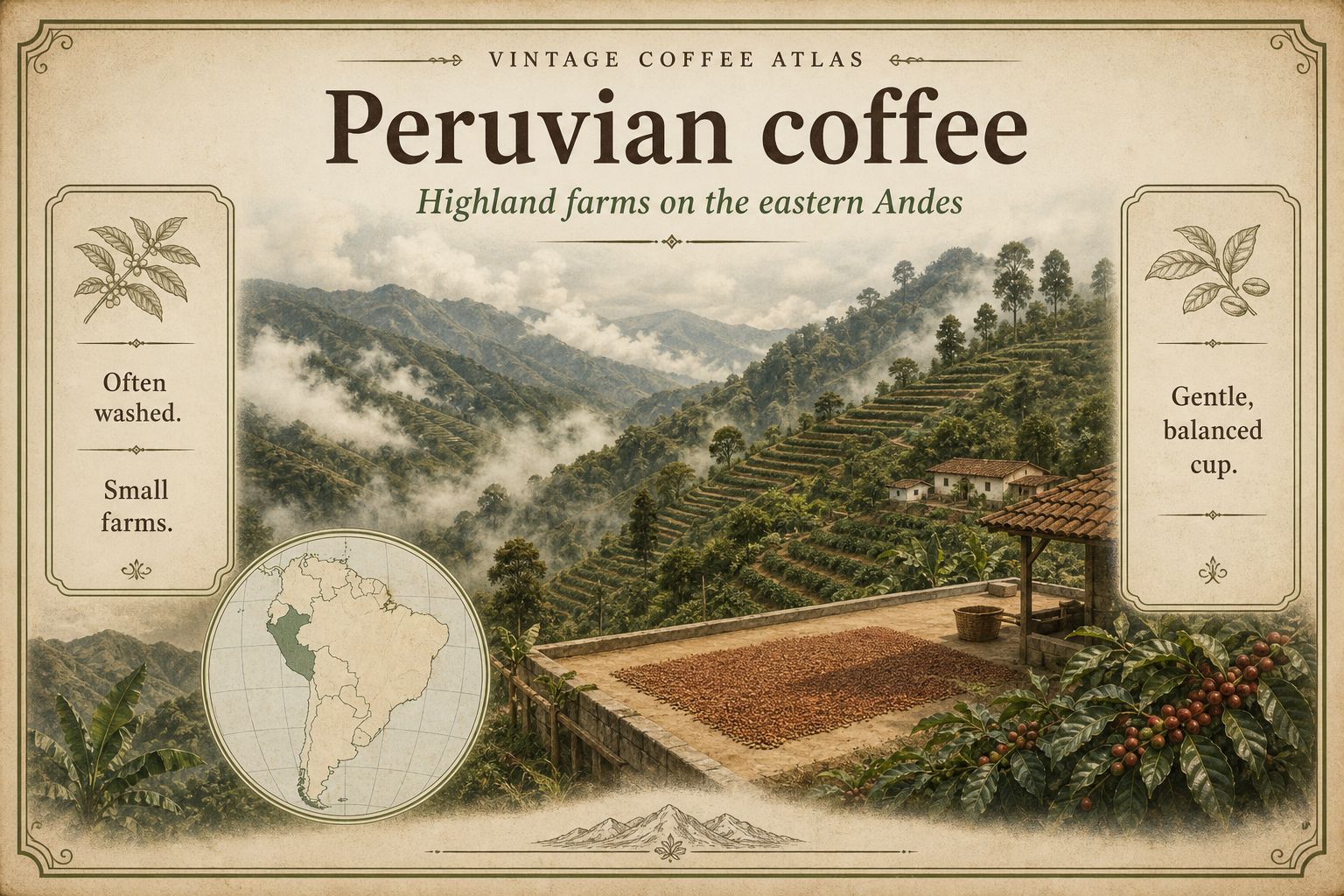
- Peruvian Coffee Explore its gentle washed flavors, small farms, growing regions, and organic certification.
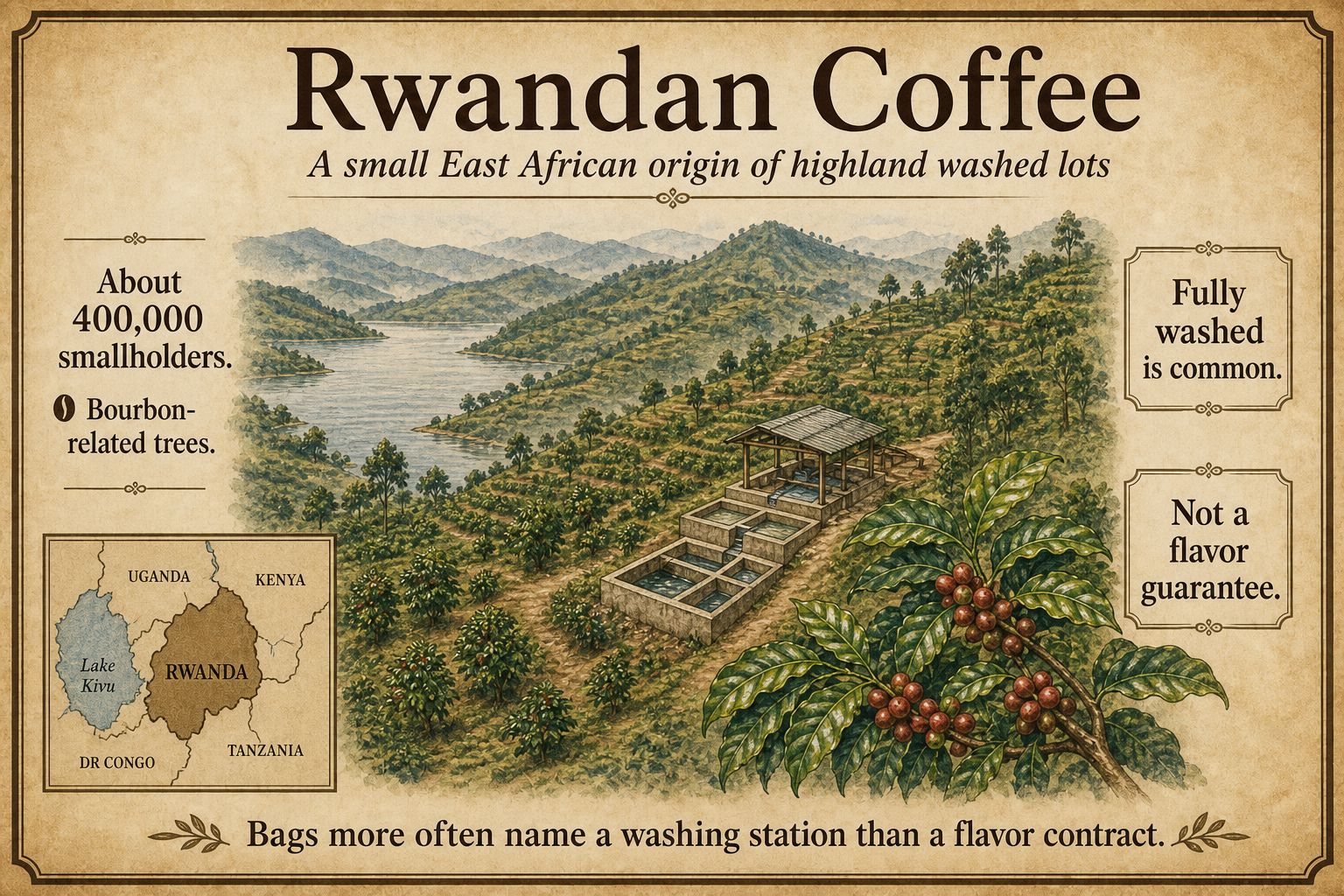
- Rwandan Coffee Explore its sweet washed flavors, Bourbon-related varieties, and washing-station names.
- Taiwanese Coffee Understand its small scale, specialty focus, growing regions, and buying clues.
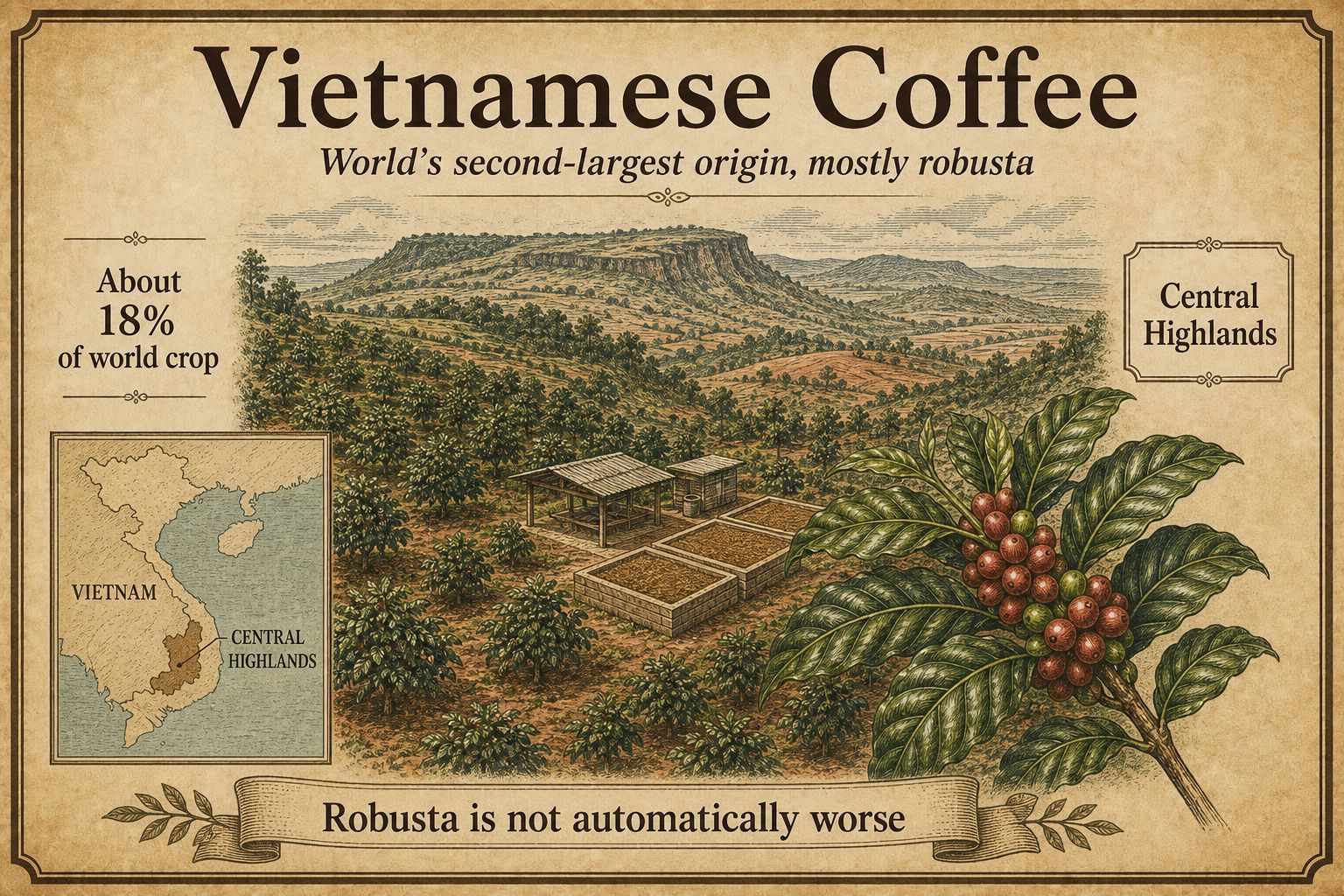
- Vietnamese Coffee Learn why Vietnam mainly grows robusta and why the species alone does not determine coffee quality.