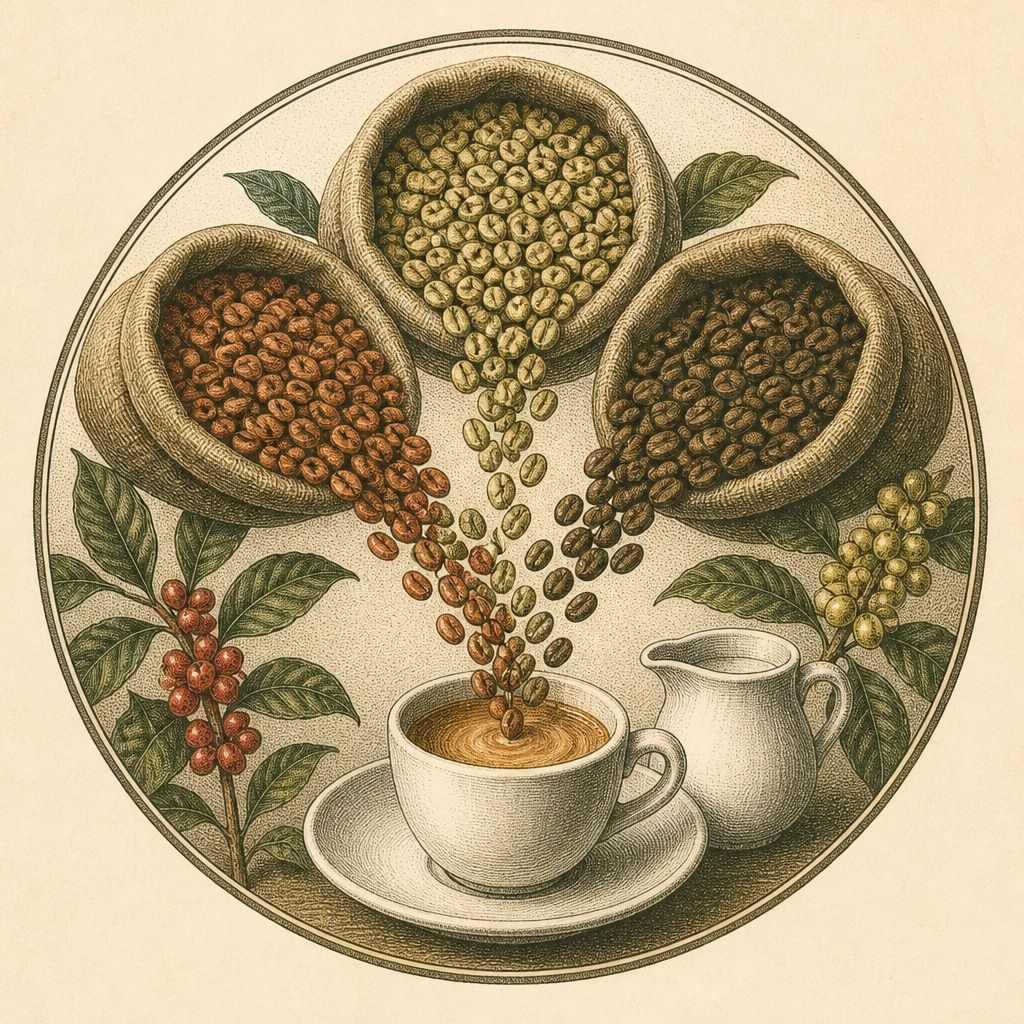
A coffee blend combines at least two coffees. Roasters may blend for a consistent year-round profile, balanced espresso, or a coffee that stays recognizable in milk. Blend, single origin, and specialty describe different things, so a blend is not automatically cheaper or worse.
Updated: Aug 20, 2026Reviewed by: Ah-Zhu (English-site batch review)
What “blend” means on a coffee bag
A blend contains at least two coffees combined into one product. The components can come from different countries, regions, farms, varieties, or processing methods.
That definition does not rank quality. Specialty coffee describes recognized character and value, while “blend” only tells you that more than one component is present. A blend can use specialty lots, and a single-origin coffee can be low quality.
Why roasters build blends
Coffee varies with the season and harvest, so one farm or country cannot supply an identical flavor throughout the year. A blend lets a roaster change individual components while keeping the overall profile close to a familiar target.
That consistency matters to cafes and people who want their regular espresso or milk drink to taste recognizable from month to month. It can also create balance: one coffee may contribute bright acidity, another sweetness, and another body or chocolate character.
Historically, blending has sometimes been used to stretch supply or hide defects, but it also allows specialty roasters to create house coffees with transparent components and a specific sensory goal.
Blends are often designed around continuity, while single origins are often chosen to show a particular source. These are goals, not quality rankings.
Why blends are common in espresso
Espresso concentrates flavor, and milk changes the balance again. A carefully designed blend can provide sweetness, body, and enough roast or coffee character to remain clear in a latte or cappuccino.
That does not mean espresso must use a blend. Single-origin espresso can highlight a distinctive lot, sometimes with a more unusual or variable profile. The right choice depends on whether you want a stable house style or a changing origin experience.
Espresso blends are often designed so the coffee remains balanced and recognizable after milk is added.
How blending is done
Roasters can mix green coffees before roasting or roast components separately and combine them afterward. Post-roast blending gives each component its own roast treatment, while pre-roast blending simplifies production but asks different beans to share one roast profile.
The ratio depends on the intended flavor, with each component chosen to complement the others. The roast level also shapes the result—a light blend can be floral and fruit-forward, while a darker blend may emphasize chocolate, nuts, caramel, or roast character.
If you want a dependable daily espresso, a transparent blend can be an excellent choice. If you want to compare origins and processing methods, follow the single-origin guide. Read the listed components before assuming a blend is lower quality or lower priced.
Common Misconceptions
Are coffee blends always lower quality?
No. A blend may be built for consistency, balance, or use with milk, and it can contain specialty lots. Quality depends on the components and how they are roasted and combined.
Is a blend the same as specialty coffee?
No. Blend describes the number of components. Specialty describes recognized attributes and value. A specialty coffee can be sold alone or used in a blend.
Does espresso require a blend?
No. Single-origin espresso is common. Blends are popular because they can keep a stable profile through seasonal changes and balance well in milk drinks.
What is a single-origin blend?
It usually combines coffees within one broader source, such as different processes or varieties from one farm. It is still a blend because more than one component was combined.
Are blends less traceable?
They can be harder to trace to one farm because several components are involved. A transparent roaster may still list each origin and lot.