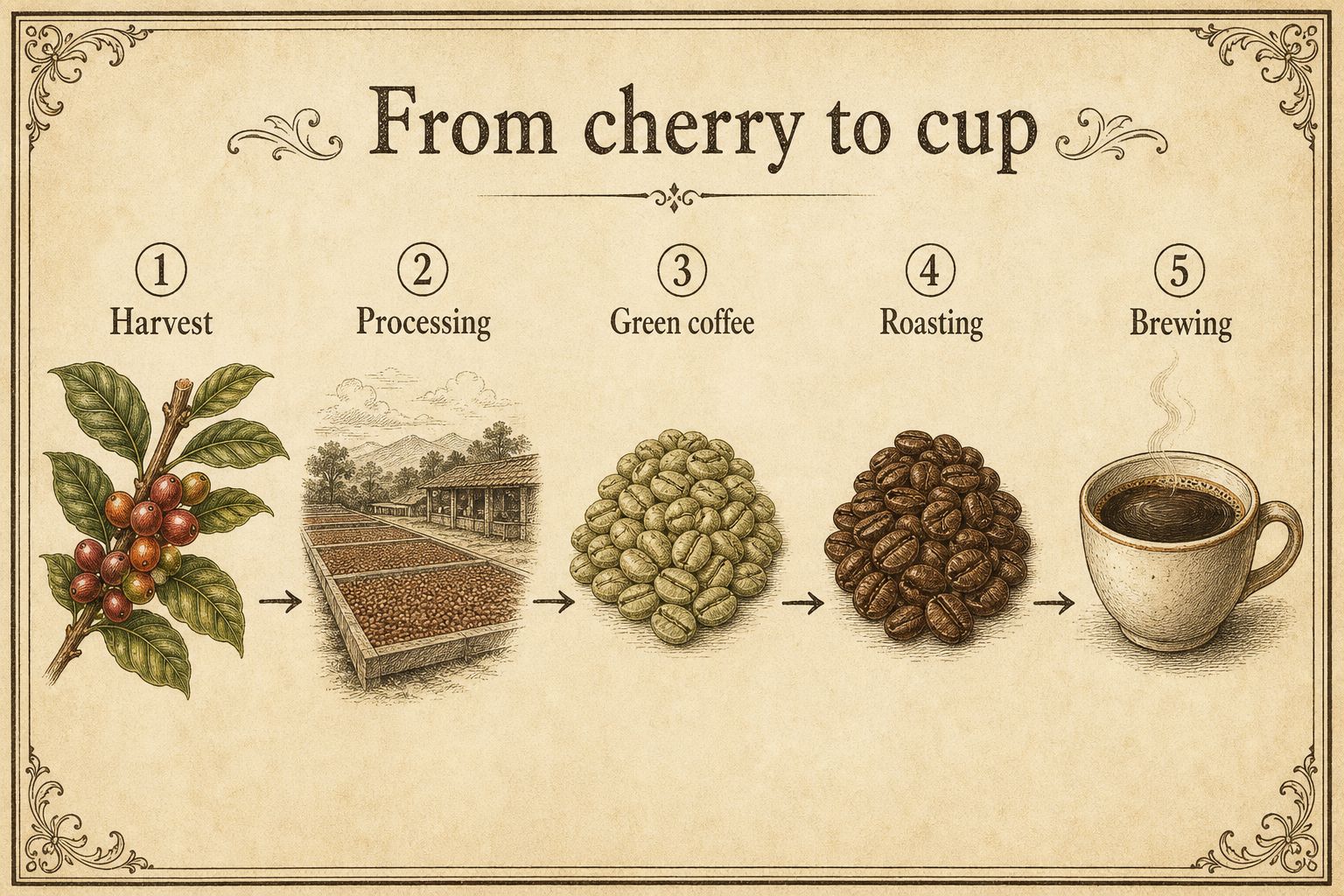
Coffee begins as fruit. After harvest, the cherries are processed and dried, the parchment is removed to produce green coffee, and the seeds are shipped, roasted, ground, and brewed. Origin, process, roast, and roast date each describe a different stop on that path.
Updated: Aug 31, 2026Reviewed by: Ah-Zhu (English-site batch review)
Coffee is a seed inside a fruit
Coffee grows as a fruit commonly called a coffee cherry. Skin and pulp surround one or two seeds, which eventually become the green coffee traded and roasted around the world.
The International Coffee Organization uses “green coffee” for unroasted coffee after the outer layers have been removed. Coffee still enclosed by the dry parchment layer is parchment coffee. The familiar brown bean in a retail bag is green coffee after roasting.
This sequence makes coffee-bag information easier to read. Origin belongs to the growing and production context. Washed, natural, and honey describe the stage after harvest. Roast level and roast date describe what happened later at the roastery.
Harvested fruit must become stable green coffee
Fresh cherries contain too much moisture to store or roast as they are. Quality-focused farms may selectively pick ripe fruit, while strip or mechanical harvesting usually requires additional sorting to remove unripe, overripe, or damaged cherries.
Processing then manages the fruit layers and drying. A washed process removes the skin and much of the pulp before or during fermentation and washing. A natural process dries the whole fruit. Honey and other methods retain different amounts of mucilage during drying. Explore those branches in the processing guide.
Drying lowers moisture to a range suitable for storage. TechnoServe’s wet-mill guide uses about 10 to 12 percent moisture on a wet basis as an operating target. See drying. That is a practical guide range, not a fixed number for every producing country.
After drying, machinery removes the parchment and remaining dry material. The result is green coffee that can be graded, sorted, bagged, and exported.
From left to right: dried coffee in parchment, hulled green coffee, and roasted coffee.
Equipment, weather, labor, and sorting practices differ by region. “From cherry to green coffee” is a family of production steps, not one identical global recipe.
Why coffee is usually shipped green and roasted later
The International Trade Centre explains that most coffee moves through international trade as green coffee. Roasting is more often performed in the consuming market, followed by packaging and retail sale.
Green coffee is denser and generally more stable for transport and storage. Roasting develops the aromas and flavors people associate with brewed coffee, but it also begins a faster period of degassing and flavor change. That is why a retail bag commonly emphasizes the roast date rather than the date of harvest.
Roast level describes how far that transformation goes. Lighter roasting often preserves more recognizable origin acidity and aroma; darker roasting adds stronger roast, chocolate, smoke, and bitter notes. The terms are not standardized across roasters.
Finally, roasted coffee is ground to expose more surface area and brewed with water to dissolve flavor compounds. Grind, water, temperature, contact time, and technique can all change the cup. The product you drink is the end of a long chain, not simply fruit that was dried and heated.
Matching bag information to the journey
Origin tells you where the fruit was grown. Processing tells you how the harvested cherries became dried seeds. Roast level tells you how the green coffee was heated. Roast date tells you when that later transformation happened.
Use those four coordinates when you read a coffee bag. They provide context without promising a specific flavor.
Common Misconceptions
Is green coffee simply coffee that has not been roasted?
Yes, with an important detail. In trade, green coffee is the unroasted seed after the dried outer layers and parchment have been removed.
Is processing done at origin or at the roastery?
Usually at origin soon after harvest. Roasters generally receive green coffee after washed, natural, honey, or another processing method has been completed.
Why is most coffee sold to consumers already roasted?
Green coffee is generally exported before roasting, then roasted closer to the consumer. Roasting creates aroma but also begins a faster period of flavor change.
Must coffee be washed before it reaches the cup?
No. Washed, natural, honey, and other methods use different approaches to fruit removal and drying.
Is the roast date the same as the harvest date?
No. Harvest is when fruit leaves the tree. Roasting happens later, after processing, drying, hulling, grading, and shipping.
TechnoServe, Wet Mill Processing Guide: Drying green coffee to a storable moisture range, with about 10 to 12 percent wet-basis moisture as the guide's operating target.