What Drying Does in Coffee Processing—and How Raised Beds Differ from Patios
Drying lowers seed moisture so coffee can be stored and shipped. Washed, natural, and honey processes all require drying, with different tissues remaining around the seed. Raised beds allow airflow above and below the coffee, while patios use a solid surface. Drying rate and uniformity can affect storage and sensory quality.
Updated: Aug 31, 2026Reviewed by: Content and layout review
Washed Process
Pick ripe coffee cherries
Remove the skin and pulp
Break down the mucilage through fermentation
Wash the coffee
Dry the parchment coffee
Natural Process
Pick ripe coffee cherries
Dry the whole cherries
Turn them regularly
Remove the dried fruit and parchment
Prepare the green coffee
Honey Process
Pick ripe coffee cherries
Remove the skin while retaining some mucilage
Dry the coffee with mucilage attached
Remove the parchment after drying
Prepare the green coffee
Wet-Hulled Process
Pick ripe coffee cherries
Depulp, then briefly ferment or wash
Remove the parchment while moisture remains high
Continue drying
Prepare the green coffee
Anaerobic Fermentation
Pick ripe coffee cherries
Place the coffee in a sealed or low-oxygen vessel
Control fermentation time and temperature
Finish with a washed, natural, or honey process
Dry the coffee
What drying is for
Washed, natural, and honey processes all require drying to lower seed moisture for storage and shipping. Although bags may not describe this stage separately, it affects the coffee’s subsequent quality.
TechnoServe’s wet-mill guide describes solar or mechanical drying that lowers washed parchment coffee from about 57% moisture to about 10 to 12% on a wet basis. That range is the handbook’s operating reference and may differ from requirements elsewhere.
The Codex code of practice for preventing ochratoxin A contamination specifies a maximum moisture content of 12.5% after drying to reduce the risk of mold growth and toxin production. ICO Resolution 420 from 2004 specifies moisture between 8 and 12.5%, measured using ISO 6673, for export coffee labeled S.
Drying uniformity at origin affects how long coffee keeps, the risk of mold during storage, and breakage when the parchment is removed.
Raised beds, patios, and mechanical dryers
Parchment coffee can be spread on concrete patios, tarpaulins, or raised beds for sun drying. TechnoServe describes most East African coffee as drying on raised beds, with mechanical dryers more frequent on large estates. Codex also lists cement or brick terraces, tarpaulins, mats, and raised mesh tables, and describes combining solar and mechanical drying in stages.
Raised mesh beds allow air to circulate above and below the coffee. A 2026 drying review associates them with less contact with soil, dust, and animals, and fewer poorly ventilated areas that remain anaerobic. Patios use a solid surface with airflow mainly above the coffee, offering greater capacity and lower construction costs. Appropriate layer depth and turning in a stable, dry climate can also bring patio-dried coffee to a moisture level suitable for storage.
The diagram compares raised beds (left) with a patio (right). Raised beds allow air to circulate both above and below the coffee.
Washed coffee is typically cleaned to parchment before drying; natural coffee retains the whole fruit, while honey coffee retains mucilage after pulping. With more fruit and sugar around the seed, drying is more likely to overlap with fermentation. Wet-hulled coffee has its parchment removed before reaching the moisture levels common for export, then continues drying with the seed exposed.
Mechanical drying is less affected by rain and offers greater control over processing conditions, though the review also notes higher energy use. TechnoServe warns that overly rapid drying can harm quality and recommends bean temperatures under 40°C, with actual conditions varying by dryer.
How drying speed and uniformity affect quality
Drying requires a controlled, even reduction in moisture. TechnoServe describes removing surface water first, followed by a slower, steady reduction toward 10 to 12%. Excessive speed may prevent moisture from leaving the seed’s center evenly, affecting color and quality. Insufficient or uneven drying leaves wetter beans vulnerable to mold in storage, which also poses a health risk. Rain and nighttime moisture can interrupt the process.
The University of Hawaiʻi publication describes increased risk of quality loss from bacteria, mold, or yeast above about 12% moisture, and possible shrinkage and distortion below about 9%. TechnoServe describes declining aroma, acidity, and freshness below 10%, along with greater breakage during hulling and effects on appearance and weight.
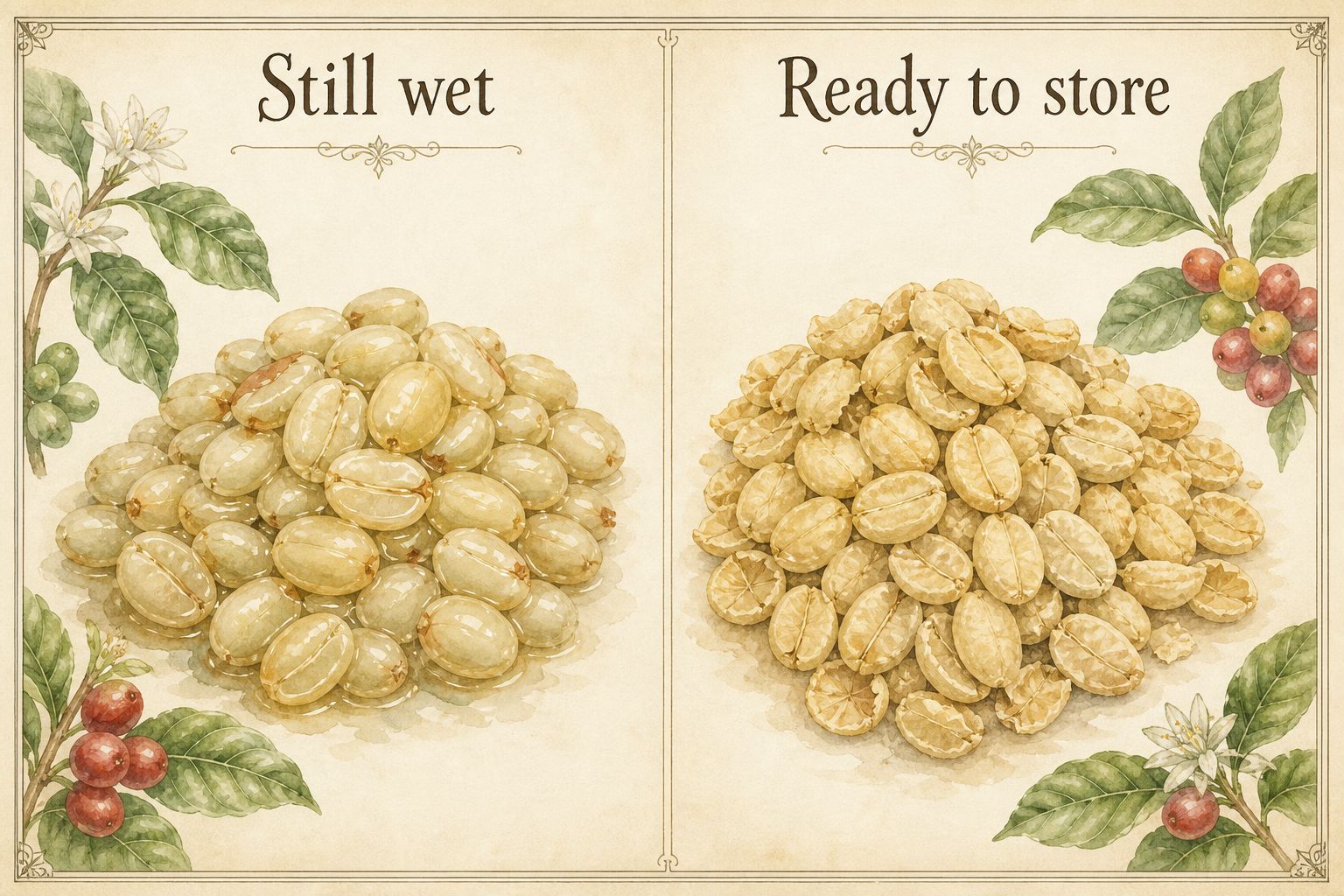
This conceptual diagram compares insufficient drying (left) with excessive drying (right); it cannot identify mold or defects in an individual bean.
Common Misconceptions
Do only natural lots need drying?
Washed, natural, and honey coffee all require drying to a moisture level suitable for storage. They differ in whether the seed retains fruit skin and mucilage or has been washed to parchment before drying.
Do raised beds always taste better than patios?
Raised beds allow airflow above and below the coffee and reduce contact with soil and animals, but patios can also dry coffee well in a dry climate with careful turning. Flavor depends on the lot, other processing conditions, and roasting, rather than the equipment alone.
How many days does drying take?
The time required varies with weather, layer depth, airflow, and mechanical assistance, so no fixed duration applies to every mill.
Is drying the same as fermentation?
Fermentation involves microbial breakdown of mucilage, while drying lowers seed moisture for storage. The two can overlap during natural processing, as explained in the fermentation article.
What happens if coffee is over-dried?
TechnoServe describes loss of aroma, acidity, and freshness below 10% moisture, along with greater breakage during hulling. The Codex maximum of 12.5% addresses a different concern, reducing the risk of mold growth and ochratoxin A associated with excess moisture.
TechnoServe, Wet Mill Processing Guide: Defines drying as solar or mechanical heat taking seed moisture to about 10–12% on a wet basis. After washing, parchment falls from about 57% into that range. East African mills mostly use raised beds; patios and tarpaulins are also listed. Mechanical dryers are common on large estates. Drying too quickly can hurt quality; unfinished or uneven drying leaves wetter beans open to mold in storage. Poor drying can also make green coffee fade or age sooner. The guide recommends keeping bean temperature under 40°C, ideally under 35°C; actual conditions vary by dryer.
Codex Alimentarius, Code of Practice for the Prevention and Reduction of Ochratoxin A Contamination in Coffee, CAC/RCP 69-2009: This code of practice aims to prevent contamination by ochratoxin A, a toxin produced by some molds. It specifies a maximum moisture content of 12.5% after drying to reduce the risk of mold growth and toxin production. Listed sun-drying surfaces include cement or brick terraces, tarpaulins, mats, and raised mesh tables. Washed and natural coffee may use solar or mechanical drying, or a combination in stages.
Eduardo Duque-Dussán, Paula A. Figueroa-Varela, Valentina Cruz-Ospina, and Jan Banout, Advances in Coffee Drying: A Comprehensive Review of Traditional, Solar, Mechanical, Hybrid, and Emerging Methods, Foods, 2026: Compares patios with raised beds, also called African beds or drying tables. Patios have lower construction costs and greater capacity but depend on weather and can reabsorb moisture at night. Raised mesh beds allow airflow above and below the coffee, reducing contact with soil, dust, and animals; the review associates these conditions with more even drying and fewer environments conducive to unwanted fermentation. Beds cost more to build and staff and still need protection from rain and nighttime moisture. With appropriate layer depth and turning in a stable, dry climate, patios can also reach a moisture level suitable for storage, so equipment alone cannot establish sensory quality.