Basic process
Washed
Fruit and mucilage are removed before the parchment-covered seeds are dried.
Natural
Whole cherries dry first; the dried fruit and parchment are hulled afterward.
 Add More Coffee
 Comparison
Neither process is inherently better. Washed coffee often makes acidity and origin character easier to identify, while natural coffee often places more emphasis on ripe-fruit and fermentation notes. Both are tendencies, not promises.
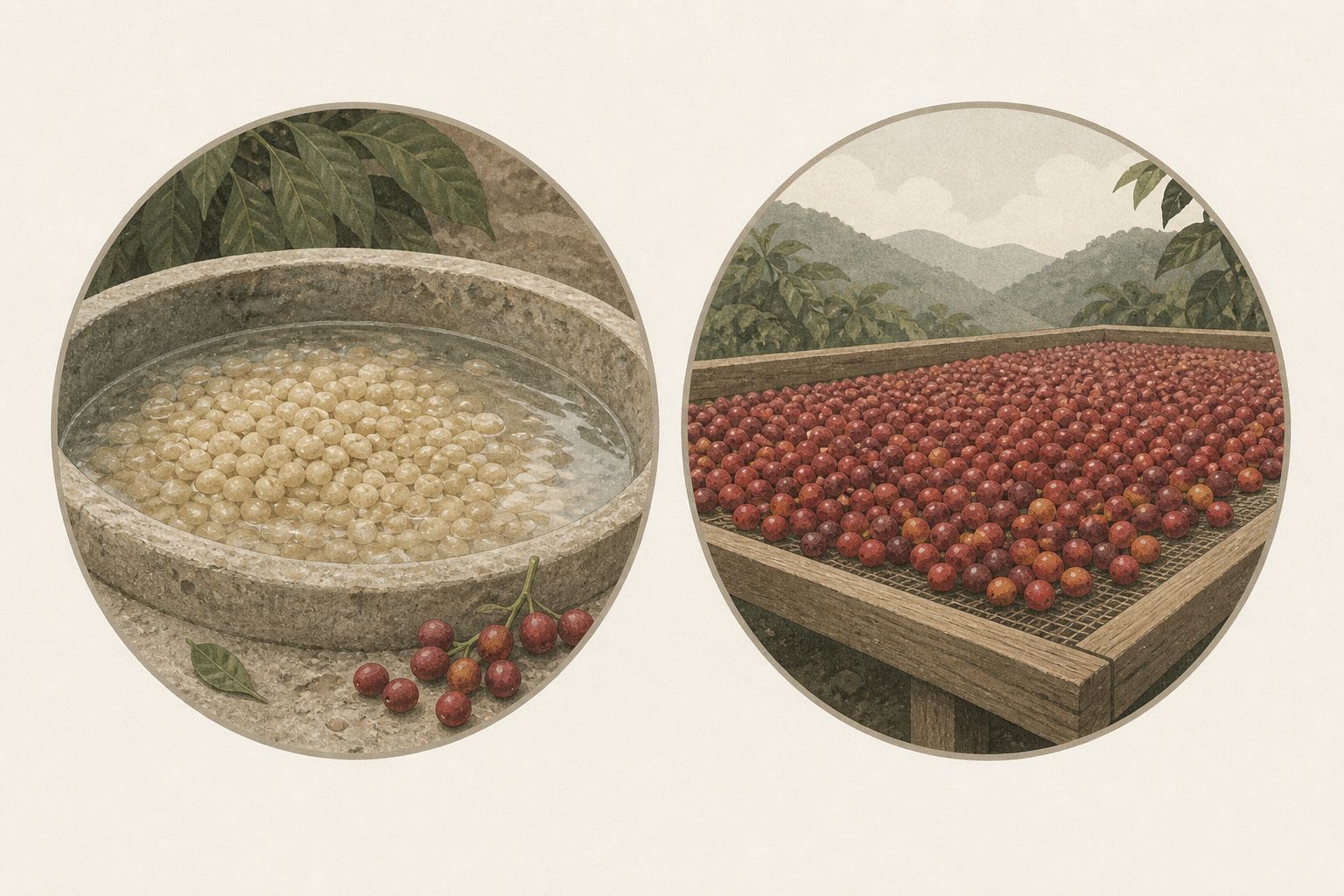
“Washed is acidic; natural is sweet” is easy to remember, but too rigid to guide every purchase. The real distinction begins after harvest. Washed coffee has its fruit and mucilage removed before drying, while natural coffee dries inside the whole cherry.
Keeping the fruit around the seed changes the drying environment and can influence fermentation. That helps explain the recurring sensory contrast, but variety, growing conditions, drying control, roasting, and brewing can easily outweigh the process label.
Use this comparison to choose flavors you would like to explore, then taste the individual lot to see whether it suits you.
Basic process
Fruit and mucilage are removed before the parchment-covered seeds are dried.
Whole cherries dry first; the dried fruit and parchment are hulled afterward.
Common flavor tendency
Clearly defined acidity and more recognizable origin character.
Ripe-fruit, jam-like, or fermentation-influenced notes.
Finish and clarity
Often described as clean and sharply defined.
Often described as layered, rounded, or fruit-forward.
Sweetness
Can be very sweet; the process does not remove sweetness from the cup.
Often perceived as sweet, but the label does not guarantee it.
Production challenge
Requires careful mucilage removal, water management, and drying.
Requires even whole-fruit drying and close control of mold and fermentation risk.
Common origins
Common in Kenya and Central America, among other regions.
Common in Ethiopia, among other regions.
Good starting point
Comparing origins, varieties, or clearly defined acidity.
Exploring ripe-fruit character and more noticeable flavors associated with processing.
| Comparison point | Washed | Natural |
|---|---|---|
| Basic process | Fruit and mucilage are removed before the parchment-covered seeds are dried. | Whole cherries dry first; the dried fruit and parchment are hulled afterward. |
| Common flavor tendency | Clearly defined acidity and more recognizable origin character. | Ripe-fruit, jam-like, or fermentation-influenced notes. |
| Finish and clarity | Often described as clean and sharply defined. | Often described as layered, rounded, or fruit-forward. |
| Sweetness | Can be very sweet; the process does not remove sweetness from the cup. | Often perceived as sweet, but the label does not guarantee it. |
| Production challenge | Requires careful mucilage removal, water management, and drying. | Requires even whole-fruit drying and close control of mold and fermentation risk. |
| Common origins | Common in Kenya and Central America, among other regions. | Common in Ethiopia, among other regions. |
| Good starting point | Comparing origins, varieties, or clearly defined acidity. | Exploring ripe-fruit character and more noticeable flavors associated with processing. |
In washed processing, the skin and pulp are removed soon after harvest. Fermentation followed by washing, mechanical removal, or a combination clears the remaining mucilage before the parchment-covered seeds are dried. In natural processing, the entire cherry dries before the dried fruit and parchment are hulled away. The defining difference is what remains around the seed during drying; tank fermentation is not required for every washed lot.
Natural processing leaves more sugar-rich fruit material around the seed during drying, creating a different environment for microbial activity than washed processing, which removes that material earlier. This distinction can influence flavor, but it does not act alone.
Choose washed when you want an easy reference for origin character, clearly defined acidity, or a crisp finish. Choose natural when you want to explore ripe berries, dried fruit, jam-like sweetness, fuller texture, or a more obvious fermentation signature.
The results can vary considerably—a carefully managed natural may be floral and clean, while a washed coffee may be sweet, full, and low in perceived acidity. Roast degree and brewing also shape the flavor.
Here, “clean” describes flavor clarity and the absence of distracting off-notes. It is not a sanitation test, and neither process name guarantees quality.
The most useful experiment is a side-by-side tasting. Keep the origin, variety, roast, and brew recipe as similar as possible, then compare aroma, acidity, texture, sweetness, finish, and how distinct each flavor feels. One pair will not establish a universal rule, but it can teach you what these labels mean to your own palate.
Read washed and natural alongside the producer, lot, variety, drying method, fermentation, elevation, roast degree, roast date, and intended brew style. Those details explain more about how a particular coffee was produced and how it might taste than the process label alone. The coffee-bag guide explains how to use those details when choosing a coffee.
Flavor also varies by lot. Trust what you taste first, then use the process as one piece of context.