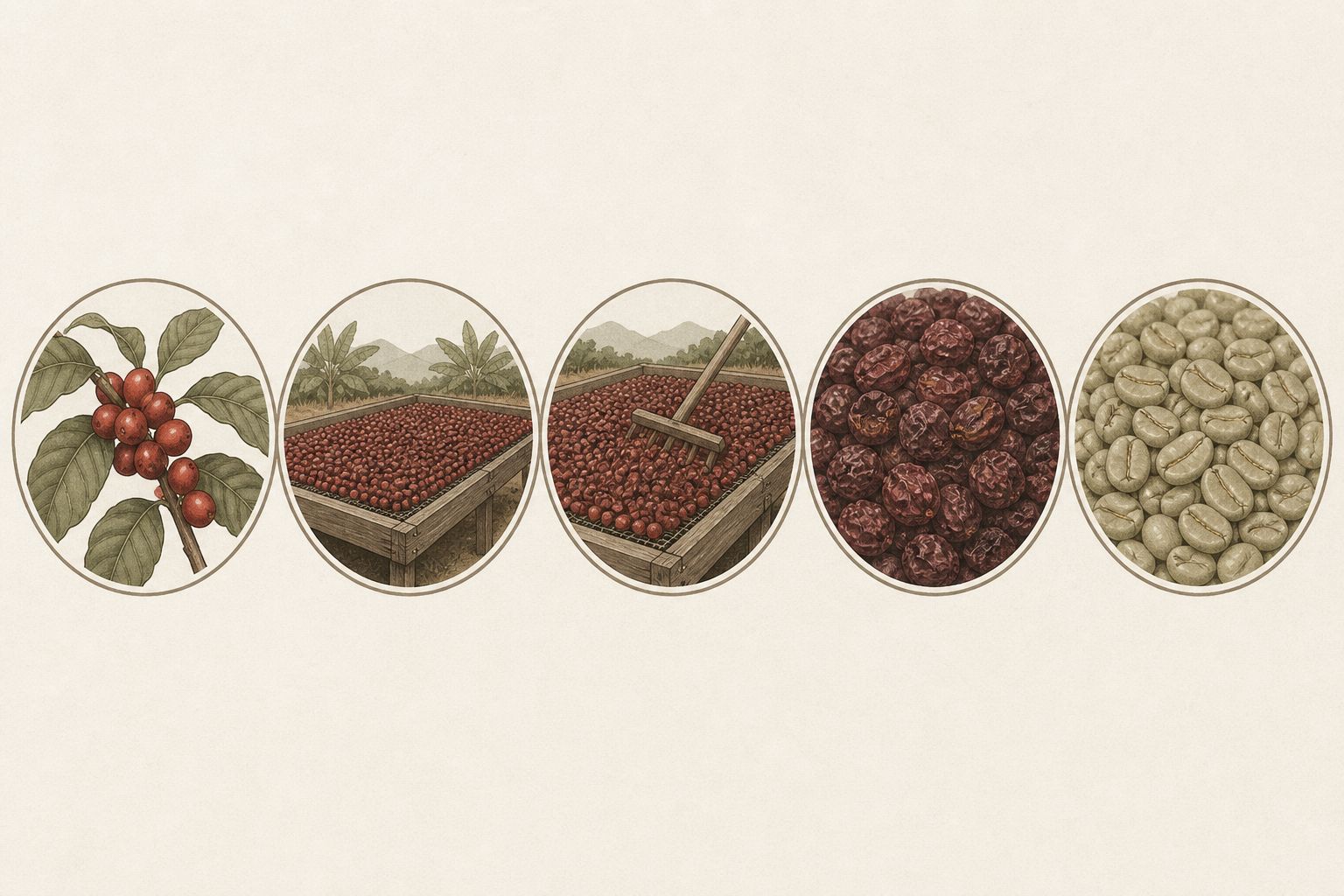
What dries in a natural process
Natural coffee—also called dry-process coffee—is dried as a whole cherry. The skin, pulp, mucilage, parchment, and seeds remain together through most of the drying period. Once the fruit is sufficiently dry, a huller removes the hardened outer layers and releases the green coffee.
That sequence distinguishes it from washed processing, which removes the fruit before drying. Natural processing still requires producers to sort the harvest, control layer depth, turn the cherries, protect them from rain or nighttime moisture, and monitor drying.
Some facilities float cherries in water to separate light or damaged fruit. Others sort by hand or machine. The use of water for sorting does not turn the lot into washed coffee; the seed still dries inside the intact fruit.
Why drying control matters
Whole cherries contain more water and sugar-rich material than depulped coffee. Slow or uneven drying can encourage unwanted mold or excessive fermentation. Drying too quickly can also leave the outside apparently ready while moisture remains uneven inside the fruit.
Drying time varies with weather, humidity, elevation, layer depth, airflow, and mechanical assistance, as explained in the drying guide. Processing reviews and mill guides commonly place finished green coffee around 10–12% moisture on a wet basis, but that range is an operating reference rather than a fixed number for every origin.
The fruit surrounding the seed creates more opportunity for microbial activity during drying. That can contribute desirable complexity, but it can also produce defects when control is poor. Quality comes from the actual lot and its handling, not from the word natural by itself.
How natural coffee often tastes
Natural coffees are often associated with ripe berries, jam, dried fruit, wine-like aromas, fuller texture, or a stronger fermentation signature. These descriptions refer to sensory impressions; fruit juice is not being infused into the seed.
The same process can also yield a clean, floral, or citrus-driven coffee. Variety, growing conditions, cherry ripeness, drying, storage, roasting, and brewing remain important. Natural does not automatically mean sweet, heavy, funky, or better.
If you are deciding between two bags, use the process as a clue rather than a promise. Choose natural when you are curious about fruit-forward or fermentation-influenced profiles, and compare it with a washed coffee when you want to learn how processing can shift the cup.