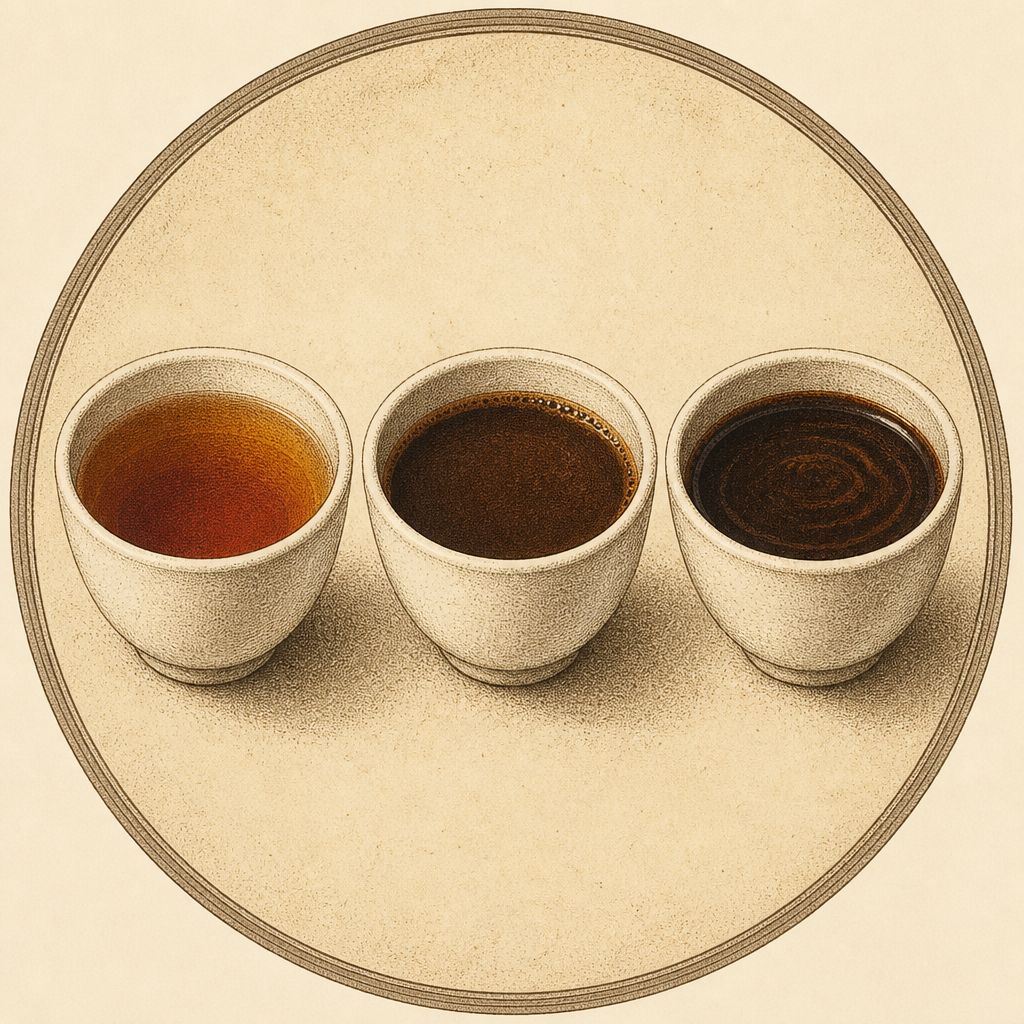
Body describes the physical sensation of coffee in your mouth—its weight, viscosity, and texture. Modern SCA language uses mouthfeel and can include oily, silky, syrupy, rough, metallic, or drying sensations. Fuller body is not automatically better.
When a bag or tasting note says full-bodied, it is describing a physical sensation rather than a chocolate, citrus, or berry flavor. Pay attention to the liquid’s weight across your tongue and between your tongue and palate. Does it feel light like tea, smooth like silk, creamy, or dense like syrup?
Older specialty cupping forms used Body as the main category. The SCA’s Coffee Value Assessment uses mouthfeel, a wider concept covering weight, viscosity, texture, and other tactile sensations. Temperature is evaluated separately.
Flavor, strength, and mouthfeel are different
Flavor combines taste and aroma. Sweet, sour, salty, bitter, and umami are taste dimensions; citrus and cocoa involve broader flavor perception. Mouthfeel belongs to touch.
Using more coffee and less water often creates a stronger beverage and may also increase perceived weight, but the two ideas are not identical. A concentrated coffee can feel rough and thin, while a lower-concentration coffee can feel silky and coating. Formal tasting keeps intensity and tactile quality distinct for this reason.
Color is only illustrative. Body is judged by tactile weight and texture in the mouth.
Historical SCAA protocols explicitly allowed light-bodied and heavy-bodied coffees to receive equally strong preference scores when their tactile quality suited the coffee. Sumatra was offered as a commonly heavier reference and Mexico as a commonly lighter one. Full does not mean superior.
Texture vocabulary beyond light and heavy
SCA descriptive references include rough textures such as sandy, chalky, or grainy; oily or buttery sensations; smooth textures such as velvety, silky, or syrupy; drying or astringent sensations; and metallic character.
Bright acidity is a taste perception, while astringency is the tactile sensation of tightening or drying across the tongue and mouth. A coffee can be vivid and juicy without being drying, or low in acidity and still feel rough. See why coffee feels astringent.
Texture words describe how the liquid behaves in your mouth; they are not quality grades by themselves.
How to practice tasting body
Let the coffee cool enough to taste safely, then move a small sip across your tongue and palate. Ignore named flavors for a moment. Ask three questions:
How much weight does the liquid seem to carry?
Is the texture rough, silky, oily, creamy, syrupy, or drying?
Do I enjoy that texture in this coffee?
Wet-hulled coffee is often a useful full-body reference, while a delicate washed coffee may provide a lighter contrast. Roast, filtration, brewing device, coffee-to-water ratio, fines, and extraction can all change the tactile result. Describe first; decide whether you like it second.
Common Misconceptions
Is fuller body always better coffee?
No. Body is a description and preference dimension. A tea-like coffee and a syrupy coffee can both be excellent.
Does body mean the coffee was brewed stronger?
No. A concentrated recipe may also feel heavier, but tasting systems separate flavor intensity or strength from the liquid's tactile quality.
Are body and mouthfeel the same?
Body traditionally emphasizes weight and viscosity. Mouthfeel is the broader modern term and also includes texture and sensations such as oiliness, silkiness, roughness, and drying.
Does light roast have no body?
No. Light-roasted coffee can feel light, creamy, juicy, silky, or substantial. Roast changes balance but does not assign one mandatory texture.