What Is Enzyme-Processed Coffee—and How Is It Different From Anaerobic?
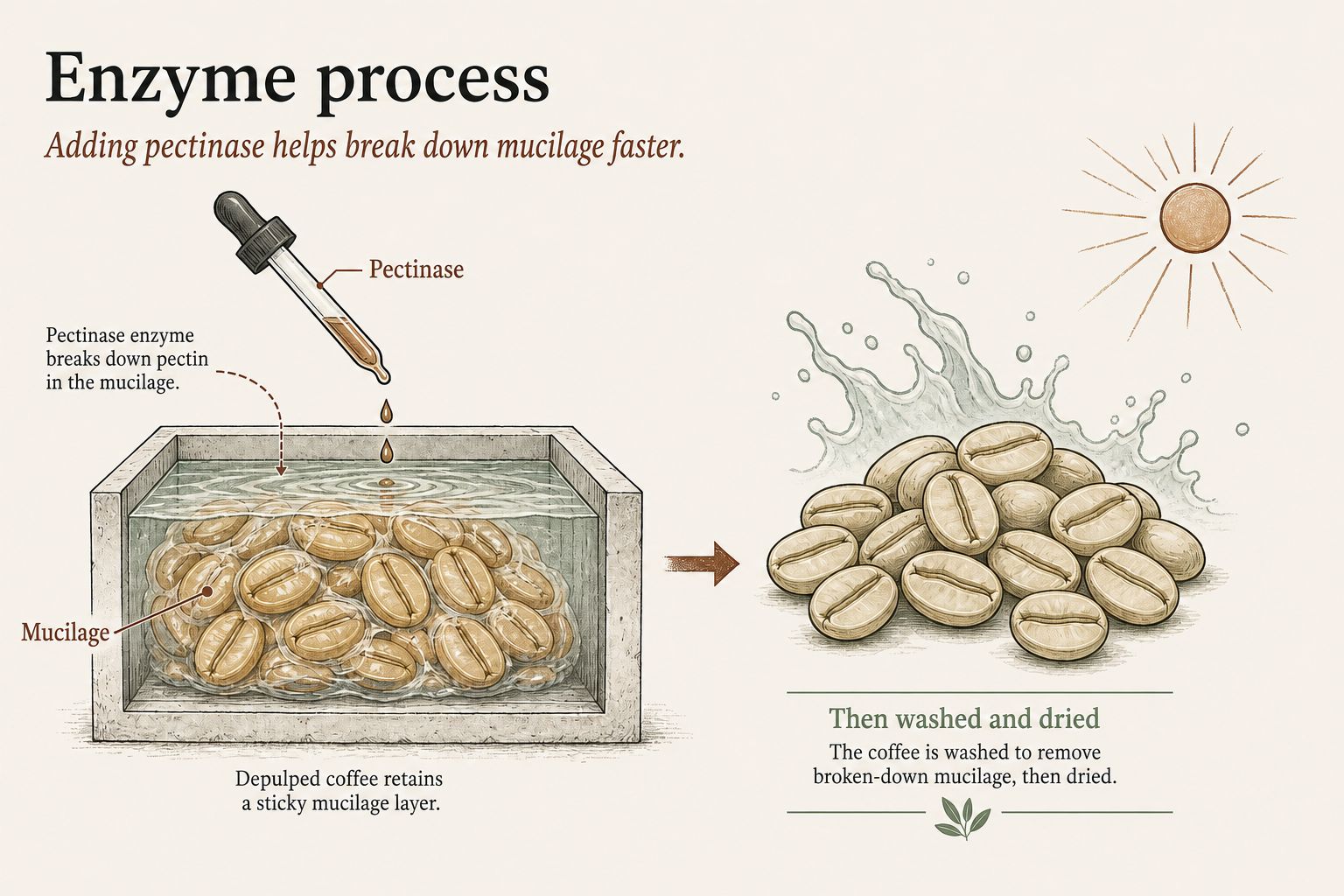
Enzyme processing usually involves adding commercial pectinase, sometimes with cellulase, after pulping to accelerate mucilage breakdown before washing and drying. This step in washed processing serves a different purpose from sealed anaerobic fermentation or yeast inoculation. Studies often report shorter processing times, but cupping scores do not necessarily improve.
Updated: Aug 22, 2026Reviewed by: Content and layout review
Washed Process
Pick ripe coffee cherries
Remove the skin and pulp
Break down the mucilage through fermentation
Wash the coffee
Dry the parchment coffee
Natural Process
Pick ripe coffee cherries
Dry the whole cherries
Turn them regularly
Remove the dried fruit and parchment
Prepare the green coffee
Honey Process
Pick ripe coffee cherries
Remove the skin while retaining some mucilage
Dry the coffee with mucilage attached
Remove the parchment after drying
Prepare the green coffee
Wet-Hulled Process
Pick ripe coffee cherries
Depulp, then briefly ferment or wash
Remove the parchment while moisture remains high
Continue drying
Prepare the green coffee
Anaerobic Fermentation
Pick ripe coffee cherries
Place the coffee in a sealed or low-oxygen vessel
Control fermentation time and temperature
Finish with a washed, natural, or honey process
Dry the coffee
What enzyme processing means
After harvest and pulping, a mill can add pectinase, sometimes with cellulase, to accelerate breakdown of the mucilage around the seed before washing and drying the coffee. This is commonly described as enzyme processing.
Washed processing often uses fermentation for mucilage removal, relying on enzymes produced by microbes in the tank. Enzyme processing adds enzymes directly to accelerate this step, while washing and drying still follow.
The term describes a different aspect of processing from the sealed environment of anaerobic fermentation or the hot-then-cold water treatment of thermal shock. A bag may list several of these terms when they describe different stages.
How it differs from a typical washed tank
Washed processing requires removal of the mucilage remaining after pulping. TechnoServe and the SCA describe breakdown through naturally produced enzymes and removal by mechanical demucilagers. Another line of research adds commercial pectinase, sometimes with cellulase, to pulped coffee to accelerate breakdown.
A 2022 Mexican arabica trial compared two commercial enzyme blends with traditional fermentation, which took about 15 to 20 hours; enzyme treatments removed most mucilage in about 3 hours. A 2021 Colombian study on café suave lavado found that first-use pectinase reduced degradation time by about 79 to 85 percent compared with the traditional control.
A small Ethiopian trial reported that enzyme treatment finished breaking down mucilage in about 24 hours, while a natural-fermentation control was still unfinished at 36 hours. Those results also show that mill, enzyme type, and other factors can change how long the step takes.
The studies describe faster tank turnover, closer control of pH and temperature, lower water use, and reduced overfermentation risk as reasons for adding enzymes. Once the mucilage breaks down, the coffee still needs washing and drying.
This conceptual diagram compares conventional tank fermentation (left) with added enzymes (right). Actual processing times depend on the conditions.
Enzymes, anaerobic fermentation, and yeast inoculation
Anaerobic processing describes the fermentation environment: whole cherries or pulped coffee enter a sealed bag or tank where microbes work under limited oxygen, followed by natural, washed, or honey processing and drying. Tasting reports often describe more intense flavors, sometimes with lactic notes, as discussed in anaerobic processing.
Enzyme processing introduces proteins that break down pectin, commonly to accelerate mucilage removal in washed processing. That purpose differs from developing flavor through sealed fermentation.
Experimental lots may also describe yeast inoculation. Yeasts are living microbes that influence fermentation, while pectinase is a protein that breaks down pectin, so the two additions serve different functions.
In the Colombian washed-coffee trial, enzyme-treated and traditionally fermented lots both scored around 81 on the SCA scale, with no significant difference. The study supports faster mucilage removal but did not demonstrate improved cupping quality.
The diagram compares the sealed, low-oxygen environment of anaerobic processing (left) with added enzymes for mucilage breakdown (right).
How to read the name
Enzyme processing tells you about accelerated mucilage breakdown in a washed process; drying and roasting also deserve attention. If the bag lists anaerobic fermentation, thermal shock, or yeast inoculation as well, check what happened at each stage.
Bags may not disclose enzyme use, and products and contact times can vary even between labeled lots. Mechanical demucilaging, tank fermentation, and added enzymes can all be used to produce washed coffee.
Common Misconceptions
Is enzyme process the same as anaerobic?
They describe different aspects of processing. Anaerobic refers to a sealed, low-oxygen fermentation environment, while enzyme processing usually involves adding pectinase after pulping to accelerate mucilage breakdown.
Is adding enzymes the same as adding yeast?
Yeast inoculation introduces living microbes to influence fermentation, while pectinase is a protein that breaks down pectin. A lot may list both, but they describe different steps.
Does enzyme process guarantee a cleaner or better cup?
Studies often show faster mucilage removal, but a Colombian washed-coffee trial found no significant SCA-score difference from traditional fermentation. Washing, drying, and roasting also influence flavor, so added enzymes alone cannot establish quality.
Does washed coffee mean no enzymes were used?
Many washed lots rely on enzymes produced by microbes during fermentation, while enzyme processing usually means adding a commercial enzyme product. Some mills remove mucilage mechanically, so the word washed alone does not identify which approach was used.
Is this only a specialty experimental label?
The literature often describes enzyme processing as a way for wet mills to shorten processing time, reduce water use, and lower overfermentation risk, beyond specialty experimental lots. The term does not denote a national standard, and bags may not disclose its use.
TechnoServe, Wet Mill Processing Guide: Describes fermentation and mechanical mucilage removal in East African wet mills. It provides context for conventional washed processing, rather than evidence from an added-enzyme trial.