What Fermentation Does in Coffee Processing—and How It Differs From Spoilage
Fermentation in coffee processing often involves microbes breaking down the mucilage around the seed, helping prepare the coffee for washing or drying. It can occur in washed, natural, honey, and anaerobic processes under different conditions. Both insufficient and excessive fermentation can affect quality, so more time does not guarantee more aroma.
Updated: Aug 31, 2026Reviewed by: Content and layout review
Washed Process
Pick ripe coffee cherries
Remove the skin and pulp
Break down the mucilage through fermentation
Wash the coffee
Dry the parchment coffee
Natural Process
Pick ripe coffee cherries
Dry the whole cherries
Turn them regularly
Remove the dried fruit and parchment
Prepare the green coffee
Honey Process
Pick ripe coffee cherries
Remove the skin while retaining some mucilage
Dry the coffee with mucilage attached
Remove the parchment after drying
Prepare the green coffee
Wet-Hulled Process
Pick ripe coffee cherries
Depulp, then briefly ferment or wash
Remove the parchment while moisture remains high
Continue drying
Prepare the green coffee
Anaerobic Fermentation
Pick ripe coffee cherries
Place the coffee in a sealed or low-oxygen vessel
Control fermentation time and temperature
Finish with a washed, natural, or honey process
Dry the coffee
What fermentation means in coffee processing
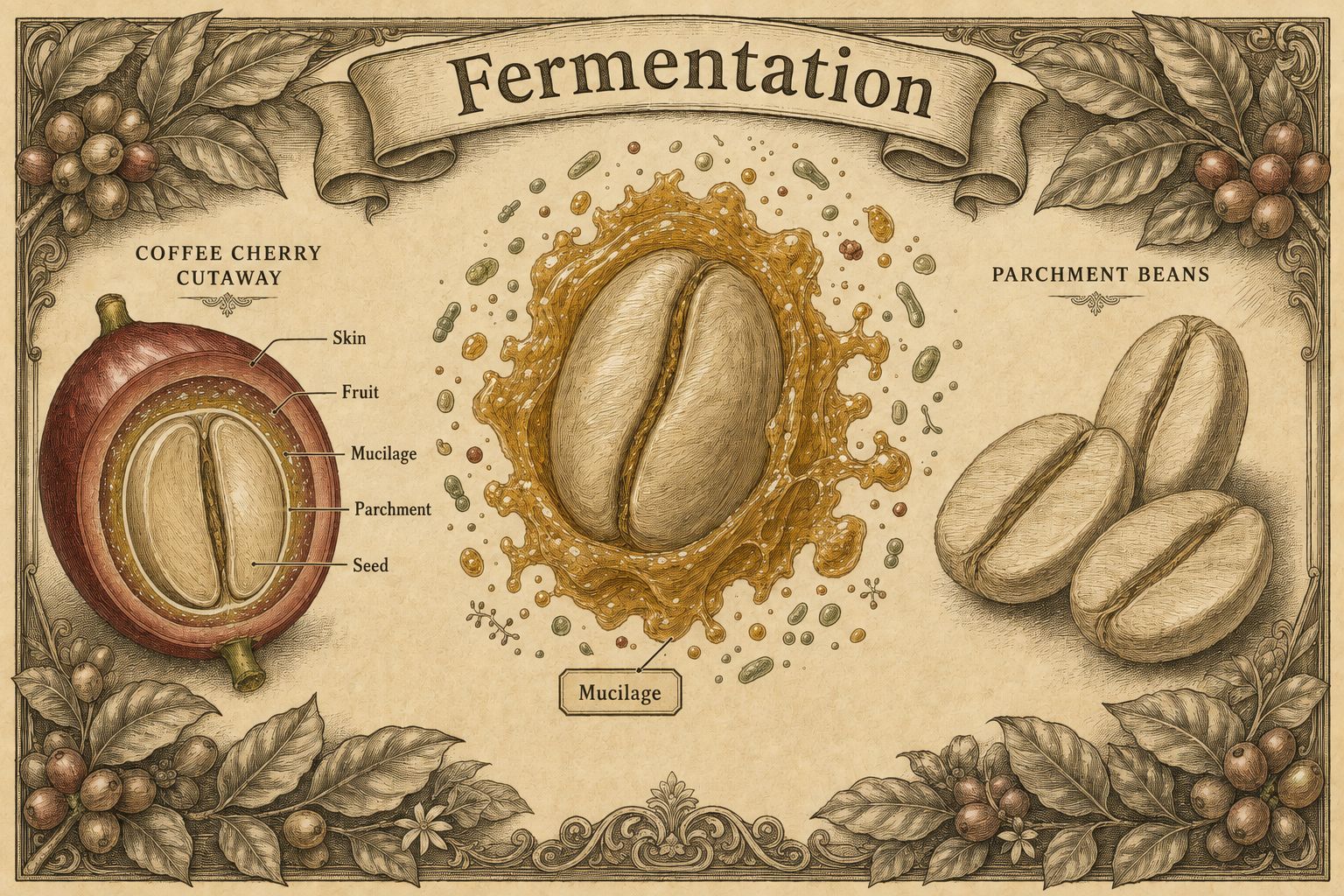
Fermentation in coffee processing often involves microbes breaking down the mucilage around the seed after harvest. The same coffee could follow a process with extended tank fermentation or one that makes little use of a fermentation tank.
TechnoServe’s wet-mill guide explains that mucilage remains attached to the parchment after pulping. Microbial breakdown makes it easier to remove during washing. The guide also notes that fermentation can occur from cherries on the tree through dried parchment coffee, making the conditions and purpose of each stage important.
Mucilage contains water, sugars, and pectin, providing an environment where yeasts and bacteria can grow and produce organic acids, alcohols, and other metabolites. Research reviews discuss both mucilage breakdown and the possibility that some metabolites enter the seed and influence flavor after roasting. The latter remains an area of research and does not establish that every lot will develop the same fruit flavors.
Why washed lots often ferment
Washed processing usually starts by removing the skin and most of the pulp, leaving mucilage on the parchment. Many mills hold this coffee in a tank until the mucilage feels less slick, then wash and dry it.
Elhalis, Cox, and Zhao’s 2023 review reports wet-tank fermentation lasting about 6 to 72 hours, depending on climate. TechnoServe explains how temperature, mucilage thickness, microbes, and water affect the rate: cool conditions can slow microbial activity or stall fermentation, while heat can cause it to progress too quickly. The guide distinguishes dry fermentation without added water from submerged fermentation, which require different approaches to water use and temperature management. Although pH usually falls, a single reading cannot determine when to wash the coffee.
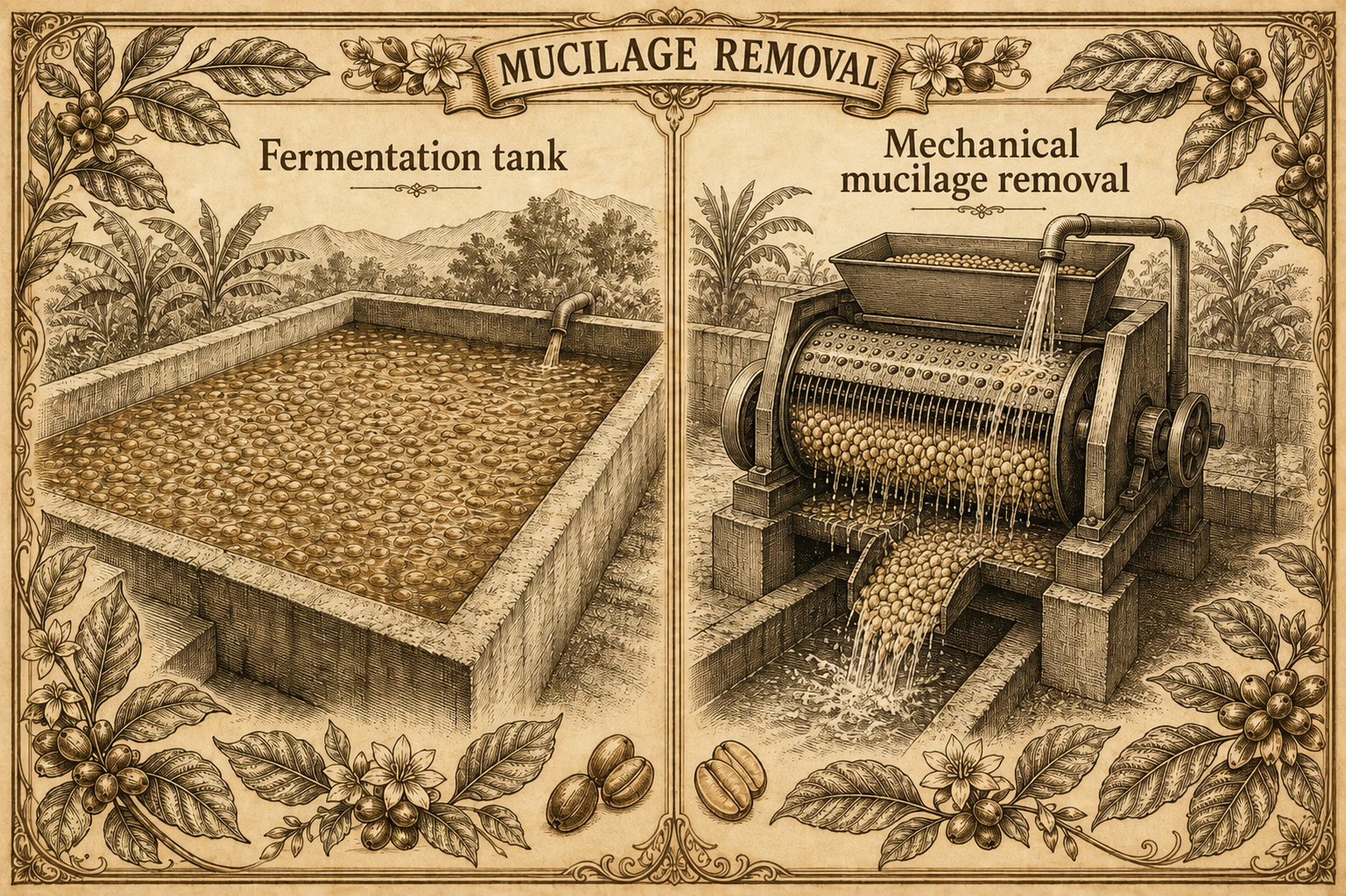
Mechanical demucilaging removes mucilage through friction and rinsing, providing an alternative to tank fermentation. Some studies report that this approach does not necessarily reduce sensory quality. Mills may also combine the two methods, fermenting until the mucilage loosens before mechanically removing the remainder.
The diagram compares microbial loosening of mucilage during tank fermentation (left) with removal by mechanical friction (right).
Producers can also add pectinases to accelerate mucilage breakdown. This differs from relying on the existing microbes for fermentation, as explained in enzyme processing.
Naturals, honeys, and anaerobic lots ferment too
Natural coffee dries inside the whole fruit, allowing microbial activity in the pulp and mucilage during drying. Honey coffee is pulped before drying with mucilage still attached; that remaining layer also undergoes breakdown.
Anaerobic processing usually uses a sealed bag or tank to limit oxygen, while a traditional washed tank is often open. Both involve fermentation under different oxygen conditions. Anaerobic natural and anaerobic washed coffees usually undergo a sealed stage before drying or washing. The carbonic maceration article explains how producers and sources use that related term.
Washed, natural, honey, and anaerobic processes differ in whether they retain the skin, add water, or seal the vessel, but all can involve fermentation. It is a part of conventional processing as well as specialty and experimental methods.
How it differs from spoilage
A mill aims to loosen mucilage sufficiently for washing and drying. Unwanted microbes or excessive fermentation time can instead lead to spoilage.
Insufficient fermentation can leave mucilage and sugars on the parchment, hindering drying and supporting unwanted microbial growth. Reviews associate excessive fermentation with propionic acid, butyric acid, and excess acetic acid. Haile and Kang describe affected coffee as stinkers and mention onion-like defects, while Elhalis and colleagues report increased propionic acid in prolonged natural processing. These are reported signs of overfermentation, rather than a flavor that every affected lot will share.
Cherries left unprocessed after harvest can also begin uncontrolled fermentation. Elhalis and colleagues cite research in which holding fruit for more than about eight hours could affect quality; that duration needs to be understood within the study conditions.
A “fermenty” description may refer to an intentional processing flavor or an overfermentation defect. The distinction involves how thoroughly the mucilage was removed and whether unpleasant aromas or flavors developed. No particular fermentation time guarantees more aroma in the finished coffee.
This conceptual diagram compares mucilage loosened enough for washing (left) with quality problems that may result from excessive fermentation (right).
Common Misconceptions
Does washed coffee skip fermentation?
Many washed lots undergo fermentation to loosen mucilage, although some mills use mechanical removal to shorten or skip tank fermentation. The washed-processing article explains these approaches.
Is fermentation the same as anaerobic processing?
Fermentation can occur under different oxygen conditions. Anaerobic processing usually uses a sealed bag or tank to limit oxygen, while traditional washed tanks are often open; both involve microbial activity. The anaerobic-processing article explains the distinction.
Does a longer ferment taste better?
Fermentation needs enough time to loosen mucilage, but excessive time can produce off-flavors. Temperature, water, and mucilage thickness influence the rate, so no fixed duration guarantees better aroma.
Does adding enzymes count as fermentation?
Adding pectinases directly speeds mucilage breakdown, while traditional fermentation relies on microbial activity already present in the environment. These are distinct approaches, explained further in the enzyme-processing article.
If naturals have no tank, is there no fermentation?
Microbes can remain active in the pulp and mucilage as whole cherries dry, so fermentation can occur during drying without a separate tank.
TechnoServe, Wet Mill Processing Guide: Explains how wet mills use fermentation to loosen mucilage before washing it off, as well as mechanical removal as an alternative. Fermentation can occur at several stages from cherry to dried parchment, with its rate influenced by temperature, mucilage thickness, microbes, and water. The guide distinguishes dry fermentation without added water from submerged fermentation; falling pH alone does not determine when the coffee is ready to wash.
Hosam Elhalis, Julian Cox, and Jian Zhao, Coffee fermentation: Expedition from traditional to controlled process and perspectives for industrialization, Applied Food Research, 2023: Reviews fermentation in washed, natural, and semi-dry processing, including microbial breakdown of mucilage and research into metabolites that may enter the seed and affect flavor. Reported wet-tank durations range from about 6 to 72 hours depending on climate, while cherries held for more than about eight hours after harvest may begin uncontrolled fermentation. Insufficient fermentation can leave mucilage and sugars that hinder drying; excessive fermentation may increase propionic, butyric, or excess acetic acids, with onion-like defects reported in the literature. Some studies found that mechanical demucilaging did not necessarily reduce sensory quality. The reported times describe study conditions, not a universal processing schedule.