Processing
What Is Anaerobic Coffee Processing?
Anaerobic coffee usually includes a fermentation stage in a sealed or low-oxygen container. It is not a complete drying method: the coffee may later be finished as a natural, washed, or honey process.
 Add More Coffee
 Processing
Anaerobic coffee usually includes a fermentation stage in a sealed or low-oxygen container. It is not a complete drying method: the coffee may later be finished as a natural, washed, or honey process.
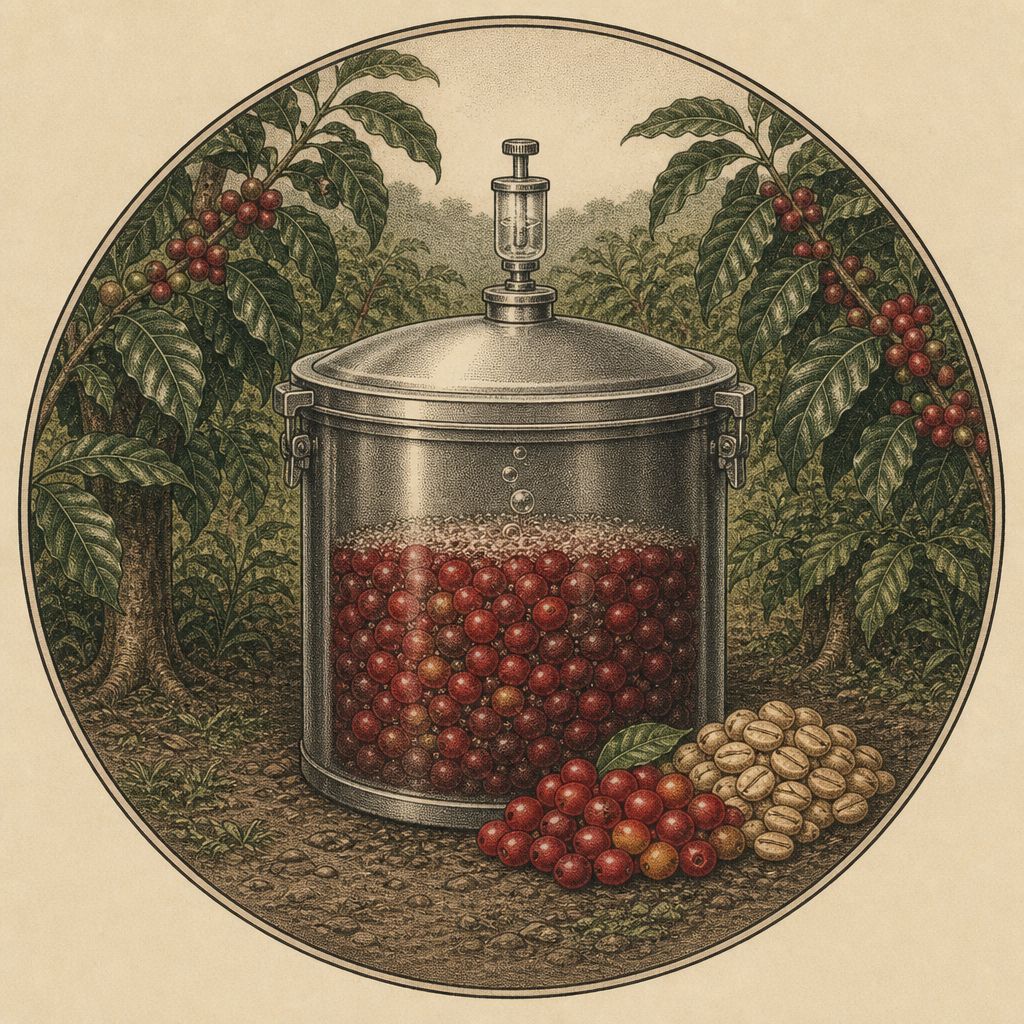
An anaerobic label usually means that a producer placed whole cherries or depulped coffee in a sealed container for a controlled fermentation stage. Microbes and fruit metabolism consume oxygen and produce carbon dioxide, creating an increasingly oxygen-limited environment.
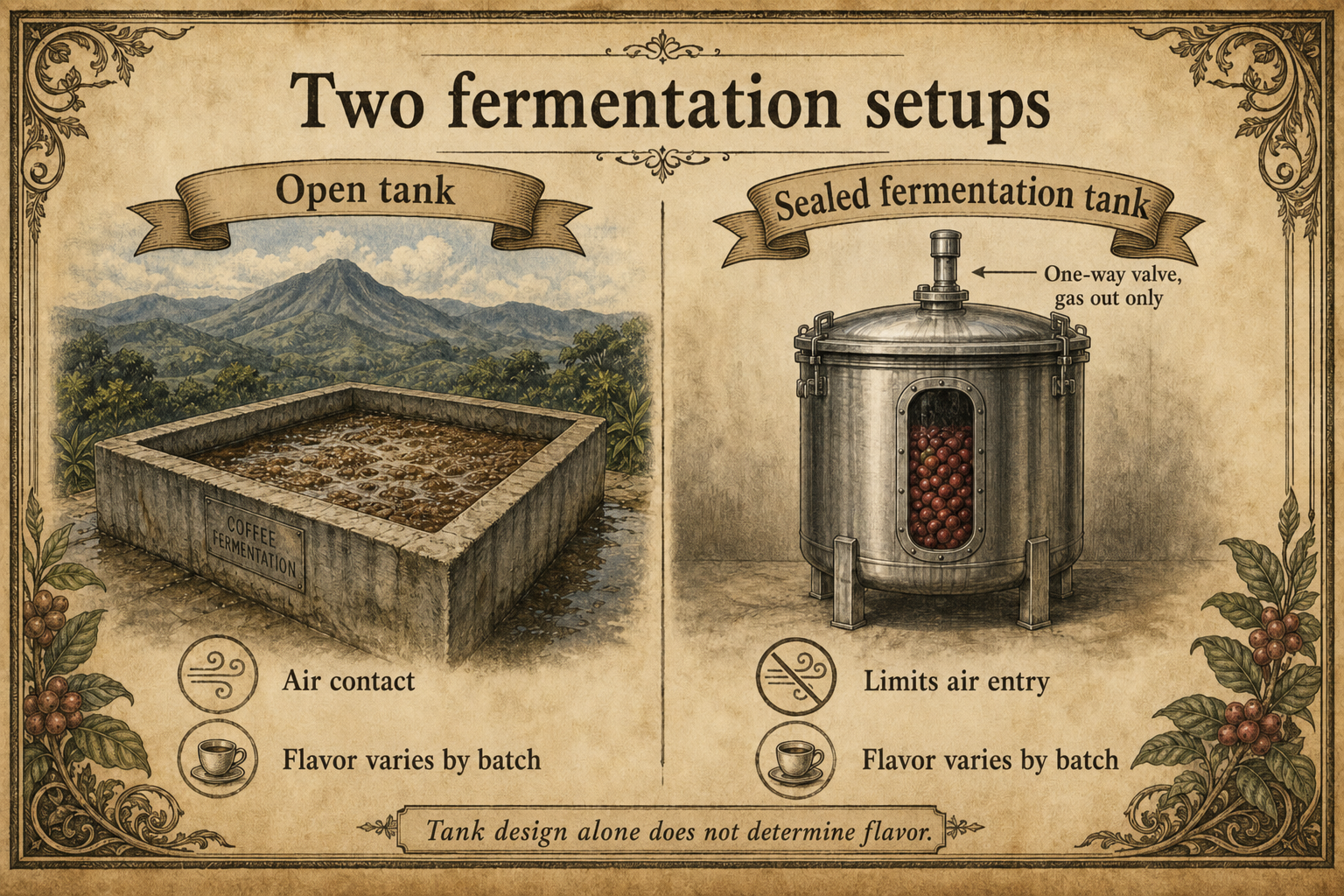
The label alone does not establish that the container is completely free of oxygen. Containers, seals, headspace, valves, temperature monitoring, and gas management vary. Some systems use a one-way valve to release excess pressure without allowing much outside air back in.
Coffee Review describes common sealed stages of roughly one to six days, while other producers use very different schedules. Duration alone does not determine quality because temperature, starting material, ripeness, microbial population, pressure, and subsequent processing also affect the result.
After sealed fermentation, coffee still has to be depulped if needed and dried to a stable moisture level. Whole cherries can continue as an anaerobic natural. Depulped and fully cleaned coffee can become anaerobic washed, while coffee dried with mucilage attached can become anaerobic honey.
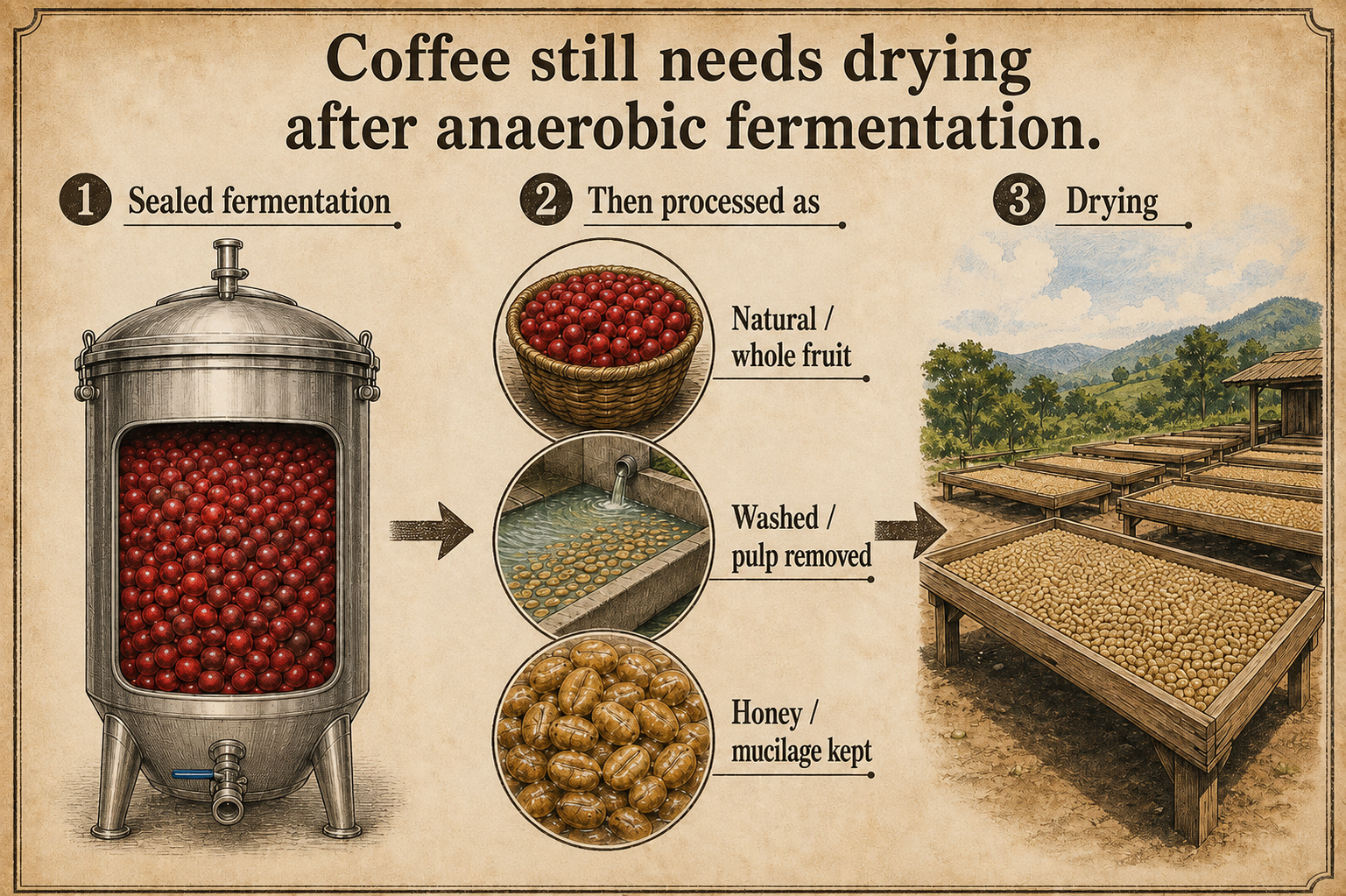
The two parts of the label describe different stages: anaerobic identifies the fermentation environment, while natural, washed, or honey describes what surrounded the seed during drying. A bag that gives both terms provides more process information than one labeled only experimental process.
Reviewed and researched examples often show intensified fruit, fuller texture, or fermentation-associated notes. Some lots suggest yogurt, lactic acidity, cheese, wine, herbs, wood, or tropical fruit layered over the coffee’s underlying chocolate, floral, or fruit character.
Those notes are not requirements, and they are not universally desirable. Some drinkers enjoy a strong process signature; others feel it obscures the variety or origin. A 2023 study reported overfermented character in some treatments beginning around day six, illustrating why longer is not automatically better.
When shopping, look beyond the word anaerobic. Useful details include whole cherry or depulped coffee, fermentation time and temperature, added cultures or gases, the finishing process, drying method, and the producer’s sensory goal.
Not necessarily. In coffee marketing, the term usually means a sealed or strongly oxygen-limited environment, not a laboratory-grade vacuum.
Usage overlaps. Some sources reserve carbonic maceration for whole cherries or for added carbon dioxide; others use anaerobic as the broad category. A producer's process details are more reliable than the label alone.
Yes. Anaerobic describes the sealed fermentation stage; natural describes whole-fruit drying afterward. Anaerobic washed and anaerobic honey coffees also exist.
No. It is often intense, but intensity is a style rather than a quality guarantee. Poor control or excessive time can overwhelm origin character or create off-flavors.