How Decaf Coffee Is Made—and How It Differs From Low-Caffeine Varieties
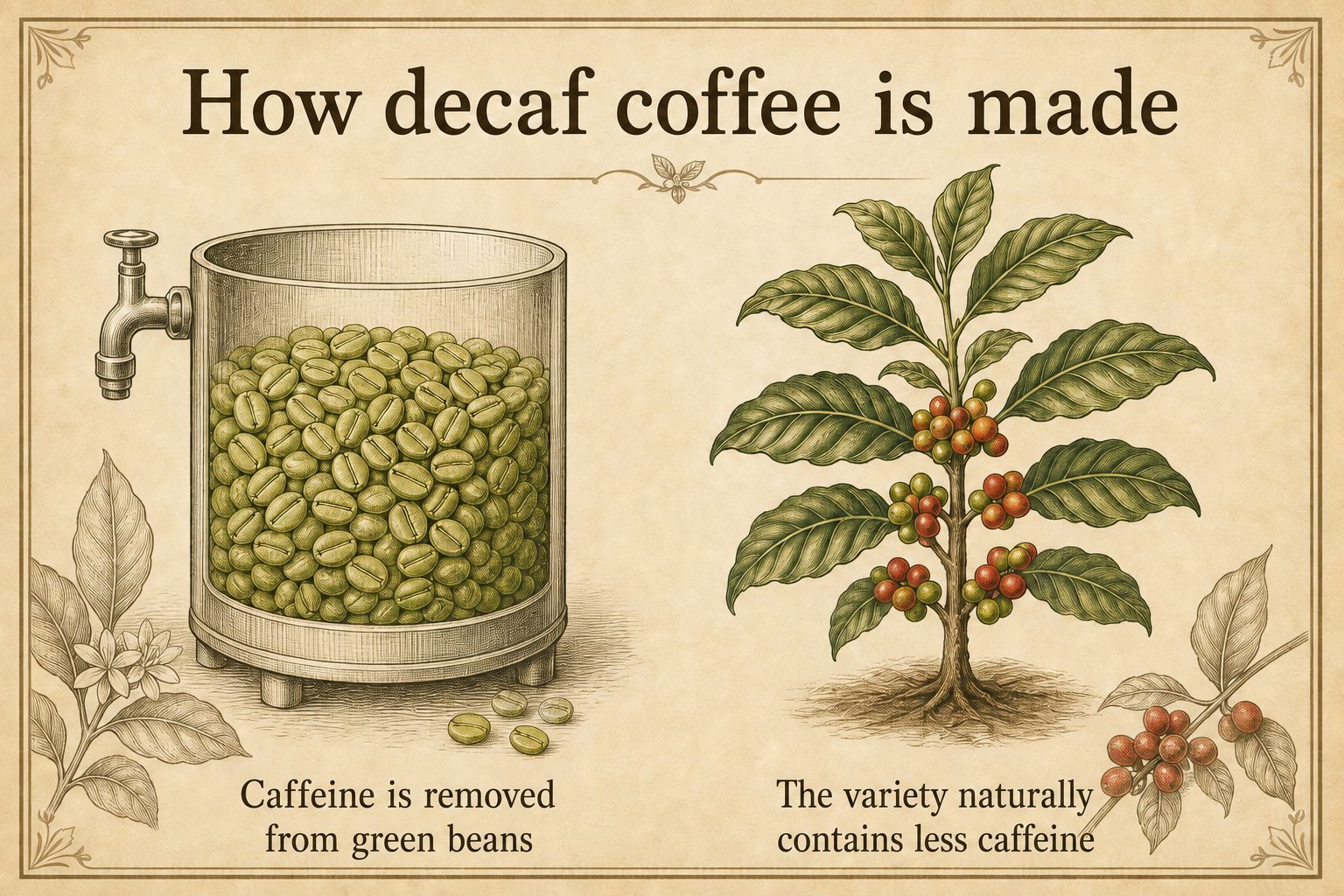
Decaf usually means most caffeine was removed from green coffee before drying and roasting. Common methods use water, solvents, or carbon dioxide, leaving some caffeine in the finished coffee. This differs from varieties with genetically lower caffeine content.
Updated: Sep 15, 2026Reviewed by: Content and layout review
Washed Process
Pick ripe coffee cherries
Remove the skin and pulp
Break down the mucilage through fermentation
Wash the coffee
Dry the parchment coffee
Natural Process
Pick ripe coffee cherries
Dry the whole cherries
Turn them regularly
Remove the dried fruit and parchment
Prepare the green coffee
Honey Process
Pick ripe coffee cherries
Remove the skin while retaining some mucilage
Dry the coffee with mucilage attached
Remove the parchment after drying
Prepare the green coffee
Wet-Hulled Process
Pick ripe coffee cherries
Depulp, then briefly ferment or wash
Remove the parchment while moisture remains high
Continue drying
Prepare the green coffee
Anaerobic Fermentation
Pick ripe coffee cherries
Place the coffee in a sealed or low-oxygen vessel
Control fermentation time and temperature
Finish with a washed, natural, or honey process
Dry the coffee
What decaf means on a coffee bag
Decaf or decaffeinated usually means most caffeine was removed from green coffee before drying and roasting. Processing before roasting avoids removing the aromas developed during roasting along with the caffeine.
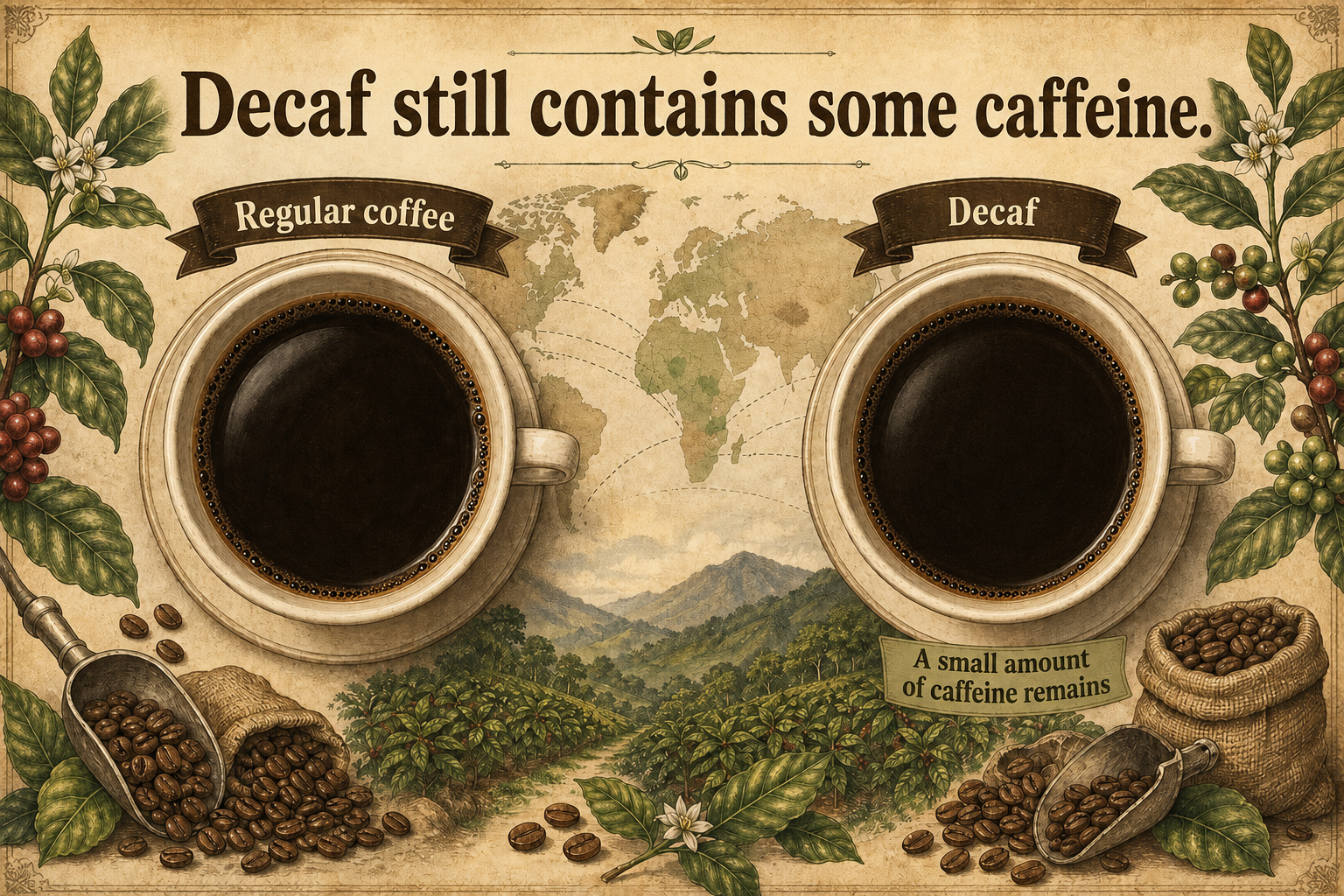
Decaf retains some caffeine, and selectively removing caffeine without other soluble compounds remains difficult. The National Coffee Association reports typical removal of about 97%, comparing about 95 milligrams per 8-ounce cup of regular coffee with about 2 to 15 milligrams in decaf. USDA reference data give about 1 milligram per 100 grams of brewed decaf, equivalent to about 2 milligrams in 8 fluid ounces, while The Conversation cites about 7 milligrams. These are different reference figures; actual amounts vary with the lot and brewing method.
For amounts in different drinks and daily intake references, see caffeine.
It is not a low-caffeine variety
A low-caffeine variety has genetically lower caffeine content. Laurina, also called Bourbon Pointu, is a familiar example; the literature often describes these varieties as containing about half as much caffeine as other arabica cultivars.
Decaffeination is an additional treatment of green coffee. A lot can list both its variety and its decaf status, describing the plant and the subsequent treatment respectively.
Washed, natural, and honey processing describe how coffee fruit becomes green coffee. Decaffeination takes place after that green coffee has been prepared.
Three common methods
All three methods begin with moistened green beans, which are dried after decaffeination and then roasted.
The conceptual diagram compares water, solvent, and carbon dioxide methods, all applied to unroasted green coffee.
Solvent methods use methylene chloride or ethyl acetate. Producers can put solvent on the beans, or they can move solubles into water first and treat that water. The Conversation describes this route as removing about 96% to 97%. A sugarcane-process label usually means ethyl acetate, which can be made from fermented sugarcane; industrial ethyl acetate is not always from cane. Treat that as marketing language, not proof that “natural” tastes better.
Swiss Water® is one example of water processing, trademarked by a Vancouver company that uses water, Green Coffee Extract, and carbon filters. The company describes its coffee as 99.9% caffeine free, while The Conversation reports caffeine removal of about 94% to 96% for Swiss water. These source figures differ, and water processing includes other methods and brands. That branded method is in the Swiss Water Process.
High-pressure carbon dioxide methods date from the early 1970s and are relatively selective for caffeine. The Conversation reports removal of about 96% to 98%, describing costly equipment and common use for supermarket decaf.
Because other solubles leave with the caffeine, cupping notes on older commodity solvent decaf often call it flatter and more muted. Specialty lots more often use water, CO₂, or ethyl acetate. That is a common current approach, not a ranking of which method tastes better.
Decaf retains some caffeine, with amounts varying by lot and brewing method. The conceptual diagram does not represent fixed milligram values.
How to read the name on a bag
Decaf identifies an additional green-coffee treatment; variety and washed or natural processing describe different information. Bags may omit the decaffeination method, and coffee without a Swiss Water® label can still use another water process. A solvent or sugarcane label alone cannot predict sensory quality.
In the EU, soluble coffee labeled decaffeinated has an anhydrous-caffeine cap of 0.3% of coffee-based dry matter. A 0.1% roasted-bean threshold is often a national rule, not one EU roasted-coffee statute. How much you ingest still depends on dose, brew, and cup size. This page is not medical advice.
Common Misconceptions
Is decaf caffeine-free?
Decaf still contains some caffeine. The National Coffee Association lists about 2–15 mg per typical cup, while USDA reference data give about 2 mg in an 8-ounce serving. Actual amounts vary by source, lot, and brewing method.
Is that the same as a low-caffeine variety?
Decaf describes caffeine removal from green coffee, while a low-caffeine variety such as Laurina has genetically lower caffeine content. These varieties usually still contain some caffeine.
Should I always choose Swiss Water?
Swiss Water® is one branded water process. Origin, roasting, and brewing also affect quality, so the brand or method alone cannot establish which coffee will taste better.
Does solvent decaf mean the coffee is unsafe?
U.S. rules limit methylene chloride residue in roasted decaf to 10 ppm. Sugarcane processing usually refers to ethyl acetate, a different solvent that is not always made from sugarcane. A clinician can address concerns related to individual health conditions.
Does a decaf label guarantee how the coffee was processed?
No. Bags often omit the method. A missing Swiss Water name does not mean water was not used; a solvent or sugarcane label does not decide the cupping score.
Michael W. Crowder, Retaining flavor while removing caffeine − a chemist explains the chemistry behind decaf coffee, The Conversation, 2024: Explains why decaffeination begins with moistened green coffee to avoid losing roast aromatics, and why selectively removing caffeine without other compounds remains difficult. Reported removal rates are about 96–98% for carbon dioxide, 94–96% for Swiss water, and 96–97% for solvent methods, with about 7 mg remaining in an 8-ounce cup. These are the author's reference figures, rather than measurements for every lot.
National Coffee Association, Decaffeinated Coffee: The U.S. industry association reports typical caffeine removal of about 97%, with regular coffee at about 95 mg per 8-ounce cup and decaf at about 2–15 mg. The removal percentage is an industry reference, rather than an FDA statutory threshold.
21 CFR 173.255 Methylene chloride: U.S. residue limit of 10 ppm methylene chloride in decaffeinated roasted coffee and in decaffeinated soluble coffee extract. A residue cap, not a required 97% caffeine-removal rule.
Directive 1999/4/EC relating to coffee extracts and chicory extracts: EU rule for coffee extracts labeled decaffeinated: anhydrous caffeine not more than 0.3% of coffee-based dry matter. A 0.1% roasted-bean threshold is often national, not a single EU roasted-coffee statute.