What Is Thermal Shock Processing—and How Is It Different From Anaerobic?
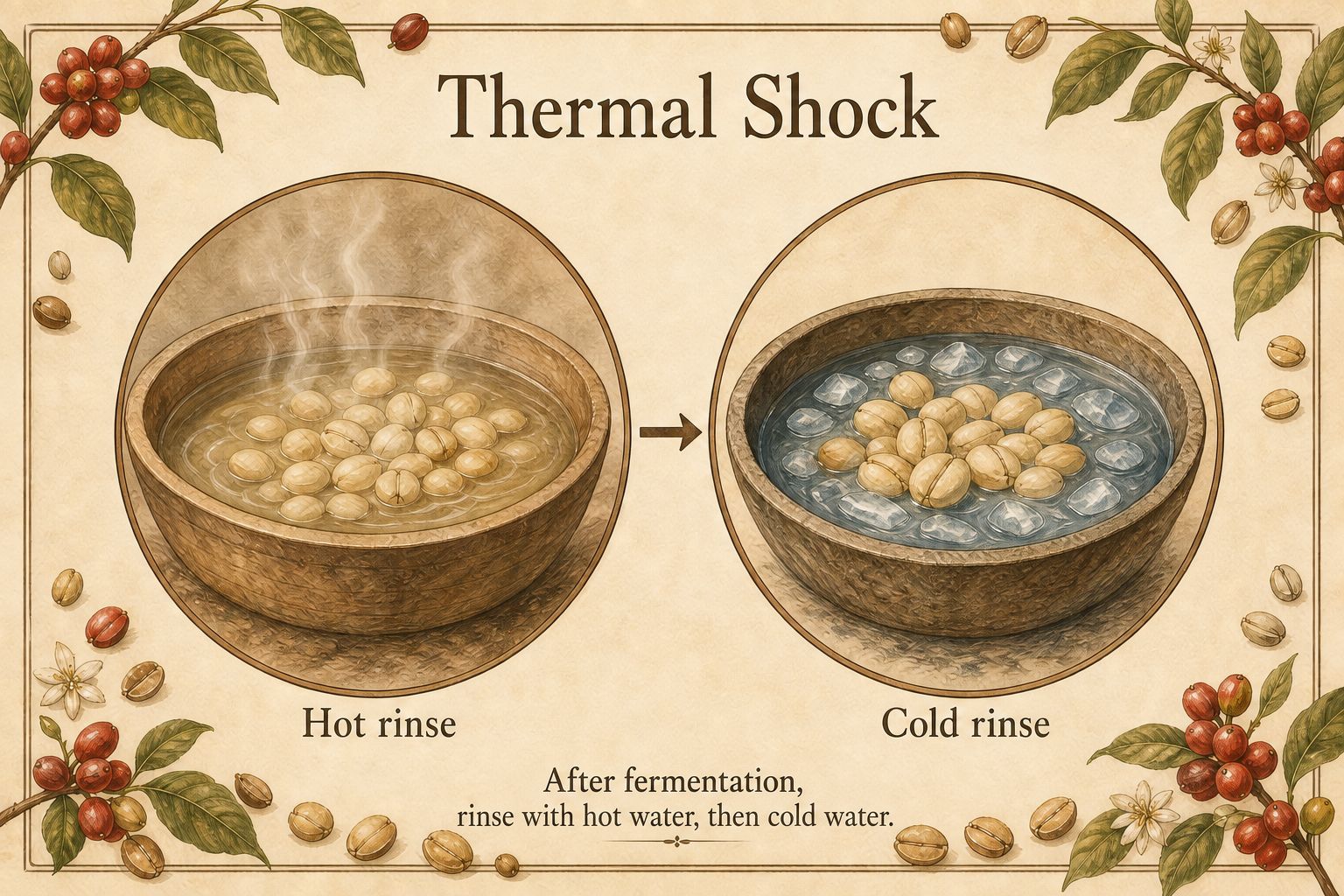
Thermal shock usually describes hot-water rinsing followed by cold water after fermentation. Some lot descriptions give its purpose as encouraging uptake of fermentation compounds and stopping fermentation, although the mechanism needs further research. This stage can accompany anaerobic fermentation and washed, natural, or honey processing; terminology and conditions are not fully standardized.
Updated: Aug 22, 2026Reviewed by: Content and layout review
Washed Process
Pick ripe coffee cherries
Remove the skin and pulp
Break down the mucilage through fermentation
Wash the coffee
Dry the parchment coffee
Natural Process
Pick ripe coffee cherries
Dry the whole cherries
Turn them regularly
Remove the dried fruit and parchment
Prepare the green coffee
Honey Process
Pick ripe coffee cherries
Remove the skin while retaining some mucilage
Dry the coffee with mucilage attached
Remove the parchment after drying
Prepare the green coffee
Wet-Hulled Process
Pick ripe coffee cherries
Depulp, then briefly ferment or wash
Remove the parchment while moisture remains high
Continue drying
Prepare the green coffee
Anaerobic Fermentation
Pick ripe coffee cherries
Place the coffee in a sealed or low-oxygen vessel
Control fermentation time and temperature
Finish with a washed, natural, or honey process
Dry the coffee
What thermal shock means on a coffee bag
Thermal shock usually describes rinsing coffee with hot water and then cold water after fermentation. It is a relatively recent processing term, often listed alongside anaerobic fermentation.
Coffee Review describes two Colombian microlots rinsed with hot and cold water after fermentation, with the stated purpose of encouraging uptake of fermentation metabolites and stopping fermentation. One finishes as washed parchment; the other uses wine yeast and continues through a natural process. In these examples, thermal shock identifies the temperature-treatment stage within the longer process.
Perfect Daily Grind records Diego Bermudez’s process using water around 40°C followed immediately by water around 12°C. These settings describe that example; other mills may choose different temperatures and incorporate the treatment into their own processing sequences.
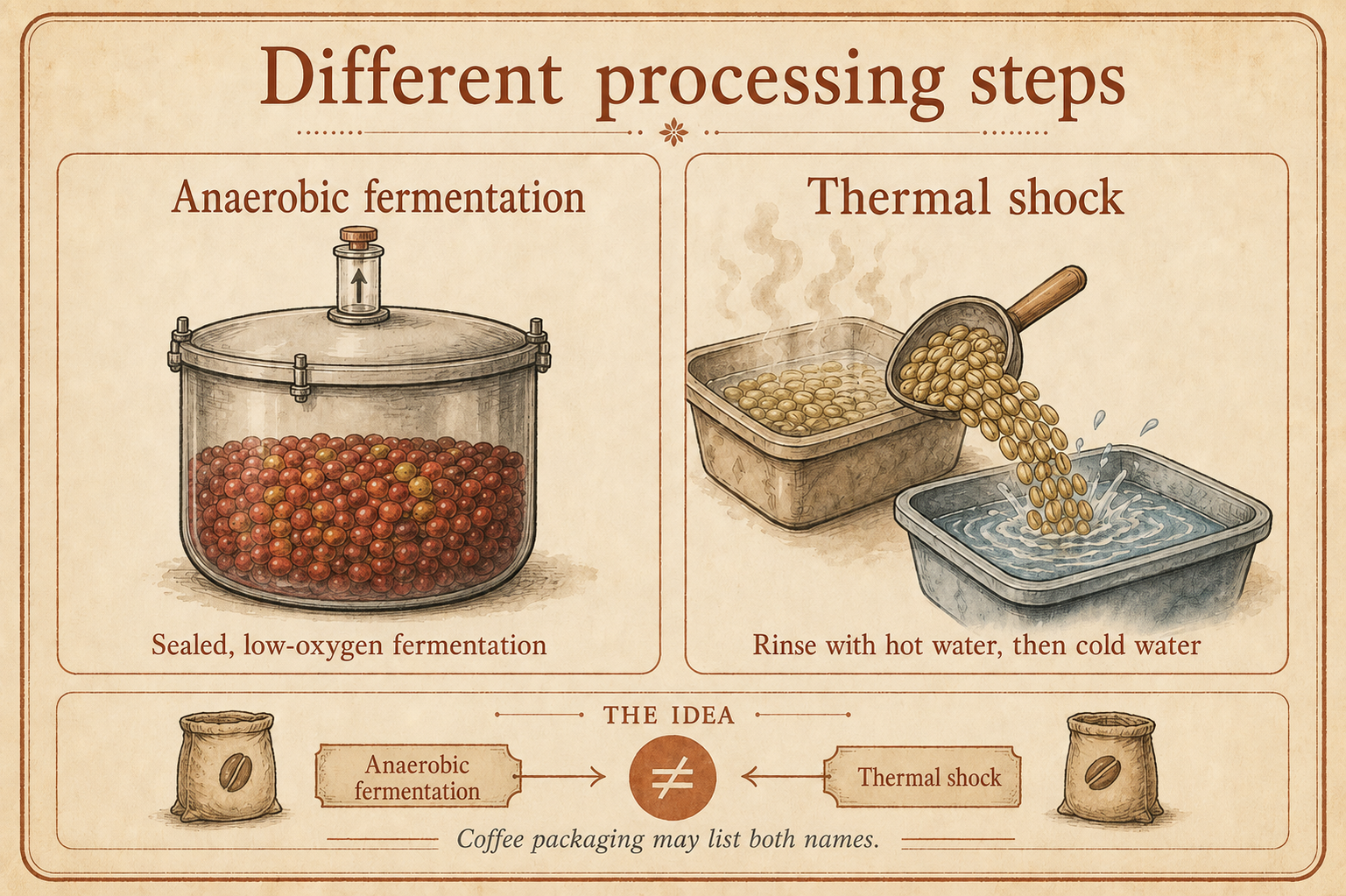
The diagram compares sealed anaerobic fermentation (left) with hot-water rinsing followed by cold water (right).
How it differs from anaerobic fermentation
Anaerobic usually means fermentation in a sealed bag or tank that limits incoming oxygen, as explained in anaerobic processing.
Thermal shock focuses on an abrupt temperature change. Coffee Review places the hot and cold rinses after fermentation, while Black & White Coffee Roasters likewise describes it as one step within a longer fermentation process.
Both can form part of the same sequence. Coffee Review’s examples include ozone sanitation, two fermentation stages, and then thermal shock; some lots also use lactic cultures or wine yeast.
Black & White proposes that heat opens seed pores to admit esters from the fermentation liquid, then cold contracts the pores and retains those compounds. Rapid heating and cooling might also inhibit enzymatic activity, as in vegetable blanching. The author notes that the mechanism still requires research: hot water followed by cold water describes the sequence, while the explanation involving pores and compound uptake remains provisional.
A conventional washed process uses water to loosen and remove mucilage before drying. The thermal-shock accounts above instead emphasize deliberately changing temperature with the aim of stopping fermentation at the mill’s chosen point.
The diagram shows the common sequence of fermentation followed by hot and then cold rinsing. Temperatures and contact times vary between mills.
The names are not yet unified
Perfect Daily Grind mentions that experimental processes keep multiplying, that the industry has no standard names for them, and that many roasters have never seen the work at origin. Roland Horne of WatchHouse, quoted there, says the lack of naming standards leaves little agreement on what the words actually mean.
On a bag, thermal shock points to a hot-then-cold treatment around fermentation, with temperatures and durations that need to be checked in the lot description. Black & White also mentions a less common use before depulping. The coffee still needs drying and may finish through washed, natural, or honey processing.
Some tasting reports describe greater aroma and fuller texture, sometimes with distinct fruit or fermentation character. These observations do not guarantee better coffee or establish that process character will obscure the origin. Production volumes are usually much smaller than for conventional washed coffee, and the label appears often on experimental Colombian microlots.
Common Misconceptions
Is thermal shock the same as anaerobic fermentation?
They describe different stages. Anaerobic usually refers to fermentation in a sealed, low-oxygen environment, while thermal shock commonly involves hot water followed by cold water after fermentation. A bag may list both.
Does thermal shock always make coffee more aromatic or better?
Some tasting reports describe greater aroma and fuller texture, but processing conditions, timing, and drying all affect the result. Thermal shock can accompany washed or natural processing, and its name alone cannot establish quality.
Does the hot water cook the coffee?
The sources describe rinsing during processing. Perfect Daily Grind's example uses water around 40°C followed by water around 12°C, but those settings are not universal; the individual lot description provides the relevant temperatures.
Is it the same as enzyme processing?
Enzyme processing adds pectinase to break down mucilage, while thermal shock uses a temperature change. They may occur at different stages of the same lot. Adding enzymes also differs from yeast inoculation, as explained in the enzyme-processing article.
Is it only Colombian coffee?
The name shows up often on Colombian experimental microlots. It is not Colombia's national process, and most Colombian coffee is still conventionally washed.
Coffee Review, Colombia El Paraiso Geisha Luna Washed, SÖT Coffee Roaster, 2023: Describes a double-anaerobic thermal-shock lot sanitized with ozone, fermented in two stages, then rinsed with hot and cold water. The stated purpose is to encourage uptake of fermentation metabolites and stop fermentation before drying as washed parchment. These are details of one lot, rather than a universal thermal-shock process.
Trevor Clark, What Does Thermal Shock Process Mean?, Black & White Coffee Roasters, 2024: Describes thermal shock as a temperature treatment within a longer fermentation process. The article proposes that heat opens seed pores to admit esters before cold contracts them, and discusses possible inhibition of enzyme activity similar to blanching. It also states that the mechanism requires research, so these explanations remain provisional.