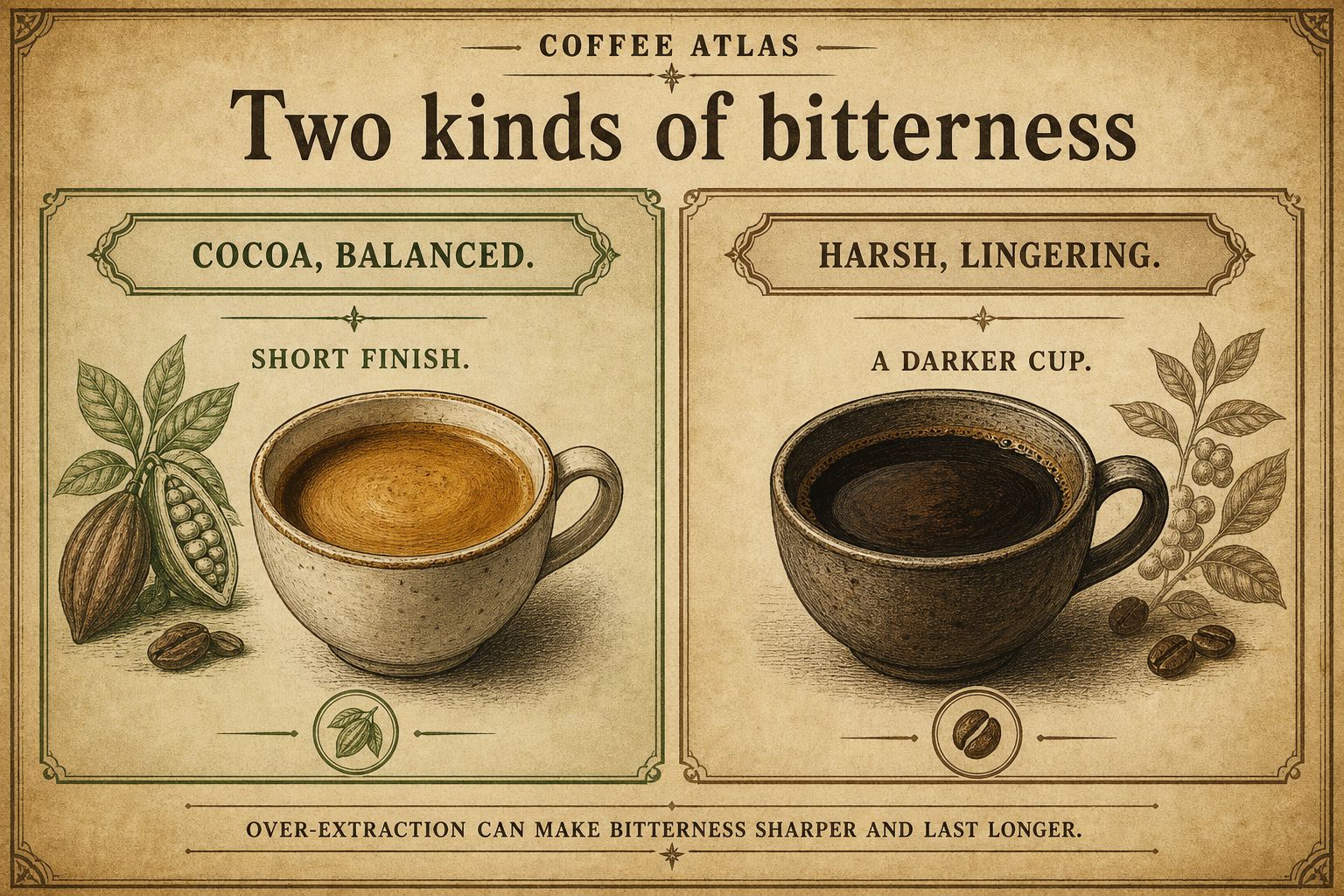
Bitterness is a normal part of coffee and can balance sweetness and acidity. Roasting turns chlorogenic acids into bitter lactones and, with deeper roasting, harsher phenylindanes. Fine grinding, hot water, and long contact can also make bitterness dominate.
Updated: Sep 7, 2026Reviewed by: Content and layout review
Bitterness is a common first impression of coffee
For many people, the first impression of coffee is bitterness. That does not mean the beans are spoiled. Bitterness is one of the basic tastes detected on the tongue. In a balanced cup, a small amount can support sweetness and acidity. Without it, the cup can feel too sharp and one-note.
The problem begins when bitterness covers every other attribute or becomes burnt, rough, throat-catching, and persistent. Roast development and brewing both change that result; it is rarely a single cause.
Roast chemistry changes the character of bitterness
Green coffee contains chlorogenic acids whose composition varies with species, variety, ripeness, environment, and farming. The original acids are not very bitter; roasting gradually turns them into the bitterness you taste.
During light-to-medium roasting, chlorogenic acids form chlorogenic-acid lactones. Research and sensory work associate these compounds with a milder bitterness that is easier to drink—the bitterness coffee usually has, not a harsh catch in the throat. Their concentration commonly peaks around light-to-medium development rather than increasing forever as roasting gets darker.
With further roasting, those lactones degrade and fragments form oligomers including phenylindanes. Researchers identified these compounds in dark-roast brews and associated them with harsher bitterness that lingers longer.
The diagram summarizes changes in bitter compounds during roasting; it is not a complete chemical reaction pathway.
Caffeine also tastes bitter, but it is not the main source of bitterness. Robusta commonly contains more caffeine and chlorogenic acids than arabica, so a blend with a higher robusta share often tastes more bitter and astringent. Astringency is a drying tactile sensation, while bitterness is taste; they can occur together.
How roast and brewing change this bitterness
Deeper roasting usually produces more phenylindanes, so bitterness is harsher and lingers longer. Light roasts often keep acidity clearer, and bitterness is less prominent. That is a common tendency, not a rule that every dark roast catches the throat the same way.
Brewing also changes bitterness. Many bitter compounds become more prominent later in extraction. A very fine grind, high water temperature, or long contact time can suppress sweetness and acidity under a bitter finish. See grind size and over-extraction and under-extraction.
Roast and brewing can both change bitterness, so diagnose them separately.
Diagnosing a bitter cup
Begin with the bag. A very dark roast may intentionally emphasize smoke, bittersweet cocoa, and roast character. If that style is not what you want, brewing changes cannot turn it into a light floral coffee.
If the roast suits you but the cup is harsh, change one thing at a time: grind setting or brew time.
Cocoa- or dark-chocolate-like bitterness often integrates and finishes cleanly. Burnt, moldy, rancid, or aggressively lingering bitterness deserves closer attention to roast, storage, and green-coffee quality. Compare it with the cup’s acidity and fruit character instead of judging bitterness in isolation.
Common Misconceptions
Does bitter coffee mean the beans are spoiled?
Usually not. Some bitterness is normal and can balance sweetness and acidity. Burnt, moldy, rancid, or persistently harsh character may point to roasting, extraction, processing, or storage problems.
Is caffeine the main reason coffee tastes bitter?
Caffeine is bitter, but it is not the main source. Roast-derived chlorogenic-acid lactones and phenylindanes usually contribute more.
Is dark roast always more bitter?
Harsher and longer-lasting bitterness is a common dark-roast tendency, though green coffee, roast profile, freshness, and brewing can change the result.
Can grinding too fine make coffee bitter?
It can increase extraction and make late-extracting bitter material dominate, especially with high temperature or long contact. It is not the only possible cause.